It is possible to stay healthy even when carrying a little extra weight – provided we move enough and eat a balanced diet. In an interview, nutritionist Dr. med. David Fäh explains what causes obesity and which diet can ultimately lead to better health and wellbeing.
When I see a trolley next to mine in the supermarket, I picture the person it belongs to. Most of the time I guess right. Baskets and trolleys filled with plenty of fruit and vegetables usually belong to fairly slim people. Plenty of such produce, along with calorie-free drinks for weight control, keeps us younger.
Food: which choices are right
Unfortunately, Switzerland has no precise data on the quality of food consumption. Instead, we can look at the degree to which food is processed. The number of calories in a food does not tell us whether all of them actually reach the body and are absorbed there.
What does this mean? Nuts, for example, have a high energy density: a small amount contains many calories. Yet our body absorbs only part of them. Chips and crisps have fewer stated calories than nuts, but we absorb those calories in full. The reason is the degree of processing: the more food is processed, the less nutritional value it retains and the more body weight increases.
How far diet affects our health
What we eat has a direct effect on the cardiovascular system, blood pressure, blood lipid levels and blood glucose levels. An even greater risk to the cardiovascular system, however, comes from the excess calories we store as fat. Abdominal fat in particular is a constant risk factor.
This means that, for the sake of our health, we should pay attention to diet and nutrition. Above all, we need to exercise enough to burn the calories we consume.
Almost half of the Swiss population is overweight.
How does this affect health?
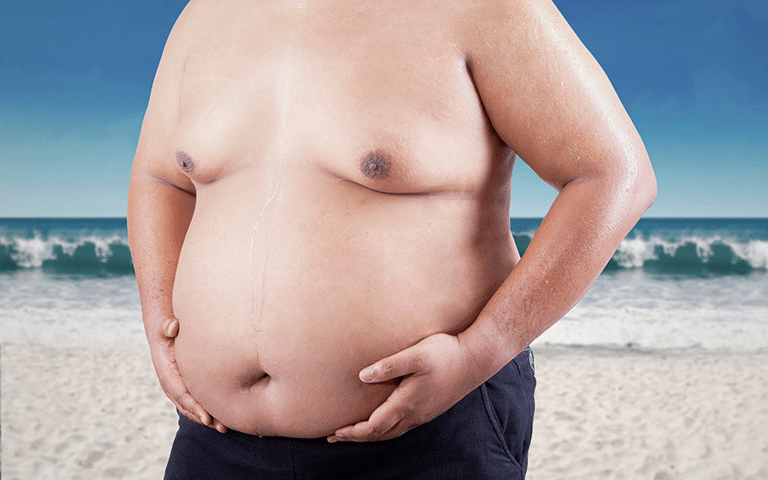
Obesity affects 30% of the population, and 15% of them have health problems as a result. It raises the risk of many serious diseases, including heart attack, stroke and diabetes. Being slightly overweight, which applies to around 25%, mostly has no effect on health.
Obesity results from an unhealthy lifestyle – for example, poor-quality or unbalanced nutrition, smoking or excessive alcohol consumption.
When weight loss is necessary
Getting rid of obesity and achieving a lasting result is very difficult. The right approach is therefore to prevent obesity and keep body weight constant. Yet this is often hard to do. Where does excess weight come from?
As we age, our metabolism changes and we lose muscle mass in favour of fat mass. As a result, the body uses fewer and fewer calories. In other words, anyone who does not continually adapt their lifestyle automatically falls into the risk group for gaining weight – on average 0.5 to 1 kilogram a year.
Dieting
I cannot recommend dieting. Strict, one-sided diets are entirely counterproductive – because of the well-known yo-yo effect (the weight comes off, then soon returns) and because they have a negative effect on eating behaviour. They encourage snacking and increase the risk of eating disorders.
Which food is considered the healthiest?
We know from large-scale studies that the Mediterranean diet directly reduces cardiovascular risk. It also helps to maintain an optimal weight in the long term. The secret of the Mediterranean diet’s success is the pleasure factor. It requires no bans on individual foods. Unlike a low-carb diet, it even allows you a plate of pasta.
Food and cooking should be a celebration. Cooking for yourself and sharing meals with others is far healthier than quick snacks in restaurants.
What about fats? There is a great deal of conflicting information
Saturated fats, found mainly in meat and dairy products, used to be demonised. Today the view is somewhat more nuanced: replacing them with carbohydrates is sometimes even worse for health. Replacing them with polyunsaturated fatty acids, however, is preferable. Our main source of fat should be polyunsaturated fatty acids, such as olive oil or rapeseed oil.
Can eating sausage be justified?
No. Red and especially processed meat contains saturated fatty acids. Moreover, problematic ingredients such as a high salt content raise blood pressure. A high-quality piece of meat from a pasture-raised animal, however, is more likely to bring you pleasure than to do you harm.
What else should we be careful with?
Definitely with sugary soft drinks – and fruit juices belong in this category too. Apple juice has more calories than cola. Energy drinks, coffee-based drinks and fruit yoghurt also contain a lot of sugar and supply unnecessary calories. The food industry carefully hides sugar and fat in our products. We often fail to notice this, although it is very insidious and can cause obesity.
To sum up, the keys to healthy eating are Mediterranean food and unprocessed products of the highest possible quality. Ideally, cook for yourself, share meals with others and move enough to maintain an optimal weight.
The Mediterranean diet
The Mediterranean diet is the traditional cuisine of the people of the Mediterranean countries. It is characterised by fresh ingredients, simple and gentle cooking methods and a high proportion of plant-based foods.
What the Mediterranean diet includes:
- Eat plenty of fresh vegetables, salads and fruit every day.
- Every main meal can be enriched with wholegrains, pulses, other cereals or potatoes – even nuts.
- The main sources of fat are olive oil and rapeseed oil.
- Among animal products, preference is given to low-fat dairy products, poultry, fish from sustainable fisheries or eggs.
- Seasoning comes from very little salt, spices, fresh herbs, onion and garlic.
- A glass of red wine also suits this diet.


