CorSwiss — Swiss Medical Concierge

The Top 6 Clinics in Switzerland: How to Choose the Right One

Switzerland has long been a byword for medical precision, innovation and an exceptional standard of service. Yet for the international patient a paradox arises: the higher the quality of medicine in a country, the harder it becomes to choose a clinic. University hospitals, private medical networks, specialised rehabilitation centres and VIP mental-health clinics — each organisation has its own area of specialisation and its own strengths.

According to international medical platforms, Switzerland is home to dozens of world-class clinics, many of which regularly feature in international rankings of the finest medical institutions in Europe and beyond. A high position in a ranking, however, does not in itself mean that a particular clinic will be the right fit for a particular patient.

‘There is no single best clinic in the abstract — there is a best clinic for your particular medical need.’ This is precisely the principle that professional medical coordinators apply when arranging treatment in Switzerland.

This article looks at six of the country’s leading clinics and examines how the right medical centre can be chosen for a specific diagnosis.

Why the choice of clinic matters so much

Modern Swiss medicine is built on narrow specialisation. One centre is regarded as a leader in oncology, another in orthopaedics, and a third in rehabilitation after stroke or in the treatment of burnout.

Several factors need to be taken into account when making a choice:

  • the clinic’s specialisation;
  • the experience of its doctors;
  • the availability of up-to-date technology;
  • the standard of service;
  • the cost of treatment;
  • logistics and location;
  • the scope for rehabilitation after the main course of treatment.

This matters especially with complex diagnoses, where the outcome depends not only on the individual doctor but also on the work of a multidisciplinary team.

A practical guide to choosing a clinic

Before making contact, it is worth assessing a medical centre against several criteria.
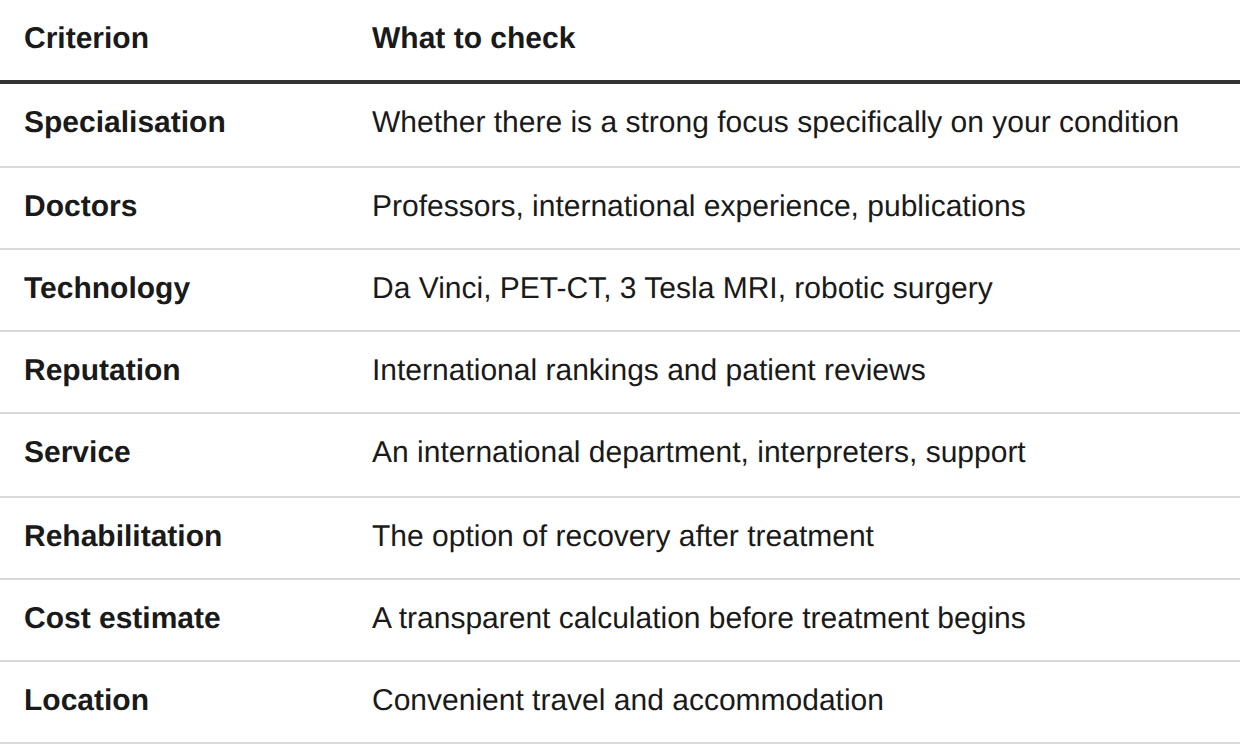
How to choose a clinic

Many patients make the mistake of being guided solely by a prestigious name or by price. In reality, what matters more is the combination of specialisation and the experience of a particular team of doctors.

No. 1. University Hospital Zurich — Switzerland’s leader

University Hospital Zurich is considered one of the flagships of Swiss medicine and regularly features in international rankings of the world’s best hospitals. It is one of the largest medical institutions in the country, with around 900 beds and almost 300,000 days of care a year.

The hospital employs around 2,500 researchers across a range of medical disciplines. It works closely with the University of Zurich and ETH to develop new treatments and medicines.

Its principal strengths:

  • oncology;
  • cardiac and cardiovascular surgery;
  • neurosurgery;
  • neurology;
  • transplantation medicine;
  • rare diseases;
  • microsurgery of the lymphatic system;
  • obstetrics and gynaecology;
  • urology with genetic diagnosis of prostate cancer.

USZ operates around the clock and is the only Swiss hospital to offer certain forms of therapy. A hallmark of the institution is the close collaboration between its doctors, researchers and the teaching staff of the medical university.

Who it suits

Patients with complex diagnoses or rare diseases, and those who need a second opinion or a multidisciplinary consultation.

No. 2. Privatklinik Bethanien — elite private medicine in Zurich

Bethanien is one of the most prestigious private clinics in Zurich. The institution has been operating for more than 110 years and sits on the Zürichberg hillside, overlooking Lake Zurich and the city. Since 2010 it has been part of Swiss Medical Network and a member of the Mayo Clinic Care Network. In October 2024 Bethanien merged with Klinik Pyramide am See, strengthening its surgical and aesthetic profile.

The clinic draws on around 390 accredited doctors. Its main areas of specialisation:

  • orthopaedic surgery;
  • gynaecology and obstetrics;
  • visceral surgery;
  • cardiology;
  • urology;
  • neurosurgery and spinal surgery;
  • thoracic surgery;
  • oncology;
  • gastroenterology;
  • and more than 13 further specialist centres.

What sets Bethanien apart is its personalised approach and access to a network of specialist consultants within a single institution. The clinic works extensively with international patients and offers a high standard of care coordination.

Who it suits

Those who prefer private clinics, an individual approach and comfort on a par with a five-star hotel.

No. 3. Clinique de Genolier — a flagship of premium medicine

Clinique de Genolier was founded in 1972 and is considered one of the largest private clinics in Switzerland. It stands on high ground overlooking Lake Geneva and the Alps. The clinic belongs to Swiss Medical Network — the country’s largest private medical network (21 clinics and more than 80 centres across all of its language regions) — and is a member of the Mayo Clinic Care Network.

The clinic has around 100 beds and works with 230 doctors and 340 staff. Its key areas:

  • oncology (with its own cancer centre);
  • cardiology;
  • orthopaedic and vascular surgery;
  • neurosurgery;
  • gastroenterology;
  • physiotherapy and rehabilitation;
  • specialist centres for diabetes, pain management and radiology.

Its chief advantage is the combination of high medical standards, advanced diagnostics and service on a par with a premium hotel.

Who it suits

Patients for whom comfort, privacy and comprehensive treatment in a single centre matter — particularly in oncological, cardiological and complex surgical cases.

No. 4. Ars Medica Clinic — the orthopaedic leader in Ticino

Ars Medica Clinic is located in Gravesano, 7 km north of Lugano, in the canton of Ticino. It is the official Reference Center in Ticino for orthopaedic surgery and musculoskeletal traumatology.

Its main areas:

  • spinal surgery (Centro Colonna Vertebrale);
  • sports medicine (Centro dello Sport);
  • orthopaedic surgery and joint replacement;
  • traumatology;
  • emergency orthopaedic care;
  • radiology;
  • physiotherapy and rehabilitation medicine;
  • pain management.

Professional athletes come here, as do patients who need a swift return to an active life. Particular attention is paid to post-operative rehabilitation.

Who it suits

Patients with joint and spinal conditions or sports injuries, as well as athletes recovering from injury.

No. 5. CALDA Clinic — a world centre for treating burnout and addiction

While most Swiss clinics are associated with surgery or diagnostics, CALDA occupies a unique niche — it is one of Europe’s best-known centres for the treatment of mental-health disorders and addiction.

What is treated here:

  • burnout and stress;
  • depression (including post-natal depression);
  • anxiety disorders and phobias;
  • eating disorders;
  • ADHD and obsessive-compulsive disorder;
  • post-traumatic conditions;
  • alcohol and drug dependence;
  • behavioural addictions.

Distinctive features of the model:

  • in-depth diagnostics at both the psychological and physical level, including genetic and orthomolecular analysis;
  • integrative treatment: modern psychiatry combined with acupuncture, art therapy, meditation and equine therapy;
  • a personal psychiatrist available around the clock (Russian-speaking specialists are available);
  • complete confidentiality — VIP transfer, direct access to the apartment from the garage, and minimal involvement of third parties;
  • a limited number of patients treated at any one time.

Who it suits

Business people, executives, public figures and patients who require absolute privacy and individual support.

No. 6. The Bad Ragaz wellness centre

Grand Resort Bad Ragaz is a luxury resort with an integrated Tamina Health Center that has been a place of healing since 1242. Today it is regarded as one of the leaders in:

  • preventive medicine and longevity programmes;
  • detox and weight-loss programmes;
  • check-up programmes (Health Check-up);
  • sports medicine (Swiss Olympic Medical Center);
  • recovery and wellness programmes.

What distinguishes the complex is the integration of medical procedures and recovery programmes with world-class resort facilities and thermal springs. Its dining has been awarded 6 Michelin stars.

Who it suits

Patients who are looking for preventive diagnostics, recovery programmes after physical strain, sports medicine and all-round wellness in a resort setting.

How to choose a clinic for a specific need

how to choose a clinic

Oncology

  • What matters: molecular tumour profiling, access to targeted therapy and immunotherapy, and a multidisciplinary tumour board for your type of cancer.
  • Technology to look for: PET-CT, the latest generation of linear accelerators, proton therapy (where relevant to the diagnosis) and full genetic profiling of the tumour.
  • Questions for the clinic: how many cases of your specific diagnosis are treated each year, how often the tumour board meets, and whether there is access to clinical trials.
  • Suitable clinics: University Hospital Zurich, Genolier, Bethanien.

Cardiology and cardiac surgery

  • What matters: the operator’s personal experience (the number of procedures performed has a direct bearing on risk), access to minimally invasive techniques, and hybrid operating theatres.
  • Technology to look for: transcatheter techniques (TAVI, MitraClip), Da Vinci robotic surgery and a hybrid operating theatre.
  • Questions for the clinic: how many such operations the surgeon has personally performed, what the mortality rate is for this type of procedure, and whether cardiac rehabilitation is provided on site.
  • Suitable clinics: University Hospital Zurich, Genolier, Bethanien.

Orthopaedics and sports medicine

  • What matters: the surgeon’s experience with the specific implant, the presence of a spine and sports-medicine centre, and a rehabilitation programme within the clinic or a partner centre.
  • Technology to look for: robotic joint replacement, navigation in spinal surgery, shockwave therapy and joint arthroscopy.
  • Questions for the clinic: which implants are used, whether they are included in the quotation, how many days of rehabilitation are involved, and whether the same team oversees it.
  • Suitable clinics: Ars Medica Clinic (Ticino), Bethanien (Zurich); for sports medicine, the Bad Ragaz wellness centre.

Rehabilitation

  • What matters: the focus of the rehabilitation (orthopaedic, neurological, cardiological or sports), the length of the programme, and the tools used to measure progress.
  • Technology to look for: hydrokinesitherapy, robotic rehabilitation for walking and for the arms, and aquatic training.
  • Questions for the clinic: how many sessions are planned each day, who looks after the patient (a single team or a rotating one), how progress is assessed, and whether the programme can be extended.
  • Suitable centres: Bad Ragaz (preventive and sports rehabilitation), Genolier (post-operative), and specialist rehabilitation clinics within partner networks.

Mental health, addiction and burnout

  • What matters: an individual approach (a limited number of patients treated at any one time), complete confidentiality, and the length of the programme and intensity of support.
  • Approaches to look for: integrative psychiatry (psychotherapy + biochemistry + complementary methods), a personal psychiatrist available around the clock, and orthomolecular diagnostics.
  • Questions for the clinic: how many patients are in the clinic at the same time, how privacy is ensured (a separate entrance, apartments), and whether Russian-speaking specialists are available.
  • Suitable clinic: CALDA Clinic.

Preventive medicine and check-ups

  • What matters: the format and scope of the programme (one to three days, and what is included) and the availability of specialist streams (longevity, detox, weight loss, sports medicine).
  • Technology to look for: 3 Tesla MRI, low-dose CT, an extended laboratory panel, microbiome tests, genetics and a cardiac stress test.
  • Questions for the clinic: what the basic package includes, how an individual programme is put together, and what form the final report and post-check-up support take.
  • Suitable clinics: Bad Ragaz, Genolier, University Hospital Zurich.

Gynaecology, fertility and childbirth

  • What matters: the presence of a neonatal intensive care unit, experience with IVF, and programmes for older expectant mothers.
  • Technology to look for: 4D ultrasound, pre-implantation genetic diagnosis, epidural anaesthesia on request, and operating theatres equipped for minimally invasive surgery.
  • Questions for the clinic: how many births and IVF cycles take place each year, what the complication statistics are, and whether psychological support is available.
  • Suitable clinics: University Hospital Zurich, Bethanien, Genolier.

Checklist: 10 questions to ask before choosing a clinic

Before a final decision is made, the following questions are well worth asking:

  1. How many similar cases are treated each year?
  2. Who will my treating doctor be?
  3. Will the professor be personally involved in the treatment?
  4. Is there an international department?
  5. What technology is used?
  6. What is included in the cost of treatment?
  7. Is there a rehabilitation programme?
  8. What outcomes are achieved for my condition?
  9. Is it possible to obtain a second opinion?
  10. Is Russian-speaking support available?

Common mistakes patients make

The main mistakes made when choosing a clinic in Switzerland:

  1. Choosing on price alone. A low price almost always means a pared-down package: no private room, no interpreter, no rehabilitation. Sometimes it also means a less experienced surgeon, or a clinic with no dedicated track record in your condition.
  2. Choosing on ranking alone. An institution in the world’s top 100 is not necessarily strong in the area you need: general rankings average performance across more than 30 specialities. What matters is the ranking within the specific field, not the overall one.
  3. Overlooking the individual doctor. Sometimes it is not the clinic but the professor or surgeon who proves decisive. It is worth finding out who is personally handling the case, how many similar operations they have performed, and what they have published on your condition.
  4. Declining a second opinion. In oncology, neurosurgery and cardiac surgery a second assessment often changes the plan: different priorities, a different approach, a different extent of surgery.
  5. Underestimating rehabilitation. After orthopaedic, neurosurgical and cardiac procedures the outcome depends heavily on recovery. Rehabilitation is often charged separately, so it is best budgeted for in advance.
  6. Sending medical records too late. Without discharge summaries, test results and scans, a clinic cannot provide a realistic quotation. The later the information is sent, the more surprises there tend to be after arrival.
  7. Travel insurance that does not cover planned procedures. A standard Schengen policy does not cover planned surgery, complications or an extended hospital stay. A separate medical policy is needed, with cover of at least €30,000 for emergency care and repatriation.
  8. Buying tickets before the appointment date is confirmed. Doctors’ schedules in Switzerland are booked well in advance, and fixed tickets often have to be changed at a loss.
  9. Having no follow-up plan for after the return home. Who will issue prescriptions at home, who will monitor test results and scans, and who will adjust the therapy — these are best agreed before arrival.
  10. Unclear terms for the return of the deposit. Swiss clinics usually require payment in advance. It is best clarified at the outset whether the difference is refunded if the final sum turns out to be lower than the quotation.
  11. Overlooking the accompanying person. The visa, insurance and accommodation for a companion are a separate cost. If a relative is travelling too, their documents and budget also need to be planned in advance.
  12. Hidden costs for implants and consumables. Depending on the clinic, these are either included in the package or listed as a separate line. An itemised quotation, broken down by item rather than a single overall figure, is well worth requesting.

How the exact cost of treatment is determined

Almost all the leading Swiss clinics work to a similar process:

  1. The patient sends their medical records.
  2. The doctors carry out a preliminary assessment of the case.
  3. An individual treatment plan is drawn up.
  4. The clinic prepares an itemised quotation.
  5. Once this is agreed, the arrangements for the trip begin.

It is worth bearing in mind that the final cost depends on the diagnosis, the length of the hospital stay, any additional investigations and whether rehabilitation is required.
How Treatment in Switzerland Is Organised: Step by Step

Arranging treatment in Switzerland looks simple at first glance: choose a clinic, book a doctor, buy a ticket and travel. In practice, a medical journey is made up of dozens of decisions — from translating documents and finding the right specialist to visa support, the cost estimate, transfers, hospital admission and follow-up care once you are back home.

This is why organising everything yourself often becomes a complex project. The patient needs to know which clinic is genuinely strong in their field, how to reach the right doctor, which documents to send and in which language, how to obtain a medical invitation, when to pay for treatment and what to do if the plan changes after the examinations.

Swiss medicine is highly systematic, and that system rewards precision. The international departments of clinics usually follow a clear sequence: first they review the medical file, then they prepare the doctor’s preliminary opinion, a treatment plan and an individual cost estimate. CorSwiss prepares the medical file, the individual cost estimate and the visa invitation for international patients, and works out the treatment plan, the coordination of appointments and the arrangement of rehabilitation.

Below is the step-by-step sequence by which treatment in Switzerland is usually organised: from the first enquiry to discharge and remote follow-up.

Step 1. Preparation and first contact

The first stage is gathering medical information, well before any tickets are chosen. The more precisely the patient describes the problem, the sooner the clinic can assess the case and propose a suitable specialist.

At this stage it is important to prepare:

  • hospital discharge summaries and outpatient reports;
  • laboratory results;
  • operation reports, if any;
  • MRI, CT, ultrasound, PET-CT and endoscopy reports;
  • the images themselves on a disc, USB stick or in a digital archive;
  • a list of current medications;
  • a brief description of complaints, symptoms and the purpose of the enquiry.

A common mistake is to send only an informal description: “my back hurts”, “I need heart surgery”, “a suspected tumour”. A clinic needs more than this. The doctor must see the medical history, the trend in test results, the imaging findings and any treatment already carried out.

Ideally, documents should be translated in advance into German, French, Italian or English. Switzerland has several national languages, and a clinic’s working language depends on the canton: German is most common in Zurich and Basel, French in Geneva and Lausanne, and Italian in Ticino. English is widely used in international departments, yet a translation may still be required for medical reports and visa documents.

The patient or a medical coordinator then sends the enquiry to the clinic. A good enquiry includes the diagnosis or presumed problem, the purpose of the trip, preferred dates, the patient’s age, the documents and the question for the doctor — diagnostics, a second opinion, surgery, rehabilitation or comprehensive treatment.

Step 2. Choosing the clinic and the doctor

Switzerland is strong in many fields: oncology, cardiology, orthopaedics, neurosurgery, rehabilitation, reproductive medicine, check-up programmes, childbirth and plastic surgery. The best clinic overall, however, is not always the best one for your particular case.

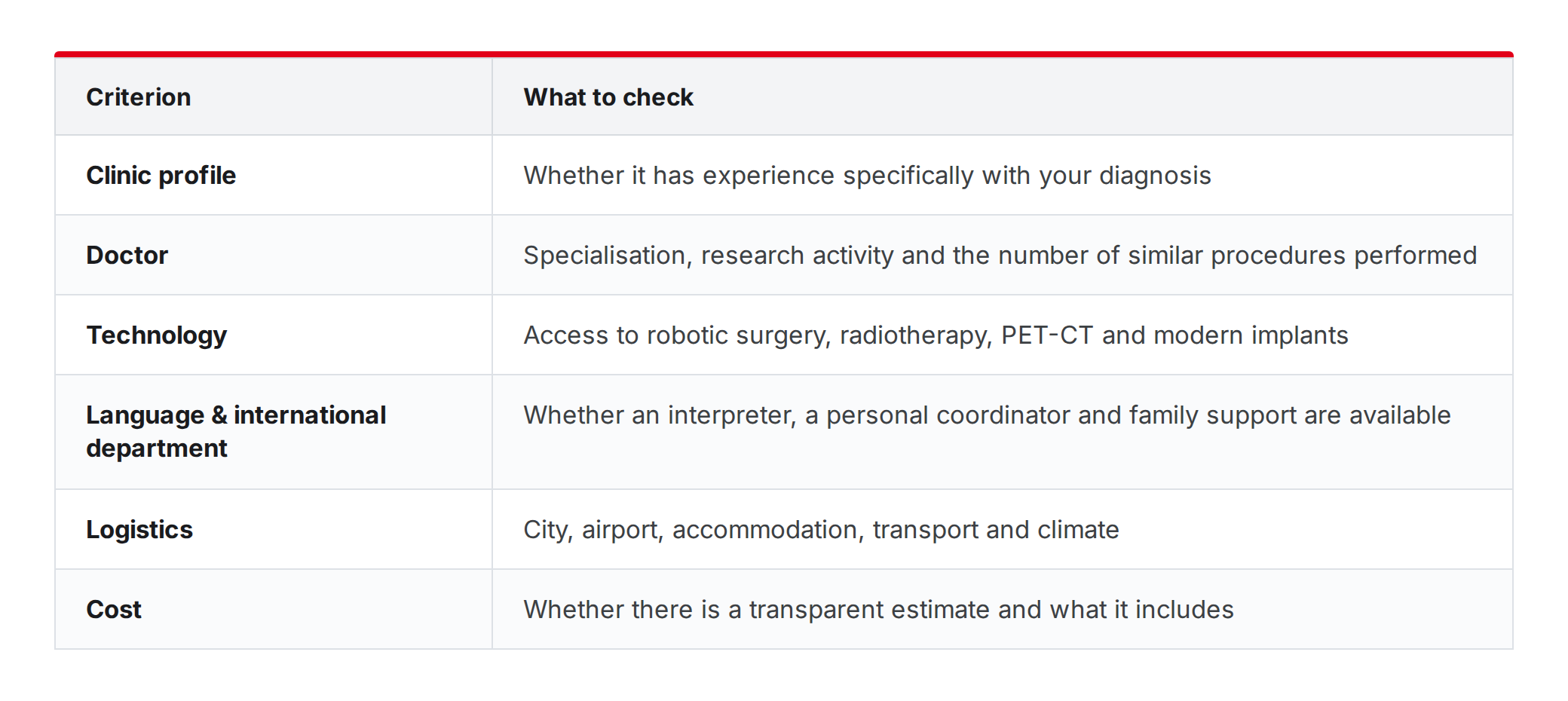
When choosing, it is worth considering:

Choosing the clinic and the doctor

A university hospital may be the best choice for a rare diagnosis or complex oncology. A private clinic suits planned surgery, rehabilitation, childbirth, orthopaedics or a check-up, where comfort, speed and personal support matter. Sometimes the ideal option is a combination: diagnostics at one centre, surgery with a specific surgeon and rehabilitation at a specialised clinic.

Step 3. Medical assessment and preliminary plan

Once the file is complete, the clinic passes it to the doctor or the specialist team. At this stage the specialist assesses whether there is enough information for a preliminary opinion. If data is limited, the patient may be asked for additional tests or invited to undergo diagnostics in Switzerland first.

In most Swiss clinics, the initial cost estimate is calculated by specialists on the basis of the documents and information the patient sends in advance. The more medical data provided before the trip, the more realistic the calculation. This matters: Swiss clinics prefer facts to “approximate promises”.

The medical assessment usually includes:

  • a preliminary medical opinion;
  • a recommendation on further diagnostics;
  • a treatment or surgical plan;
  • the estimated length of stay;
  • whether hospital admission is required;
  • the outlook for rehabilitation;
  • a preliminary cost.

For diagnostics, the plan can be ready quickly. For complex cases — for example oncology, repeat surgery, cardiac surgery or neurosurgery — preparation takes longer, as several specialists review the documents.

Step 4. Cost estimate and financial terms

After the medical assessment, the patient receives a cost estimate. Ideally, this is a structured document rather than a single figure: consultations, diagnostics, surgery, anaesthesia, room, meals, medication, doctors’ fees, rehabilitation, interpreter, transfers and accommodation for an accompanying person.

It is important to clarify in advance what is included and what is charged separately. Additional costs may arise, for example, for:

  • urgent tests and imaging;
  • biopsy and histology;
  • implants and consumables;
  • additional days in hospital;
  • medication after discharge;
  • rehabilitation;
  • accommodation for an accompanying person;
  • an interpreter outside the clinic.

In Swiss clinics, the full amount of the offer usually has to be paid no later than the day of arrival. A full or partial refund of the deposit is also common practice if the final invoice turns out lower than the preliminary amount.

This is standard practice: the clinic reserves the operating theatre, room, doctors and equipment, so advance payment is often required for planned treatment. The final amount may change, however, if the examinations show that the scope of treatment needs to be adjusted.

Step 5. Visa, invitation and travel documents

For short-term treatment, a Schengen type C visa is usually issued. If treatment or rehabilitation involves a longer stay, a national type D visa may be required. The exact type depends on the patient’s nationality, the length of treatment and the consulate’s requirements.

Official visa requirements are best checked on the website of the Swiss Federal Department of Foreign Affairs or with the consulate where the application is submitted. For a medical visa, the patient usually needs:

  • a completed visa application form;
  • a passport;
  • photographs;
  • travel medical insurance valid for the Schengen Area;
  • an invitation from the clinic or hospital;
  • confirmation of payment or deposit;
  • proof of financial means;
  • tickets or a transport reservation;
  • proof of accommodation.

The Swiss embassy’s visa checklist for medical treatment specifically states that an invitation from the clinic or hospital, signed by a doctor and confirming the deposit for medical services, is required. The insurance must also be valid for the entire stay and cover at least EUR 30,000 for emergency care, hospitalisation and repatriation.

An accompanying person also needs documents: a visa, insurance, proof of accommodation and a letter from the clinic if the trip involves accompanying the patient.

Step 6. Organising logistics

Once the treatment plan, cost estimate and visa matters are agreed, the practical part begins: dates, flights, transfers, accommodation, interpreter and the schedule of appointments.

Many international departments help with transfers, hotels and personal support. Additional services may include medical transport, hotel and apartment bookings for relatives, taxi or limousine service, and written and interpreting services.

Logistics matter especially for serious conditions. After surgery, a patient may need to avoid sitting for long periods, lifting luggage, moving about unaided or changing transport. This is why both the arrival and the return journey are planned in advance: whether a wheelchair is needed at the airport, a medical transfer, a nurse escort, an extra seat on the plane, or approval to carry medication.

Step 7. Arrival, consultation and further diagnostics

After arriving, the patient attends a first in-person consultation. Even if the documents were reviewed in advance, the Swiss doctor needs to confirm the diagnosis in person. This stage includes an examination, a review of the medical history, a discussion of complaints and the planning of further investigations.

Further diagnostics may include:

  • laboratory tests;
  • MRI, CT, ultrasound, PET-CT;
  • consultations with specialists in related fields;
  • a cardiac assessment before anaesthesia;
  • an anaesthetic consultation;
  • a repeat biopsy or a review of histology.

For check-up programmes, it is usually recommended to book at least two weeks ahead so that every stage can be arranged around the patient’s specific needs. In Swiss clinics, a check-up is typically built on three blocks: specialist consultations, laboratory tests and instrumental diagnostics; the programme is generally completed within 1–3 days.

Step 8. Treatment and hospital stay

Once the diagnosis is confirmed, treatment begins. This may be surgery, drug therapy, radiotherapy, an image-guided procedure, an endoscopic intervention or a rehabilitation programme.

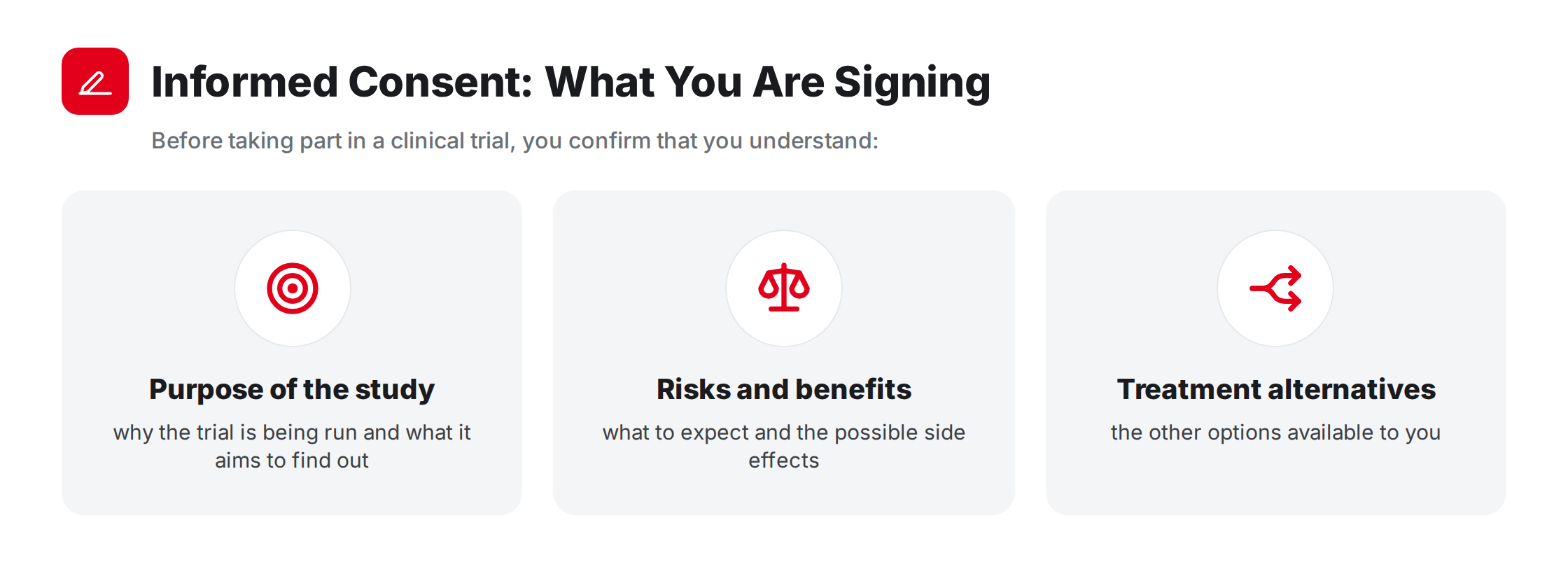
Before surgery, the patient usually has a consultation with the anaesthetist and signs an informed consent form. Private clinics explain in detail what will happen before, during and after the procedure. As a rule, on admission the patient receives documents stating the date and time of the anaesthetic consultation or admission to the clinic, together with an anaesthesia questionnaire.

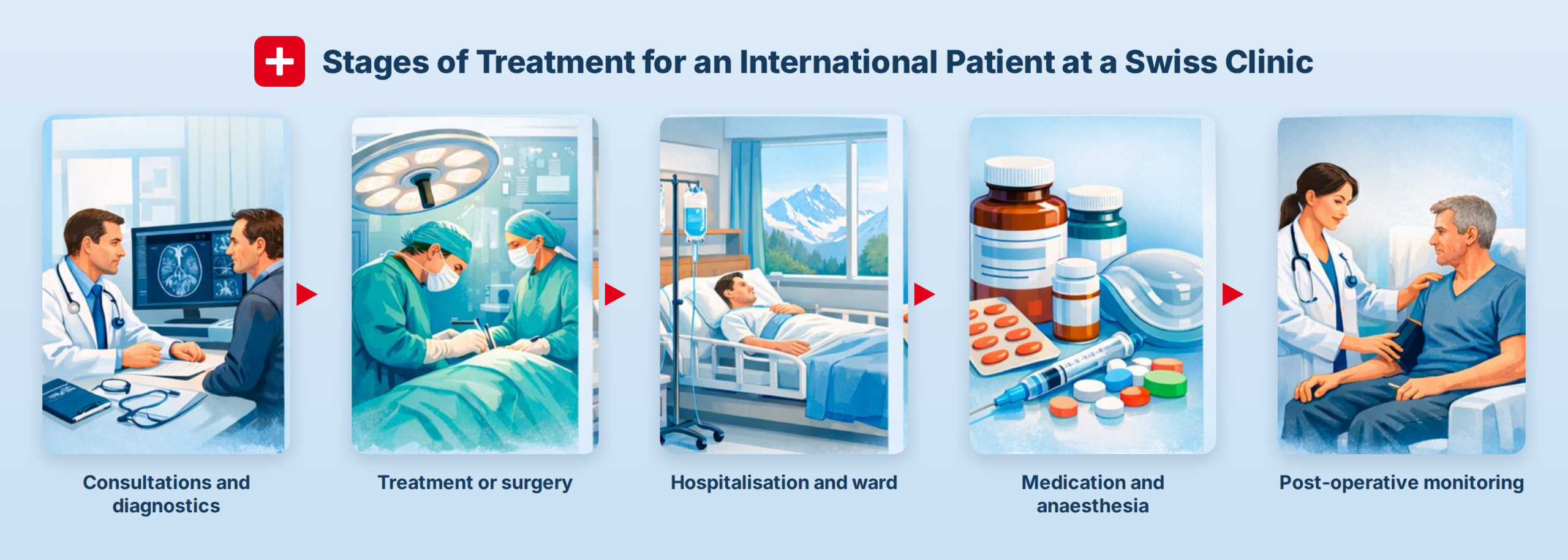
During the hospital stay, the patient is monitored regularly. Depending on the procedure, the plan includes dressing changes, follow-up tests, pain management, physiotherapy, doctor’s consultations and preparation for discharge. Switzerland places great emphasis on post-operative recovery as well as on the operation itself: early mobilisation, prevention of complications, pain control and clear recommendations.

Step 9. Discharge, rehabilitation and remote follow-up

Treatment continues beyond the day of discharge. The patient receives a medical report, a list of prescriptions and recommendations on lifestyle, restrictions, flying, physical activity and further follow-up. If rehabilitation is needed, it can be arranged at a specialised Swiss centre or after returning home.

After discharge, it is important to receive:

  • the doctor’s final report;
  • the results of all examinations;
  • the operation report;
  • recommendations on medication;
  • a rehabilitation plan;
  • the schedule of follow-up examinations;
  • contact details for remote communication;
  • documents for the insurance company, if required.

Many questions after returning home can be handled online: sending test results, adjusting therapy, discussing recovery or requesting a second opinion. This is especially important for oncology, cardiology, orthopaedic and neurology patients.

Ways to organise treatment

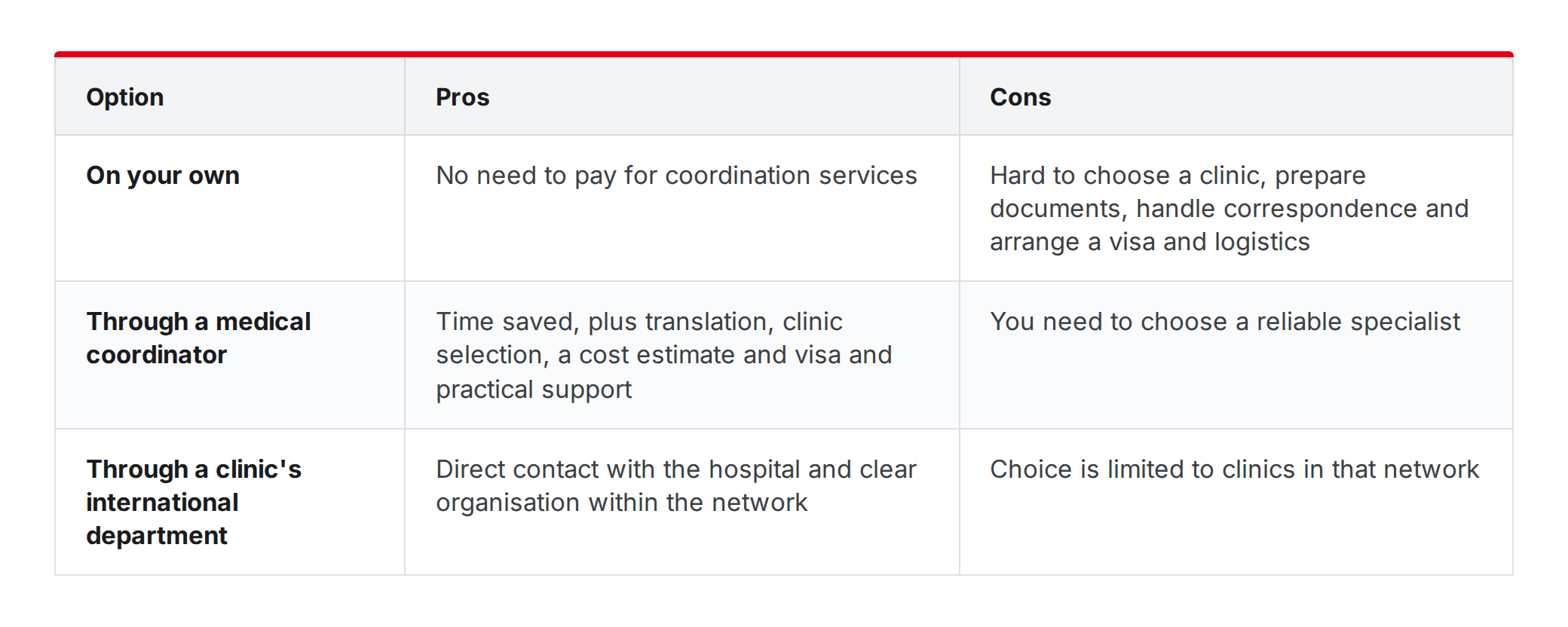
There are three main scenarios:

Ways to organise treatment

Organising everything yourself suits patients who speak the language well, understand the healthcare system and are prepared to handle the correspondence and compare clinics. A coordinator is valuable when the case is complex, when time is short, or when document translation, several opinions or support for the patient’s family are needed.

Common mistakes

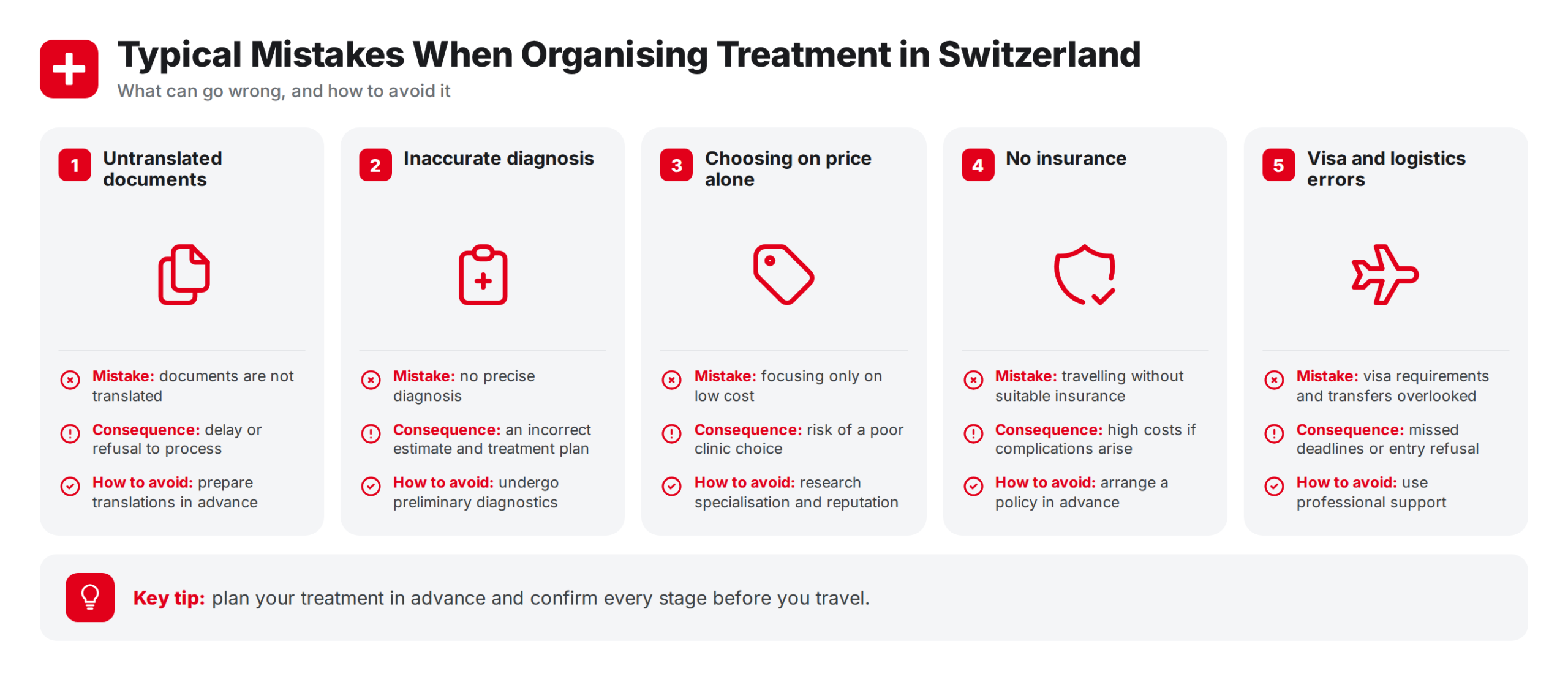
Mistakes when organising treatment in Switzerland

The most frequent mistakes when organising treatment:

  1. Sending an incomplete set of documents and receiving an inaccurate cost estimate.
  2. Choosing a clinic on price alone rather than on the doctor’s experience.
  3. Failing to check whether medication, implants and rehabilitation are included in the cost.
  4. Taking out standard travel insurance that does not cover medical risks.
  5. Buying tickets before the appointment date is confirmed.
  6. Leaving the accompanying person unprepared for visa and living costs.
  7. Returning home without a follow-up plan.

Careful organisation reduces the risk of unpleasant surprises: the patient knows the route, cost, timeline, documents and the role of everyone involved from the outset.

FAQ

How long does it take to organise treatment?

Usually two to four weeks, provided the documents are ready. Urgent cases can be reviewed faster, but visa processing times and the doctor’s availability still need to be taken into account.

Do I need to speak the language?

Not necessarily. Many clinics work with international patients and interpreters. Medical documents, however, are best prepared in English, German, French or Italian.

Can I come with an accompanying person?

Yes. In Swiss clinics, an accompanying person can usually stay in the patient’s room or in a separate room or suite, where available. Terms and costs should be confirmed in advance.

When do I need to pay?

For planned treatment, advance payment or payment before the day of arrival is often required. After the final invoice, either an additional payment or a partial refund of the deposit may follow, if actual costs turned out lower.

Does insurance cover treatment?

Compulsory health insurance applies to residents of Switzerland. The Swiss Federal Office of Public Health states that anyone who takes up residence in the country must take out insurance within three months. For medical travellers, planned treatment is more often paid privately or through an international insurance company.

The Real Cost of Treatment at Swiss Clinics: What Patients Actually Pay For

Treatment in Switzerland is often surrounded by myths. The main one goes like this: only oligarchs, celebrities and patients with large budgets go there, and prices are supposedly higher than in the USA. In practice, the picture is more nuanced. Switzerland does belong to the premium medical segment, but that does not always mean “out of reach”. According to medical coordinators, prices at Swiss clinics are often comparable to those in Germany and France, and some diagnostic programmes cost less than patients expect, given the country’s reputation as the most expensive in Europe.

Switzerland is predictable premium medicine rather than a budget destination. The patient pays for a whole system rather than a single operation or consultation: precise diagnostics, a high level of physician accountability, well-organised processes, short waiting times, privacy, service and access to practising professors. As sources online put it, the advantages of preventive check-ups include “fast appointments and short waiting times”, individual programmes, transfers, an interpreter and accommodation arranged through a personal case manager.

What determines the cost of treatment

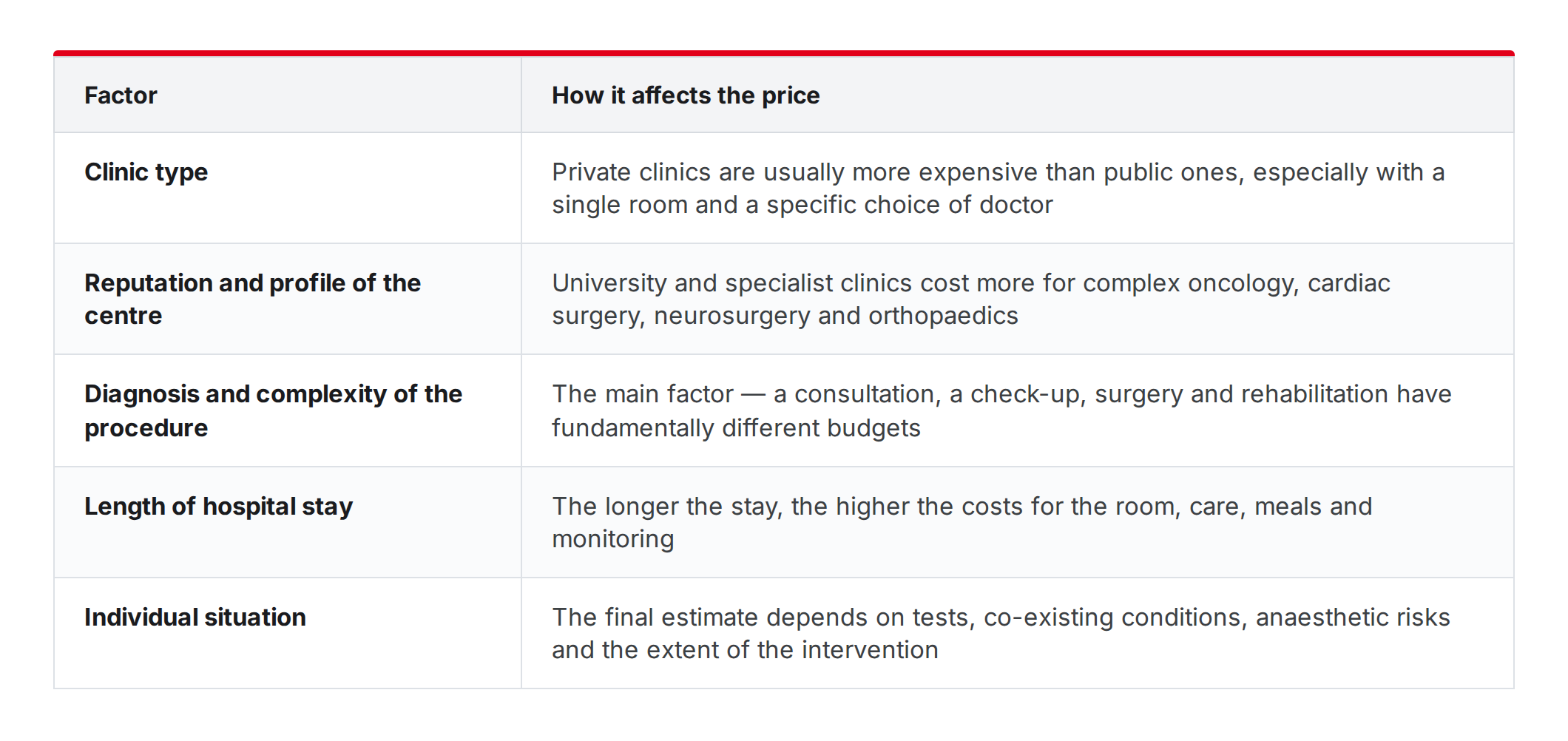
The cost of treatment in Switzerland cannot be fairly assessed with a single average figure. Several factors influence the price.

Factors that influence the cost of treatment

A preliminary price is almost always an estimate. Swiss Medical Network states clearly that the initial cost estimate is calculated on the basis of the patient’s medical records, and that additional tests or an extended stay may change the final cost.

Diagnostics and consultations: real price ranges

For a patient who is still choosing a country for treatment, diagnostics are the clearest entry point into Swiss medicine. An individual medical examination with a consultation with an internist, abdominal ultrasound, blood and urine tests, an ECG and a written report starts at around CHF 3,400.

Organ-specific programmes vary in price:

  • dermatology — from CHF 300
  • urology — from CHF 800
  • ophthalmology — from CHF 800
  • gynaecology — from CHF 1,200
  • cardiology — from CHF 2,900
  • gastroenterology — from CHF 2,500 for a colonoscopy and consultation, or around CHF 4,800 for an extended examination

The medical tourism market also offers other reference points for comprehensive programmes:

  • standard check-up — around CHF 2,800
  • men’s diagnostics — around CHF 2,000
  • women’s diagnostics — around CHF 3,000
  • examination for cardiovascular disease — around CHF 5,000
  • full gastrointestinal (GI) diagnostics — around CHF 3,000
  • extended cardiac examination with consultation and therapy — around CHF 7,000
  • CT with report — around CHF 7,000
  • urological or gynaecological examination — CHF 1,500–2,000
  • mammography — CHF 1,500–2,000
  • whole-body ultrasound of veins and arteries — around CHF 2,900
  • gastroscopy with biopsy, colonoscopy with biopsy, ultrasound of the organs — around CHF 3,900

The spread is easy to explain: a check-up can mean anything from a basic set of tests to an intensive programme with MRI, CT, genetics, endoscopy and consultations with several specialists. Prices are given in Swiss francs.

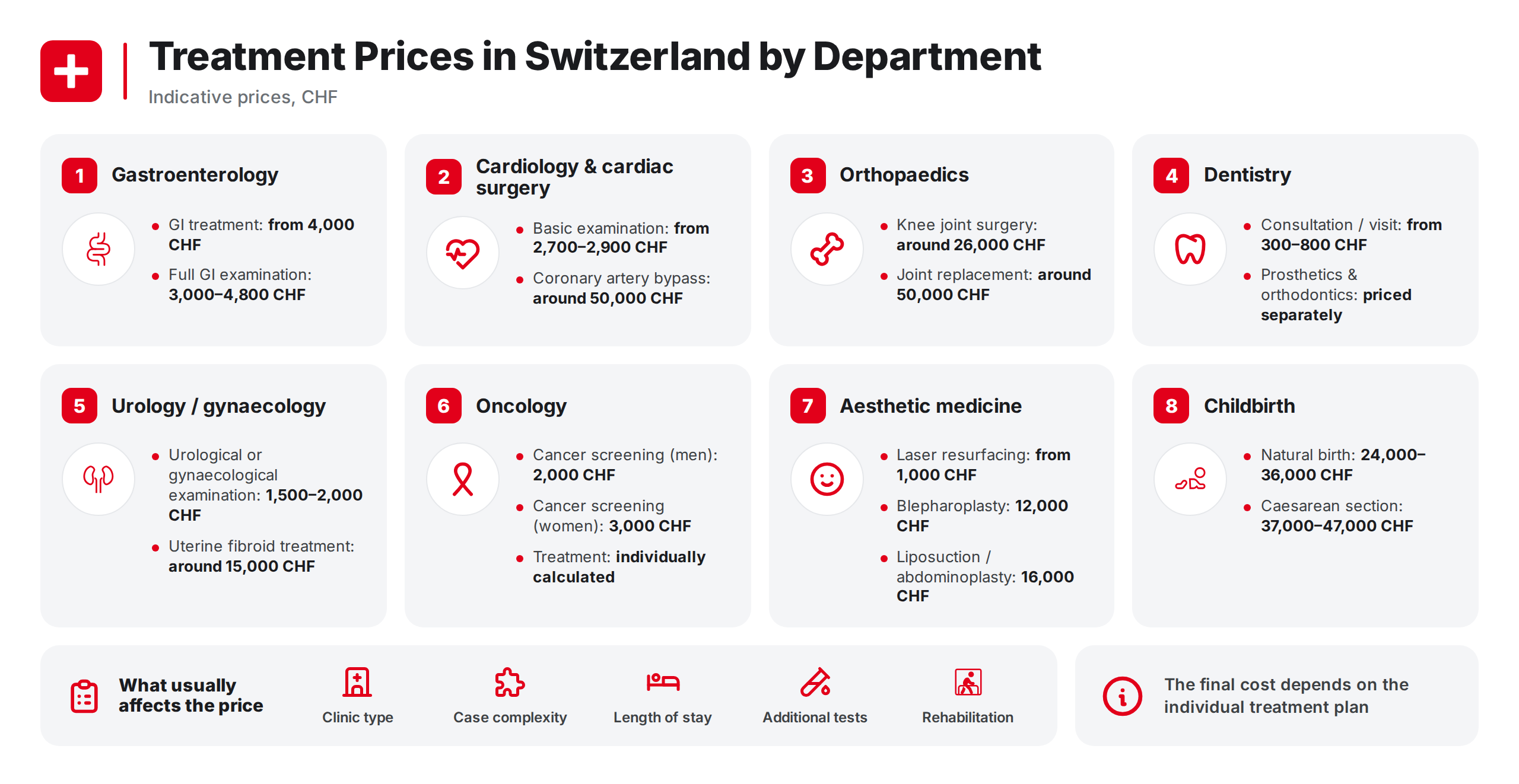
Treatment prices by specialty

Treatment prices in Switzerland by specialty

Gastroenterology

Basic treatment of digestive disorders is estimated at around CHF 4,000. Extended GI diagnostics at Swiss clinics can cost around CHF 4,800 if they include gastroscopy, colonoscopy, ultrasound and laboratory tests.

Cardiology and cardiac surgery

Indicative prices in this specialty:

  • cardiology check-up — from CHF 2,900
  • comprehensive cardiac diagnostics — from CHF 3,500
  • stenting — from CHF 15,000
  • coronary artery bypass grafting — from CHF 45,000–50,000

This is already the realm of complex medicine, where the price depends on the surgical approach, implants, the length of intensive-care monitoring and rehabilitation.

Orthopaedics

Orthopaedics is one of the most sought-after specialties. Indicative prices for operations:

  • knee surgery — around CHF 26,000
  • knee or hip joint replacement — around CHF 50,000

Such packages often include hospitalisation, the room, meals, the operating theatre, anaesthesia, the surgeon’s and assistant’s fees, and physiotherapy. This is worth clarifying: one clinic includes the implant in the package, while another lists it as a separate item.

Dentistry

Dentistry in Switzerland is expensive even by European standards. A visit to a general dentist costs from CHF 800, excluding prosthetics and orthodontics. Many clinics give a gentler reference point for a preventive dental examination — from CHF 300. The difference comes down to scope: an examination, X-rays, restorative treatment, implantology and aesthetic dentistry are all different budgets.

Urology, gynaecology, oncology

Reference prices for urology and gynaecology:

  • urological examination — from CHF 800
  • gynaecological examination — from CHF 1,200
  • ultrasound treatment of uterine fibroids — around CHF 15,000
  • robotic prostatectomy — CHF 40,000–50,000

Oncology almost never has an honest “average price”: the cost depends on the type of tumour, its stage, molecular diagnostics, surgery, radiotherapy, targeted drugs, immunotherapy and the length of follow-up. In practice, a cost estimate may start in the tens of thousands of francs and rise considerably with complex protocols.

Aesthetic medicine

Aesthetic operations are paid for separately and are usually not covered by basic insurance. Reference prices for the main procedures:

  • laser resurfacing — from CHF 1,000
  • blepharoplasty — around CHF 12,000
  • liposuction — around CHF 16,000
  • abdominoplasty — around CHF 16,000
  • full facelift — around CHF 25,000

Childbirth

Childbirth is one of the best-known premium packages. Reference prices at Swiss clinics:

  • natural birth — from CHF 20,000 to CHF 36,000
  • caesarean section — from CHF 25,000 to CHF 47,000

The package usually includes doctors’ fees, the stay at the clinic, medication, procedures and initial care of the newborn, but accommodation before the birth, the hotel, transfers and additional examinations need to be checked separately.

Hidden and additional costs

The patient’s main mistake is to compare only the price of the operation. Additional costs can change the budget noticeably:

  • medication and consumables, if they are not included in the package
  • additional tests, MRI, CT, biopsies, consultations with related specialists
  • an extended hospital stay
  • accommodation after discharge
  • transfers, flights, an interpreter
  • meals and accommodation for an accompanying person
  • travel insurance
  • rehabilitation after surgery

Swiss Medical Network states plainly that if additional tests or an extended stay are needed during treatment, the changes are agreed with the patient and charged separately. So the right question to ask a clinic is “What is included in the price, and what is charged separately?” rather than “How much does the operation cost?”

Comparison with other countries

Switzerland is more expensive than the average European destination, but not always more expensive than the USA. According to OECD data for 2024, the USA spent more than USD 14,880 PPP per person on healthcare, while Switzerland, Norway and Germany were in the range of roughly USD 9,300–10,000 PPP. This is not a direct price list for operations, but it is a good macro indicator: American medicine remains, on average, the most expensive among developed countries.

The differences with Germany are smaller. Medical coordinators state plainly that prices in Switzerland do not always differ much from those in Germany or France. Israel, Turkey, the Czech Republic and South Korea are often cheaper, but any comparison should take into account access to a specific doctor, technology, timelines, safety and post-operative support as well as price.

Health insurance for foreigners

For Swiss residents the rules are clear: everyone who settles in the country must take out basic health insurance within three months. The Swiss Federal Office of Public Health states that the standard deductible is CHF 300 per year, and the maximum annual co-payment for an adult patient after the deductible is CHF 700. The average monthly premium for compulsory insurance in 2026 is CHF 393.30.

For tourists and patients coming for planned treatment, the situation is different: ordinary travel insurance does not always cover a planned operation. You need a policy with clear terms for emergency care, complications, hospitalisation, repatriation and assistance. Basic Swiss insurance for residents covers a wide range of medical services, but it is not a universal “pays for everything” solution: cosmetic procedures and routine dentistry are, as a rule, not included.

How to get an accurate cost

The process should look like this:

  1. Gather your medical records: discharge summaries, imaging, test results, reports.
  2. Send them to the clinic’s international department or to a medical coordinator.
  3. Receive a preliminary treatment programme.
  4. Request a detailed cost estimate: doctor, room, operation, anaesthesia, implants, medication, rehabilitation, interpreter, transfers.
  5. Separately clarify the terms for refunding the deposit if the actual amount turns out to be lower.
  6. Ask what happens in the event of complications or an extended stay.

A good cost estimate should be transparent before treatment begins. If a clinic or intermediary gives only a single total figure without a breakdown, the risk of additional costs is higher.

The best clinics in Switzerland

Clinics in Switzerland

Switzerland is rightly regarded as one of the best countries in the world for medicine. Below is an indicative list of leading clinics and centres, with a brief description of each one’s profile.

  • Clinique Nescens — regenerative medicine and cellular rejuvenation using the patient’s own stem cells, aesthetic medicine and longevity programmes.
  • University Hospital Zurich (USZ) — a large public multidisciplinary institution that brings together 43 departments and covers practically every field of medicine (from primary care to high-tech cases), and conducts research.
  • CALDA Clinic — a premium institution specialising in the treatment and in-depth diagnosis of mental health disorders: trauma, addiction, depression, personality disorders; it combines modern psychiatry with integrative methods (Ayurveda, acupuncture, art therapy and equine therapy).
  • The Gentlemen’s Clinic — a men’s clinic for cosmetic and aesthetic medicine: plastic surgery, minimally invasive procedures, dermatology, trichology (hair restoration) and lifestyle coaching.
  • Paracelsus Recovery — treatment of addictions (alcohol, drugs, gambling), eating disorders and behavioural disorders with an individual therapeutic programme.
  • Hôpital de la Providence — orthopaedics and traumatology (the leading department in the Neuchâtel region), ophthalmology and one of the largest haemodialysis centres in Switzerland.
  • Clinique des Eaux-Vives — a multidisciplinary medical, surgical and oncology centre in Geneva: orthopaedics and traumatology, paediatrics, pulmonology, angiology, radiology, haematology; radiotherapy, chemotherapy, immunotherapy and hormone therapy for cancer.
  • Professor Sailer’s Clinic — a leading centre for maxillofacial and reconstructive surgery: aesthetic surgery, dentistry and implantology, facial feminisation, and treatment of snoring and sleep apnoea.
  • Privatklinik Obach — a private surgical clinic founded in 1922; orthopaedics, traumatology, shoulder surgery, general and visceral (abdominal) surgery, gynaecology, urology, plastic surgery, ophthalmology; more than 4,000 operations a year.
  • Klinik Lindberg — a multidisciplinary institution with 95 doctors: general, visceral and neurosurgery, cardiology, oncology and haematology, orthopaedics and physiotherapy, comprehensive obesity therapy, traditional Chinese medicine.

This is a useful guide, but it does not replace an individual choice. The best clinic is not necessarily the most expensive or the best known. In oncology, the tumour profile matters; in orthopaedics, the surgeon’s experience with a specific type of implant; in cardiology, access to the right technology; in rehabilitation, the team and the length of the programme. As a coordinator, CorSwiss helps select the most suitable medical institution for each patient’s needs and arranges support at every stage.

The real cost of treatment in Switzerland is higher than the European average, but the myth of “medicine only for billionaires” is exaggerated. Basic diagnostics can cost a few thousand francs, complex operations tens of thousands, childbirth and orthopaedics from CHF 20,000 to CHF 50,000 and more, and oncology is calculated individually.

Switzerland’s main value lies in predictability, quality, service, precise diagnostics and accountability. A patient with a budget for the best private clinics in Moscow can often genuinely consider Switzerland as a realistic option, especially if they obtain a detailed cost estimate in advance.

Our key advice: look beyond price and rankings. Compare what is included in the package, the doctor’s experience, the treatment technology, the hospitalisation conditions and the rules for paying additional costs. In Swiss medicine, what you are really paying for is the certainty that the entire patient journey has been thought through in advance, as well as the procedure itself.

Switzerland’s Leading Doctors: Who Patients Travel to See from Around the World

Swiss medicine is associated with precision, advanced technology and a personal approach to every patient. Yet the reputation of its clinics rests on more than buildings, equipment and service. The system’s greatest asset is its doctors: professors at university hospitals, highly specialised consultants at private clinics, surgeons with international practices, and researchers who treat patients while helping to develop new therapies.

Switzerland has no single official list of the best doctors. There are professional registers, university appointments, scientific publications, clinical experience, membership of specialist societies, recognition among peers and patient feedback. The right question, therefore, is “which specialist is best suited to my diagnosis?” rather than “who is the most famous doctor?”.

Swiss medicine: why the standard of doctors is so high

According to FMH, the Swiss Medical Association, 42,602 doctors were working in the country in 2024. Physician density stood at 4.1 full-time equivalents per 1,000 inhabitants. This is comparable with neighbouring European countries, but what matters more is this: a large proportion of specialists pass through a rigorous system of training, specialisation and continuing education.

Switzerland regulates the profession through both state and professional mechanisms. In MedReg, the federal register of medical professions, you can verify a doctor’s diploma, specialisation, languages and licence to practise independently. For patients this is an important safeguard: a doctor should be an officially registered specialist, and reputation alone is not enough.

Continuing education is another element of quality. Swiss medical societies state that Continuous Medical Education (CME) is mandatory for doctors holding a federal or recognised postgraduate title for as long as they practise. In a patient’s terms, this means that a good doctor keeps learning long after university and regularly confirms their competence.

“A doctor in Switzerland is a clinician and, at the same time, part of a system of quality control: registration, specialisation, ongoing training and work within a professional community.”

What makes a leading doctor in Switzerland

The profile of a leading specialist is usually built on several characteristics:

  • relevant education and a recognised specialisation;
  • 15–30 years of practice in a specific field;
  • work at a university hospital or a strong private centre;
  • participation in tumour boards and international societies;
  • scientific publications and conferences;
  • experience with complex operations or rare cases;
  • command of several languages;
  • the ability to explain a diagnosis and the treatment options to the patient.

For an international patient, two factors matter most: narrow specialisation and communication. A doctor may be a brilliant surgeon and still be the wrong choice for a particular case if their experience lies with a different condition. “Orthopaedic surgeon”, for example, is too broad a term: one specialist focuses on the shoulder, another on knee replacement, a third on sports injuries and a fourth on the spine.

Professors and clinicians: what is the difference

Treatment in Switzerland

In Swiss medicine you will often see the titles Prof. Dr. med., PD Dr. med. and Dr. med. They are important, but they should not be the only criterion for your choice.

A professor usually combines clinical practice, teaching and research. Such a doctor is especially valuable for complex diagnoses, when access to university expertise, a multidisciplinary tumour board and current protocols is needed. For a planned operation, however, the number of such procedures the surgeon has performed in recent years can matter more than a professorial title.

Good medical matching therefore always looks at the whole combination: doctor + diagnosis + clinic + technology + team.

Examples of renowned specialists by field

What follows is a set of reference points rather than an “absolute ranking”: doctors and professors who represent different facets of the Swiss school of medicine.

Prof. Boris Tutschek – prenatal diagnosis and maternal-fetal medicine

Professor Boris Tutschek specialises in prenatal diagnosis, maternal-fetal medicine and the management of high-risk pregnancies. For more than 20 years he has performed expert ultrasound examinations and handled complex obstetric cases. He is one of Europe’s leading specialists in his field and works at Privatklinik Bethanien in Zurich.

Dr. Jörg Obwegeser – specialist in operative gynaecology and obstetrics

Dr. Jörg Obwegeser is a leading specialist in operative gynaecology and obstetrics with more than 30 years of experience, focusing on the diagnosis and treatment of women’s diseases. In his practice he uses modern surgical technologies and an individual approach to every patient.

Dr. Walter Weder – thoracic surgery

Professor Walter Weder specialises in thoracic surgery and the treatment of diseases of the lungs and chest organs. He is known for the high level of his surgical expertise and his many years of work at leading Swiss medical centres. His professional achievements have made his name known far beyond Switzerland.

Prof. Patrick Imesch – gynaecological oncology

Dr. Patrick Imesch works in gynaecological oncology and the surgical treatment of diseases of the female reproductive system. He provides comprehensive diagnosis and treatment of cancer, using modern therapies and minimally invasive techniques. He places particular emphasis on personalised care for his patients.

Dr. Michael Fischer – specialist in neurostimulation

Dr. Michael Fischer is a leading specialist in neurostimulation with more than 20 years of experience, applying advanced methods to treat psychiatric and neurological disorders. In his practice he uses modern methods to restore function and helps patients return to an active life.

Prof. Claudia Kell – gynaecology

Dr. Claudia Kell focuses on women’s health and on the prevention and treatment of gynaecological conditions. She advises patients on reproductive medicine and modern treatment methods. Her professional experience and attentive approach have earned her the trust of patients from many countries.

Prof. Lea Köchli – specialist in gynaecology and obstetrics

Dr. Lea Köchli is a specialist in gynaecology and obstetrics with more than 15 years of experience, offering professional care in all areas of women’s health. In her work she places the emphasis on precise diagnosis and on choosing the optimal treatment strategy.

Prof. Monika Jermann – oncology and haematology

Prof. Monika Jermann is a leading specialist in medical oncology and haematology with more than 20 years of experience, offering advanced treatments for cancer and blood disorders. Her extensive practical experience enables her to work effectively on complex oncological and haematological cases.

In addition to the specialists listed here, CorSwiss works with other highly qualified doctors across a range of medical fields. You can find all our specialists, their experience and areas of expertise in the Doctors section.

Historical figures: why they are worth remembering

The Swiss medical tradition has taken shape over centuries. Among the historical names most often mentioned is Paracelsus, a 16th-century physician and thinker who influenced the development of toxicology and pharmacology. Carl Gustav Jung became one of the key figures of 20th-century psychiatry and psychology. These names have no bearing on choosing a doctor today, but they illustrate the cultural background: in Switzerland, medicine, science and an individual approach to the person have long been closely linked.

Where the leading doctors work

Strong specialists are most often found in three types of institution.

  1. University hospitals: University Hospital Zurich, CHUV Lausanne, Universitätsspital Basel, HUG Geneva. Their strengths are complex cases, oncology, transplant medicine, neurosurgery, cardiology and rare diseases.
  2. Private clinics: Swiss Medical Network, Clinique Générale-Beaulieu, Privatklinik Bethanien. Here patients enjoy a higher level of service, flexible scheduling, individual arrangements and access to specialists in private practice.
  3. Rehabilitation and specialist centres: Davos, Valmont, cereneo, and clinics for neurological and pulmonary rehabilitation. Here the whole team matters alongside the doctors: physiotherapists, neuropsychologists, speech therapists and rehabilitation specialists.

How to find the right doctor

In practice, the process looks like this:

  1. Establish the exact diagnosis or medical question.
  2. Gather medical reports, imaging, test results and your treatment history.
  3. Choose 2–3 clinics that are strong in the relevant field.
  4. Check the doctor in MedReg and on the clinic’s official website.
  5. Review their specialisation, publications and surgical experience.
  6. Request an online consultation or a second opinion.
  7. Obtain a treatment plan and a detailed cost estimate.
  8. Compare the doctor, technology, timing and rehabilitation as well as the price.

Common mistakes when choosing a doctor

Patients often go wrong in four areas.

  1. The first mistake is choosing by a big name. A renowned professor may not be the best option if their field does not match the diagnosis.
  2. The second is relying on aggregators without checking official sources. Lists of “top doctors” are a useful starting point, but the information should be verified against the clinic’s website, MedReg and professional societies.
  3. The third is failing to ask who exactly will perform the operation. It is important to know in advance whether the lead doctor will operate personally, assist or only advise.
  4. The fourth is underestimating the team. In complex oncology, cardiac surgery, neurology and rehabilitation, the outcome depends on the tumour board and the quality of follow-up care as much as on any single doctor.

Switzerland’s leading doctors are specialists who have come through a rigorous system of education, work in a transparent professional environment, continually develop their skills and often combine practice with research.

The guiding principle of the choice is to look for the doctor best suited to the specific diagnosis rather than the most famous one. Switzerland’s particular strength is personalised medicine: the right clinic, the right specialist, precise diagnostics, a clear treatment plan and a team approach. This is what turns a medical journey into a predictable path rather than a guess based on a ranking.

Frequently asked questions

Are there doctors in Switzerland who speak my language?

Yes, although patients are more often provided with a medical interpreter. It is more reliable to choose a doctor by specialisation and to resolve the language question through the clinic’s international department.

Can I get a second opinion online?

Yes. Many clinics review documents remotely and give a preliminary opinion, provided the medical file is sufficiently complete.

How can I tell whether a doctor is truly qualified?

Check MedReg, the clinic’s official page, the FMH specialist title, publications, experience with the specific diagnosis and membership of specialist societies.

Is a professor always better than a regular doctor?

Not always. A professor is important for complex and rare cases. For a standard planned operation, the surgeon’s practical experience with the specific technique may be the decisive factor.

Which Countries Most Often Choose Switzerland for Treatment, and Why

For many years Switzerland has remained one of the world’s centres of medical tourism. Despite the high cost of services, patients from many countries continue to choose Swiss clinics for diagnostics, complex treatment and rehabilitation. The reputation of Swiss medicine has been built over decades: it combines strict quality standards, innovative technology and an individual approach to every patient.

Demand for treatment in Switzerland has grown particularly in recent years. Patients increasingly look for the most precise diagnostics, a high level of safety and comfort during treatment, in addition to medical care as such. This is why the country consistently ranks among the most sought-after destinations in international medical tourism.

What sets Swiss medicine apart

One of the main reasons for the popularity of Swiss medicine is its high standard of treatment and diagnostics. Clinics pay close attention to the quality of medical protocols, staff qualifications and patient safety. Many medical centres hold international accreditation and work with leading European research institutes.

Swiss clinics are quick to adopt modern technologies: robotic surgery, personalised diagnostics, genetic testing and minimally invasive treatment. The equipment of medical centres also plays an important role: it is updated regularly, and many techniques appear here earlier than in other countries.

The individual approach deserves special mention. A patient is usually assigned a team of specialists from different fields who jointly develop the diagnostic and treatment programme. This interdisciplinary format helps assess the person’s condition more precisely and select the optimal treatment.

Which countries most often choose Switzerland for treatment

Patients from all over the world show interest in Swiss medicine, but several groups of countries stand out:

1. Patients from the CIS countries have traditionally made up a significant share of the international clientele of Swiss clinics. For many families from this region, precise diagnostics and access to highly specialised doctors matter, as does the chance to obtain a second opinion on complex cases. Switzerland is most often chosen for oncology, cardiology, neurosurgery, orthopaedics and rehabilitation. Personal support in your language and a well-organised system of treatment coordination are further advantages.

2. The Middle East and the Gulf states are also among the key markets of medical tourism for Switzerland. Patients from the UAE, Saudi Arabia, Qatar, Kuwait and neighbouring states value a high level of privacy, premium service and the opportunity to be treated in the most comfortable conditions. Comprehensive check-up programmes, cardiology, endocrinology, treatment of chronic diseases and recovery programmes are especially in demand.

3. European countries form another important segment. Despite well-developed national healthcare systems, patients from Germany, France, Italy, the United Kingdom and other European countries come to Switzerland for highly specialised care, innovative techniques and fast access to treatment without long waiting times. These are often complex diagnostic cases or individual treatment programmes.

4. Patients from Asia and other regions are also increasingly considering Switzerland as a reliable destination for treatment. This applies to residents of China, India and South-East Asia, as well as certain countries in Africa and Latin America. They are drawn by the international reputation of Swiss clinics, a high level of trust in medical protocols and the opportunity to combine treatment with high-quality rehabilitation.

Switzerland therefore remains a universal medical destination for patients seeking a high standard of care, precision, safety and an individual approach.

Why patients choose Switzerland for treatment

Why patients from the CIS come to Switzerland for treatment

For patients from the CIS countries, trust in the quality of diagnostics remains one of the main reasons. In many cases people turn to Swiss clinics after lengthy treatment at home, when a more precise examination or confirmation of the diagnosis is needed.

The opportunity to obtain a second opinion from international specialists is of great importance. Swiss doctors often work in multidisciplinary teams, which is particularly valuable for oncological, neurological and rare genetic diseases.

Rehabilitation medicine attracts particular interest. Switzerland is known for high-quality recovery programmes after operations, injuries, strokes and cardiovascular diseases. Rehabilitation centres are often located in environmentally pristine regions with a high level of comfort.

Why Switzerland is popular with patients from the Middle East

For patients from the Gulf states, confidentiality is of great importance. Swiss clinics traditionally pay special attention to privacy and personal support for patients.

Beyond medical care, a high level of service is in demand. Many clinics offer VIP rooms, personal coordinators, interpreters and individual stay programmes for the whole family.

Family-centred treatment also plays an important role. During lengthy therapy, relatives can stay close to the patient in comfortable conditions, which is especially valued in Middle Eastern culture.

The reputation of Swiss private clinics is a further factor. For many affluent patients, treatment in Switzerland is associated with prestige, safety and a high standard of medical ethics.

Which medical specialties are most in demand

Oncology

Swiss cancer centres are known for precise diagnostics and personalised treatment regimens. Modern radiotherapy methods, targeted therapy and genetic tumour profiling are widely used.

Cardiology and cardiac surgery

The country’s cardiology clinics specialise in treating complex cardiovascular diseases, minimally invasive operations and cardiac rehabilitation programmes. Great attention is paid to preventing complications and to early diagnosis.

Neurology and neurosurgery

Switzerland is considered one of the leaders in treating neurodegenerative diseases, epilepsy and complex disorders of the nervous system. Clinics use high-precision imaging methods and modern neurosurgical technologies.

Orthopaedics and rehabilitation

Patients often come here for joint replacement, treatment of sports injuries and restorative therapy. Rehabilitation programmes are usually tailored individually and take a comprehensive approach to recovery.

Check-ups and preventive diagnostics

Diagnostics in Switzerland are in demand among patients who wish to undergo a comprehensive medical examination. Check-up programmes make it possible to detect diseases at an early stage and assess risks before symptoms appear.

The role of precise diagnostics in Swiss medicine

High diagnostic precision is considered one of the key advantages of Swiss medicine. Many diseases are detected here at an early stage thanks to modern equipment and a comprehensive approach to examination.

Interdisciplinary teamwork among doctors plays an important role. In complex cases, specialists from different fields care for the patient simultaneously, which helps avoid errors and select the most effective treatment strategy.

Swiss clinics are also actively developing personalised medicine. Treatment programmes are increasingly designed around the patient’s genetic, age-related and physiological characteristics.

The cost of treatment in Switzerland

Treatment in Switzerland is considered among the most expensive in Europe. The high cost reflects the level of technology, the qualifications of doctors, expensive equipment and a high standard of service.

The price usually covers comprehensive diagnostics, patient support, the services of international coordinators and a comfortable stay at the clinic, in addition to the treatment itself. Private medical centres pay great attention to accommodation and privacy.

Despite the cost, many patients consider the expense justified. This applies particularly to complex cases requiring precise diagnostics, innovative therapies or lengthy rehabilitation.

The main advantages of treatment in Switzerland

The main advantage of Swiss medicine remains its high level of safety and quality control. Clinics adhere strictly to international standards, and medical staff regularly undergo further training.

The professionalism of the doctors plays a major role. Many specialists take part in international research and have experience at the world’s largest medical centres.

Patients also value comfort and privacy. Swiss clinics strive to create the calmest possible conditions for treatment and recovery, which is especially important during lengthy therapy.

A further advantage is access to modern treatment methods and innovative technologies that help achieve highly effective therapy.

Advantages of treatment in Switzerland

Conclusion

Interest in Swiss medicine continues to grow thanks to its high standard of diagnostics, modern technology and attentive care for patients. For many people, treatment in Switzerland is an opportunity to access expert opinion, a comprehensive examination and an individually tailored programme of treatment or rehabilitation.

The choice of clinic matters, and so does the proper organisation of the whole process. CorSwiss assists patients with consultations, the selection of medical programmes and the organisation of examinations and treatment at leading Swiss clinics, making dealings with the healthcare system more comfortable and transparent.

Who Are Case Managers and Why You Need One for Treatment in Switzerland

Organising treatment abroad involves far more than choosing a clinic and buying tickets. The patient faces a whole series of tasks: understanding another country’s healthcare system, finding the right specialist, translating medical records, and coordinating the timing of examinations and treatment. A mistake at any stage can lead to lost time, unnecessary costs and even less effective therapy.

Switzerland is rightly regarded as one of the leading destinations for medical travel. It is home to world-renowned clinics, advanced diagnostic and treatment methods are used, and the level of service meets the highest standards. Yet it is precisely because of the high degree of specialisation and the diversity of medical institutions that organising treatment on your own becomes particularly complex.

This is where a case manager comes in — a specialist who takes on the coordination of every process and helps the patient through their treatment as effectively and calmly as possible.

What is a case manager?

A case manager is a specialist who supports the patient at every stage of organising and undergoing treatment. Their role goes beyond logistics: they build the optimal pathway of medical care based on the patient’s specific situation.

It is important to understand that a case manager differs from a medical coordinator or an interpreter. An interpreter handles language support only, and a coordinator handles organisational matters. A case manager combines these functions and adds analytical and expert work: they assess the medical data, help choose a treatment strategy and oversee its implementation.

This role is most often filled by specialists with a medical education or experience in healthcare. This allows them to understand diagnoses, find their way around treatment methods and work with doctors on a professional level.

What does a case manager do?

  1. Selecting the clinic and doctor
    The case manager selects the medical institution and specialist based on the diagnosis and the particular features of the case. In Switzerland this is especially important because clinics are highly specialised.
  2. Organising diagnostics and treatment
    The specialist draws up an examination plan, books appointments and coordinates the schedule. This helps to build effective treatment, especially when several doctors are involved.
  3. Handling medical records
    The case manager arranges the translation of reports, the preparation of discharge summaries and the accurate transfer of information between specialists. This reduces the risk of errors and misunderstandings.
  4. Supporting the patient
    During the stay in the country, they help resolve organisational matters and coordinate communication with the clinic. The patient receives support at every stage of treatment.
  5. Monitoring the quality of treatment
    The case manager ensures that the treatment plan is followed and that every process is transparent. They also make sure the patient receives complete and clear information.

Why a case manager is especially important in Switzerland

The high standard of medicine in Switzerland is both an advantage and a challenge. The healthcare system here is deeply specialised: each clinic, and even individual doctors, may focus on narrow fields.

This means that choosing the right specialist becomes critically important. The wrong decision can lead to lost time or the need for additional examinations.

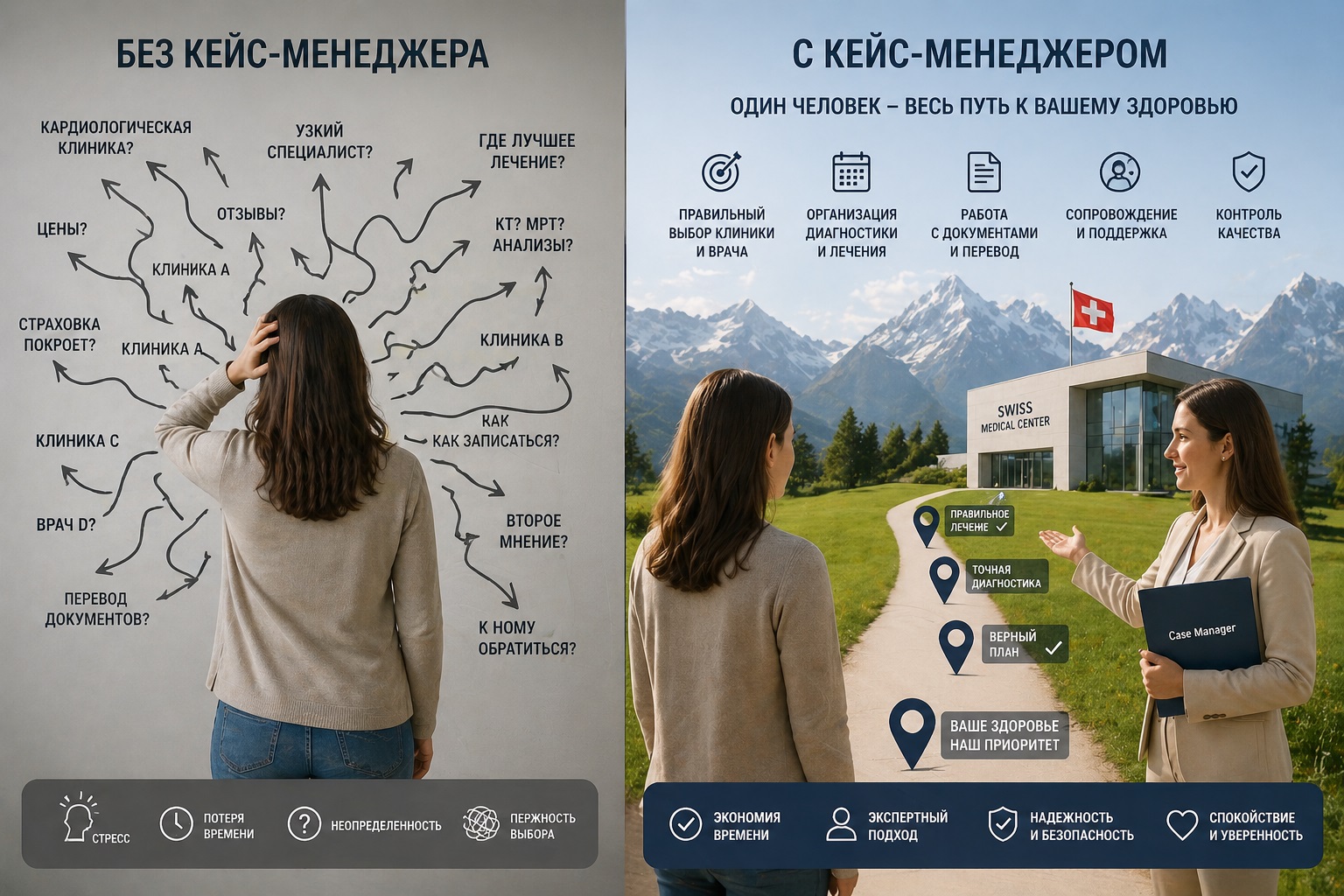
Why you need a case manager

The language barrier adds further complexity. The country uses German, French and Italian, and medical staff do not always speak other languages fluently. Misunderstanding medical information can have serious consequences.

In addition, treatment in Switzerland involves high costs. Any inaccuracy in the organisation — unnecessary tests, the wrong choice of clinic, uncoordinated procedures — has a direct impact on the patient’s budget. A case manager helps avoid these risks.

How working with a case manager works

Cooperation usually begins with an initial enquiry. The patient describes their situation and provides their medical records.

At the next stage, the case manager analyses the information: they study the diagnosis, the medical history and the doctors’ recommendations. If necessary, they may request additional data.

Treatment options are then drawn up. The patient receives several proposals with different clinics and specialists, together with preliminary plans and costs.

Once the right option has been chosen, preparations for the trip begin: paperwork, booking procedures, arranging accommodation and transfers.

During the stay in the country, the case manager accompanies the patient — in person or remotely — helping with any questions that arise and coordinating communication with the clinic.

The work continues after treatment ends: the specialist helps obtain medical reports and recommendations and, if needed, arranges further follow-up.

The advantages of working with a case manager

  1. Time saved. The patient is spared the work of researching clinics, sending enquiries and comparing options. The case manager takes on these tasks and quickly proposes the best solutions.
  2. Access to trusted clinics. These specialists work with reliable medical institutions whose quality they are confident in. This reduces risk and increases trust in the treatment.
  3. Less stress. The patient can focus on their health, free of organisational details. The case manager handles all coordination and communication.
  4. A transparent process. The person understands the stages of treatment, the timelines and the estimated costs in advance. This helps them make decisions calmly and with clarity.

When you can manage without a case manager

Despite the obvious advantages, in some situations the help of a case manager may be optional.

For example, when it comes to simple medical services — standard examinations or consultations without complex diagnostics.

A case manager may also be unnecessary for repeat visits, when the patient already knows the clinic and the doctor.

Another case is when a person knows their way around the country’s healthcare system, speaks the language and has experience of organising treatment abroad.

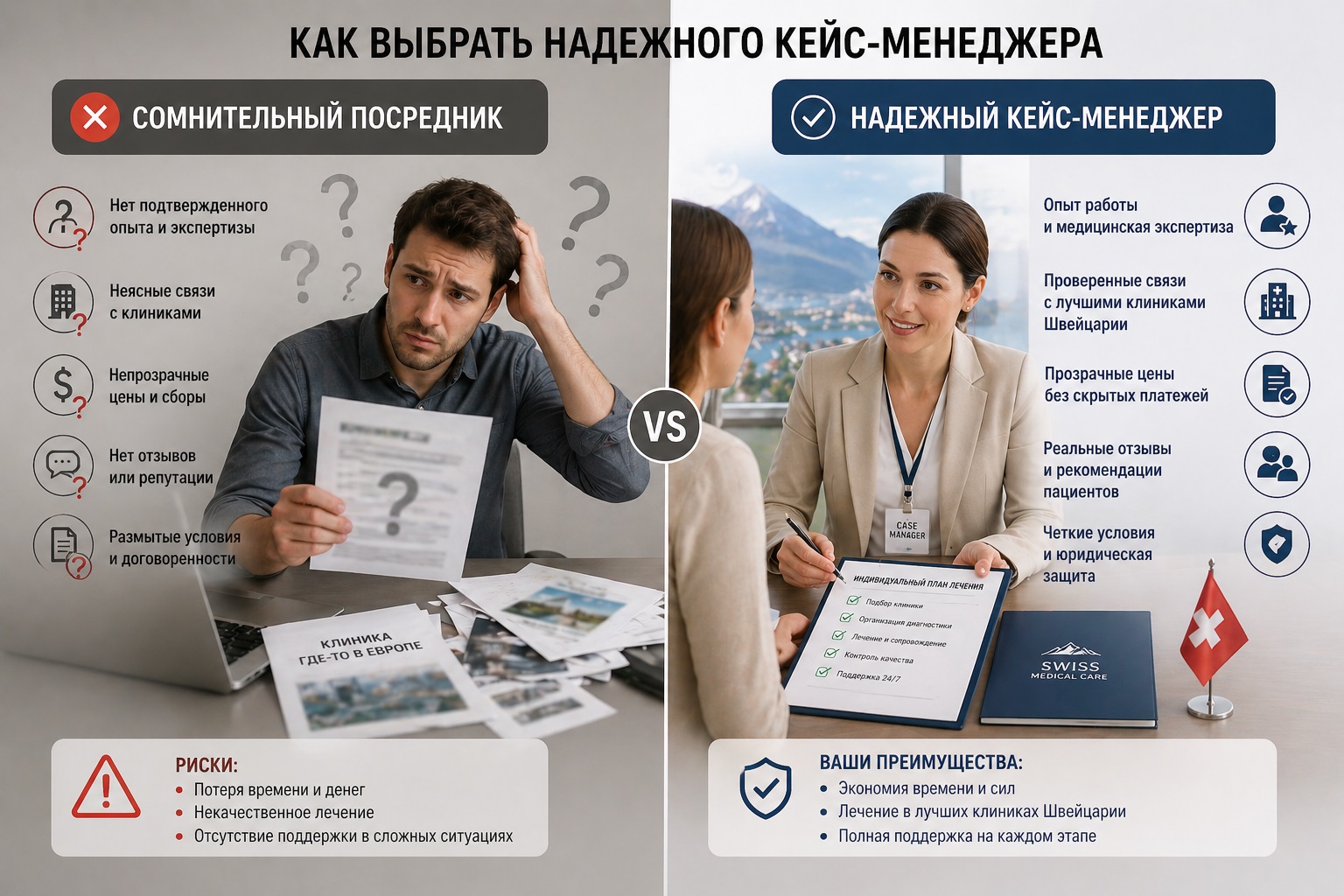
How to choose a reliable case manager

When choosing a specialist, it is important to look at their experience and specialisation. Ideally, the case manager should have practical experience in precisely the medical fields relevant to the patient.

How to choose a case manager

  • Reviews and real cases help assess the quality of their work and the level of trust clients place in them.
  • Transparent terms are just as important: the patient should understand which services are included in the support and how the cost is calculated.
  • Medical expertise is a distinct advantage. It improves the quality of communication with doctors and the accuracy of decision-making.

If you are considering treatment abroad and want the journey to be calm and straightforward, it is important to rely on experienced specialists. A well-structured process saves time, avoids mistakes and lets you focus on what matters most — your health.

CorSwiss offers personal consultations, helps organise diagnostics and treatment, and accompanies patients at leading clinics in Switzerland. This makes the whole journey — from the first enquiry to the completion of therapy — as comfortable and transparent as possible.

How Swiss Clinics Adopt Innovation Faster Than Others

For a number of modern techniques, Swiss clinics are around five years ahead of the European and Russian standard. The reason is concrete rather than a matter of marketing or of Swiss quality in a general sense: specific institutional mechanisms explain the speed. Here we look at what they are and how they show in robotic surgery, targeted therapy and clinical research.

Why Switzerland leads in speed of adoption

Speed is the result of several structural factors working at the same time.

A decentralised healthcare system. In Switzerland, a large share of management and clinical decisions is taken at the level of the cantons and individual medical institutions. Within the federal framework set by the Swiss Federal Office of Public Health, this allows new approaches to be introduced flexibly and quickly, without lengthy centralised approvals.

A regulator that works fast. Swissmedic, the Swiss agency for therapeutic products, reviews applications for new medicines and devices in 9–12 months on average. The European EMA takes 14–18 months — and that is from the submission of a complete dossier.

A strong university base. Switzerland has five major academic medical centres: in Zurich, Basel, Bern, Geneva and Lausanne. Each is linked directly to a university and its research, with no intermediaries. A new technique refined in the laboratory reaches clinical practice faster.

Competition between clinics. Private and cantonal clinics compete for patients both at home and internationally. For them, adopting a modern technique is a practical way to retain patients as much as a matter of prestige.

Clinical trials as a route to early access

Switzerland is one of Europe’s leading countries in the number of clinical trials per capita. For patients, this means one thing: access to methods that have yet to become standard.

Key institutions:

  • SAKK (Swiss Group for Clinical Cancer Research) – a network of more than 20 clinics conducting cancer research. Through it, patients gain access to medicines before they are registered.
  • Clinical Trial Units at university hospitals – continuously launching early-phase I and II trials.
  • Close cooperation with the pharmaceutical headquarters in Basel (Roche, Novartis) means new molecules reach clinical centres practically next door.

The practical effect: some patients in Zurich or Basel receive treatment with a method that will become standard in Europe in 2–3 years and in Russia in 4–5 years.

Robotic surgery: from da Vinci to the next generation

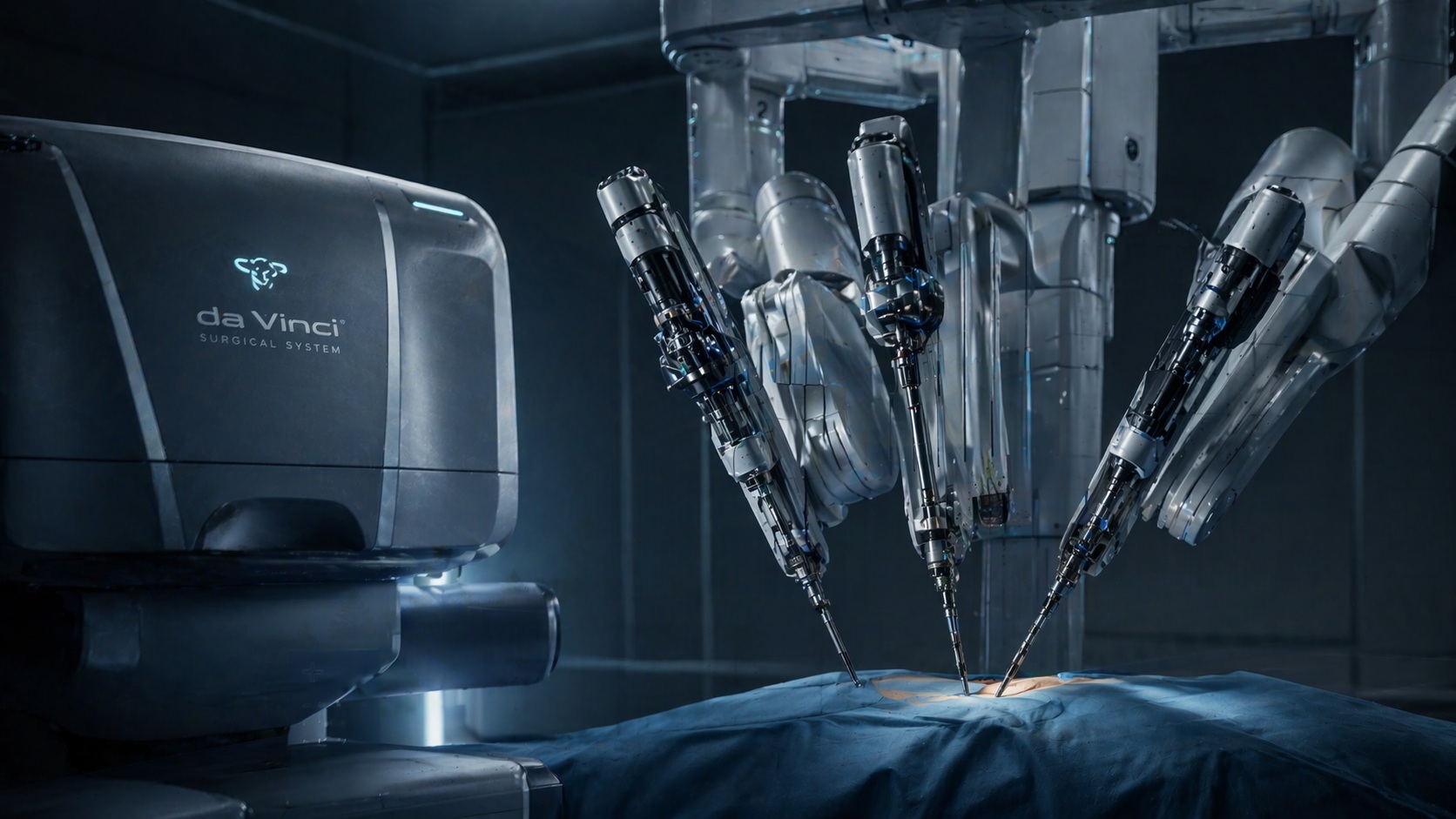
Switzerland was one of the first countries in Europe to introduce the da Vinci surgical system, in the early 2000s. Today dozens of these systems are in use across the country, and a new generation of platforms is being adopted alongside them: Hugo RAS from Medtronic and Versius from CMR Surgical.

The da Vinci surgical system

Leading centres:

  • University Hospital Zurich (USZ) – the largest volume of robotic operations in the country
  • Klinik Hirslanden – a private group of 17 clinics actively introducing new robotic platforms
  • Geneva University Hospitals (HUG) – a strong centre for robotic urology and gynaecology

The main fields of application are urology (radical prostatectomy), gynaecology, thoracic surgery and bariatric surgery. The concrete benefit for the patient: after robotic prostatectomy, the hospital stay has been reduced from 7 days with open surgery to 2–3 days, and urinary function recovers within weeks rather than months.

Targeted and precision therapy

Switzerland’s speed is especially evident in oncology.

Molecular Tumour Boards – regular multidisciplinary meetings at which teams of oncologists, geneticists and pathologists select therapy according to the specific genetic profile of a tumour. In major Swiss centres this has been standard since 2016–2018, while in many countries the approach is still the exception.

Next-generation tumour sequencing (NGS) – carried out as a matter of course in academic centres before therapy is chosen. It is routine practice rather than a premium option.

CAR-T therapy – one of the most complex and effective immunological methods in haemato-oncology. Centres in Zurich and Basel were among the first in Europe to be certified to use it.

PD-1/PD-L1 immunotherapy – enters standard protocols faster than in most countries, thanks to clinics’ direct access to manufacturers and the accelerated Swissmedic procedure.

Proton therapy and nuclear medicine

The Paul Scherrer Institute (PSI) in Villigen is one of the oldest proton therapy centres in Europe. It was here that the spot-scanning technique was first developed; today it is the global standard, used in proton therapy centres around the world.

Swiss proton therapy specialises in:

  • paediatric oncology (minimising radiation exposure to developing tissue)
  • tumours of the skull base and spine
  • prostate cancer in patients for whom preserving neighbouring organs is critical

Patients come from around the world: PSI accepts referrals from dozens of countries.

Digital medicine and artificial intelligence

AI tools in Swiss clinics have moved beyond the experimental stage and are already in active use in a number of clinics:

  • In radiology departments in Zurich and Lausanne, algorithms provide a second reading of CT and MRI scans, helping to reduce missed findings.
  • Liquid biopsy (ctDNA monitoring) – analysis of circulating tumour DNA in the blood – is used to detect recurrence early after treatment, months before a tumour becomes visible on scans.
  • The Swiss-wide electronic health record ecosystem (eHealth) allows clinics to share patient data, increasing the speed and accuracy of multidisciplinary decisions.

What this means for an international patient

For a patient from another country, Switzerland’s structural advantages translate into concrete opportunities:

  • Early access to modern methods – including those not yet approved in their home country or available there only through a quota.
  • Participation in clinical trials – many protocols are open to non-residents, offering a chance of experimental therapy.
  • Individually selected treatment through molecular tumour boards – for complex oncology cases, this can be decisive.

There is another side, however: only some Swiss clinics accept international patients directly. Some protocols require prior communication through a coordinator who knows the language, the clinical standards of both countries and the administrative workings. Without this guidance, the process can drag on for months or stall at the document stage.

How to access treatment at a Swiss clinic

This is why an experienced intermediary between patient and clinic is so often needed. CorSwiss provides consultations, selects the clinics best suited to the diagnosis and organises examinations and treatment in Switzerland – from the first enquiry to transfers and follow-up care. The patient and their family are relieved of the entire administrative workload: translation of medical documents, choice of specialist, scheduling, and financial and visa matters.

If you are considering Switzerland for a complex diagnosis, or would like a second opinion from European experts, contact our team for a free initial consultation. We will tell you which clinics and methods genuinely suit your case and help you plan the entire course of treatment.

In brief

The speed of Swiss clinics is no accident. Behind it lie a compact, fast regulator, a decentralised healthcare system, a powerful research base and competition between clinics. For a patient who needs truly modern care – robotic surgery, targeted therapy or immunotherapy, proton radiation, rare clinical protocols – Switzerland offers a real structural advantage. To make the most of it, it is important to plan the right route from the very start.

Why Patients Trust Swiss Doctors

When someone considers treatment abroad, the first question usually concerns the doctors’ qualifications. A second question is asked less often, yet proves just as important: how will the doctors talk to me? Swiss medicine stands out for more than its technical standard. It has developed a culture in which the patient is a full participant in decision-making. This is a systemic feature, anchored in law and repeated in every consultation.

Informed consent as a genuine conversation

In most countries, informed consent comes down to signing a form before a procedure. In Switzerland it works differently.

The law on patients’ rights establishes the right to full information about the diagnosis, the available treatment options, the risks of each and the possible consequences of declining treatment. The doctor must provide this information and must also make sure the patient has understood it. This changes the nature of the consultation: it becomes a dialogue rather than a specialist’s monologue.

In practice, the patient comes for a competent explanation rather than a ready-made decision. The doctor sets out the options, describes the trade-offs and answers questions — and only then does the patient decide. This approach takes time, but it is precisely what builds trust: the person feels that nothing is being imposed on them.

The patient as co-author of the treatment plan

Shared decision-making is widely practised in Swiss medicine. Its essence is that neither doctor nor patient decides unilaterally. The doctor brings medical expertise; the patient brings knowledge of their own life, values and priorities.

This matters because many medical decisions have more than one right answer. Two treatment options may be equally sound from a medical point of view, yet one involves lengthy rehabilitation and the other a higher risk of recurrence. The choice depends on what matters more to the individual. A Swiss doctor leaves this choice to the patient.

For people coming for treatment from other countries, this is often a surprise. They are used to a model in which the doctor decides and the patient follows. Here things work differently, and this calls for a certain readiness to take part in one’s own treatment.

Transparency at every stage

In Swiss medicine, transparency is a working principle.

Transparency in Swiss medicine

Patients have the right to full access to their medical records at any time. This includes test results, images, specialists’ reports and the treatment history. There are no requests through administration and no waiting for weeks: the documents belong to the patient.

Every prescription is explained: why this medicine, for how long, what to expect and which side effects are possible. The patient always knows why a particular treatment has been prescribed.

The attitude to second opinions deserves special mention. In Switzerland, consulting another specialist is the norm and a sign of good medicine rather than of mistrust. Many doctors recommend it themselves for serious diagnoses. The system treats a second opinion as an element of quality care, fully compatible with respect for the specialist.

A cultural and systemic foundation

What is described above stems from the system as a whole rather than from the personal qualities of individual doctors.

Swiss legislation regulates in detail the rights of patients and the duties of medical institutions to inform them. Failure to meet these standards has legal consequences, which creates a lasting incentive to uphold them at every level — from private clinic to university hospital.

Medical education in Switzerland places considerable emphasis on communication with patients. It is treated as part of professional competence rather than a soft skill added to clinical training. Medical students learn to explain complex matters in clear language, to address a patient’s anxiety and to conduct difficult conversations.

Finally, Switzerland is a multilingual and multicultural country. Doctors here are used to working with people of different backgrounds, expectations and communication styles. For international patients, this means they are very likely to meet a specialist who adapts the conversation to them.

What this means for an international patient

People who come to Switzerland for treatment often remark on the same thing: they are surprised by how much time the doctor spends explaining. This time is part of the treatment itself.

Trust in a doctor rests on more than reputation or the clinic’s equipment. It rests on whether the patient has understood what is happening to them, and whether they feel their view is taken into account. Swiss medicine creates the conditions for both.

For someone deciding on treatment abroad, this is an important factor — possibly as important as the clinic’s technical standard.

Practical questions: what to ask at the first consultation

The culture of informed consent works both ways: the doctor must explain, and the patient should be ready to ask. Here are questions worth asking at the first consultation, whatever the diagnosis and the doctor’s specialty.

About the diagnosis and situation:

  • What is my diagnosis, and how certain is it at this stage?
  • Which further examinations are needed, and why?
  • What will happen if treatment does not start now?

About treatment options:

  • What treatment options exist in my case?
  • How do they differ in terms of risks, timing and likelihood of success?
  • Is there an option you personally recommend, and why?

About the process and rehabilitation:

  • What will the treatment look like, stage by stage?
  • How long will recovery take?
  • What restrictions will apply during rehabilitation?

About a second opinion:

  • Would it make sense to consult another specialist in my case?

This list is a way to make full use of what the Swiss system offers — genuine participation in your own treatment — rather than a test of the doctor.

How CorSwiss can help

Organising treatment in Switzerland on your own is demanding: choosing a clinic, booking the right specialist, translating medical documents, arranging logistics. CorSwiss takes on these tasks — from the first consultation to discharge.

We provide consultations and organise examinations and treatment at leading Swiss clinics. If you are considering treatment in Switzerland and would like help with the first step, contact us.

Clinical Trials in Switzerland: Approval and Safety

Clinical trials in Switzerland are a strictly regulated medical process that often gives patients access to new treatments before they become standard care. For many patients, particularly those with cancer or rare diseases, taking part in a trial can be a genuine therapeutic option.

Let us look at this step by step and in full detail:

  • How to join a trial
  • Who makes the decision
  • How safe it is

What a clinical trial is in practice

A clinical trial is the stage at which new treatments, medicines or technologies are tested with the participation of patients. In Switzerland, such trials take place only after a rigorous prior assessment and are governed by law and by independent bodies.

It is important to understand that no patient enters a trial by chance. Every trial protocol clearly sets out:

  • who may be enrolled;
  • which criteria exclude participation;
  • which procedures will be carried out;
  • the risks and the expected effects.

What this means for the patient

Joining a trial is a matter of eligibility rather than choice: you either meet its criteria or you do not. The main focus is therefore on finding a trial that matches your specific clinical case.

Who decides on participation

The decision to enrol a patient is taken by a team working within the trial protocol, rather than by a single doctor. Approval by an independent ethics committee is also a mandatory step.

In Switzerland, trials are overseen by bodies including Swissmedic, which is responsible for the safety of medicines and medical technologies.

Even if a doctor considers you a suitable candidate, the final decision depends on meeting every criterion of the protocol. This protects the patient from unjustified enrolment.

How to obtain approval to take part

The process always begins with an assessment. The patient or their doctor submits the medical records, after which the trial team checks whether the criteria are met.

In practice, the path looks like this: first a suitable trial is identified, then a complete set of documents is compiled, and a preliminary assessment follows. If the patient is eligible, they are invited for further examinations and final confirmation of participation.

What the patient should do

Start by looking for clinics or centres conducting trials for your diagnosis. Then prepare the most complete and up-to-date set of medical records possible. If you are already undergoing treatment, discuss this option with your doctor, who can help establish whether suitable trials exist and whether participation is compatible with your current treatment.

Safety: how patients are protected


Safety is the central question in clinical trials. In Switzerland it is regulated at several levels.

First, every trial must be approved by an ethics committee, which weighs risks against benefits. Second, regulators, including Swissmedic, exercise strict oversight. Third, the patient signs an informed consent form that describes in detail all possible risks, procedures and alternatives.

In addition, the patient may leave the trial at any time without giving a reason.

You are free to stop participating if you feel it is not right for you. And you have the right to know all the risks before you begin.

Questions to ask the coordinator or doctor before signing the consent form

Even a strong protocol and a good clinic leave the patient responsible for asking the right questions. The quality of a decision often depends as much on how well a person understands what lies ahead as on the trial itself. Before signing the consent form, it is important to gain clarity on the organisational side as well as the medical one.

Patients should find out in advance what the main aim of the trial is in their particular case, what will count as a successful outcome, which side effects are most common, how quickly they can leave the trial if necessary, and who will be the main contact in an emergency.

It is equally important to understand the schedule of visits, how long participation will take, whether repeat trips will be needed and how follow-up will be organised once the protocol ends. These questions are far from formalities: they are what turn participation from an abstract possibility into a clear and manageable path.

What you are signing: informed consent

Informed consent

Before taking part, the patient receives a document describing:

  • the aim of the trial;
  • possible risks;
  • potential benefits;
  • alternative treatment options.

This is a key element of patient protection, far more than a formality.

What the patient should do

Take your time before signing. Read the document carefully, ask your doctor questions and make sure you understand:

  • which procedures will be carried out;
  • which side effects are possible;
  • what happens if you decide to withdraw.

If anything is unclear, that is a reason to ask for clarification.

Risks and limitations

Despite strict oversight, clinical trials always involve uncertainty. A new method may prove effective, or it may not deliver the expected result. Participation may also require:

  • frequent visits to the clinic;
  • additional examinations;
  • strict adherence to the protocol.

It is important to weigh the burden as well as the potential benefit. Sometimes standard treatment may be the more predictable option.

Can trial participation be combined with treatment in your home country?

For international patients, a particularly important question is how participation in a trial will fit with treatment already under way at home. In practice this is one of the most sensitive points, because a clinical protocol requires strict compliance, and parallel prescriptions, additional medicines or uncoordinated changes to a treatment regimen can affect both safety and the possibility of continued participation.

That is why patients should discuss coordination between the Swiss team and their doctor at home in advance. They need to know which medicines and procedures are permitted, which must be temporarily stopped, who makes decisions if their condition changes and how medical information will be exchanged between the two sides. The better this communication is organised, the lower the risk that the patient ends up between two treatment systems without a single clear plan.

Who pays for trial participation, and which costs may remain with the patient

One of the most practical questions, and one that patients often ask too late, is what exactly is covered by the trial and what is not. Taking part in a clinical trial does not always mean that the sponsor automatically covers every cost.

As a rule, the protocol covers the procedures, tests and visits directly related to the trial, but additional costs may remain with the patient. These may include travel, accommodation, some related examinations, translation of documents, logistics of personal support or treatment of conditions outside the scope of the protocol.

It is therefore important to gain a clear picture of the financial side before enrolment. Patients will find it useful to clarify in advance which costs are covered by the trial, who pays for emergency care in the event of complications, whether follow-up after participation ends is included, and whether travel or organisational expenses are reimbursed.

How to avoid mistakes when taking part in clinical trials

One of the most common mistakes is to see a clinical trial as a guaranteed chance of better treatment. In practice, a trial offers access to a method whose effectiveness and risks are still being studied, rather than a promise of results. That is why it is important for patients to keep their expectations realistic and to let hope rest on facts.

Another common mistake is agreeing to participate without understanding the details of the protocol. Some patients read the informed consent form superficially and do not clarify the frequency of visits, the scope of examinations, possible side effects or the conditions for leaving the trial. As a result, once enrolled, they face a burden they were not prepared for. The more complex the illness and the more emotional the situation, the more important it is to understand every stage rather than sign documents on trust.

A further mistake is withholding part of one’s medical information from the research team. Patients sometimes believe that leaving out a concurrent illness, previous therapy or adverse reactions will improve their chances of being enrolled. In reality, this can affect both safety and the integrity of the trial itself. Complete medical data is critically important here.


Patients also frequently underestimate the organisational side of participation. A trial may require frequent visits, strict adherence to a schedule, additional tests and constant contact with the clinic. Without assessing the logistics, time commitment and physical demands in advance, participation can prove far more difficult than expected.

Finally, a serious mistake is forgoing an independent second opinion. Even if a trial looks promising, it is worth discussing it with your treating doctor or another specialist who is not involved in the protocol. Such a conversation helps you understand whether participation is truly the best option in your situation, or whether standard treatment remains the more sensible choice.

The conclusion is simple: enter a clinical trial after a calm assessment of the benefits, risks, limitations and your own ability to see the whole journey through, rather than out of desperation or under the pressure of urgency.

What happens after the trial ends

One of the most underestimated questions is what happens once the trial ends, rather than how to get into it. This matters greatly to the patient, because participation in a clinical trial does not always mean that access to the therapy will automatically continue. Sometimes treatment stops when the protocol ends, sometimes the patient is moved to a standard regimen, and in some cases further monitoring or continued therapy is possible under separate trial rules.

That is why, even before signing the consent form, it is worth clarifying what will happen after participation ends. You need to know whether monitoring will continue, who will look after you from then on, whether you will receive final medical documentation and how the transition back to your treating doctor at home will be organised. If the trial involves travelling to Switzerland, it is especially important to establish in advance who is responsible for ongoing communication after you return home and how quickly you can obtain discharge summaries, test results and recommendations for your local medical team.

This question matters from a practical as well as a medical point of view. Patients need to be sure they will not find themselves in a situation where one course of treatment was started during the trial, yet the next steps remain unclear once the protocol ends. The better the “exit” from the trial is planned in advance, the safer and calmer the whole process.

In practice this means one simple thing: before you begin, ask about the plan for after the trial as well as about enrolment, risks and the monitoring procedure.

How to proceed

The best strategy is to act systematically:

  1. Understand your diagnosis and the stage of the disease clearly.
  2. Find out which trials are available in this field.
  3. Prepare your documents and submit them for assessment.

If you have already been offered a place in a trial, take your time with the decision. Compare it with your current treatment, discuss it with an independent doctor and only then decide.

Once participation has begun, it is important to follow all the requirements of the protocol and to stay in contact with the medical team.

The International Patient’s Journey to a Swiss Clinic

Treatment abroad almost always begins with a question rather than a flight: whom to contact, how to arrange everything and what will happen next. For an international patient, a trip to a Swiss clinic is a sequence of steps along a single route, where medical precision, clear communication and well-planned logistics all matter.

In practice, the journey becomes far calmer when the patient understands the stages of the process from the outset and has personal support along the way. This is why many turn to specialised medical coordinators such as CorSwiss, who help to plan the route from the first enquiry to the return home.

1. The first enquiry: where it all begins

The first stage is an enquiry from the patient or their family to a clinic or a medical coordinator. At this point, the person usually already knows about their problem, their diagnosis or at least the symptoms that need clarification and treatment.

The first enquiry usually contains the essentials: the patient’s age, a brief description of the diagnosis or complaints, any examinations already carried out and the purpose of the request. For some it is a second opinion; for others, a precise diagnosis, surgery, cancer treatment, rehabilitation or a comprehensive check-up.

This is where the first contact is made, and it sets the tone for the entire process. The more precise and clear the request, the sooner the next step can follow.

2. Gathering and translating medical records

After the initial enquiry, the patient is asked to provide their medical records. These are typically discharge summaries, test results, doctors’ reports, CT, MRI or X-ray images and sometimes details of previous treatment.

For a Swiss clinic, completeness matters, and so does ease of review. The medical records therefore need to be organised: the key reports set apart, current examination results prepared and, where necessary, a professional translation arranged.

This stage may seem purely technical, yet it largely determines how quickly the clinic can reach a decision. When the documents are compiled correctly, the doctor can assess the situation faster and propose a clear plan.

3. The doctor’s preliminary opinion and choice of clinic

Once the documents are ready, they are passed to the relevant specialist for review. At this stage, the patient receives a preliminary medical opinion: confirmation of the diagnosis, possible treatment options, any need for further examinations and recommendations on the format of the visit.

Sometimes the initial review already makes it clear which clinic, department or specialist is the best fit. In other cases, the patient may be offered several options – depending, for example, on urgency, specialisation or the desired level of service.

For the patient, this is one of the most important stages. It brings clarity: whether travelling to Switzerland is truly worthwhile, how appropriate treatment at the chosen clinic is and what to expect from the forthcoming trip.

4. Cost estimate and agreeing the treatment plan

Stages of treatment for an international patient at a Swiss clinic

After the preliminary medical assessment, the patient usually receives an outline treatment plan and a preliminary cost estimate. This may cover specialist consultations, diagnostics, hospitalisation, surgery, anaesthesia, the room, medication and follow-up care.

In international medicine, a transparent budget is of great importance. The patient needs to know in advance both the approximate cost and how it is made up. This supports a considered decision and allows financial preparation free of unnecessary stress.

At the same stage, the dates of the trip, the length of stay and the expected form of treatment are agreed: an outpatient visit, a short hospital stay or longer-term medical support.

5. Visa and travel preparation

Once the medical plan is confirmed, the organisational part begins. If the patient needs a visa, documents are prepared confirming the purpose of the trip, the treatment dates and the clinic’s invitation. At the same time, flights, transfers, accommodation for accompanying persons and practical logistics on site are arranged.

Many patients feel most uneasy about this stage, because it involves a great many practical details rather than medicine. With skilled coordination, however, the entire route can be planned in advance: from the arrival date to the airport transfer and accommodation close to the clinic.

The better this stage is prepared, the more at ease the patient feels on arrival. Their energy stays free for what matters most – their health – while the organisational details are taken care of.

6. Arrival in Switzerland and the first days at the clinic

After arrival, the in-person part of the journey begins. The first days usually include initial consultations, additional examinations and final confirmation of the treatment plan. Even when much has already been agreed remotely, an in-person assessment remains an essential part of the process.

For an international patient, comfort, clear communication and a sense of control over what is happening are especially important. Clear organisation is therefore highly valued at this stage: a known consultation schedule, clarity about who is accompanying the patient and how quickly questions can be answered.

It is during these first days that the patient settles into the new environment and begins to see the trip as a well-managed medical process with a clear course.

7. Diagnostics and treatment

The main stage is the diagnostics and the treatment itself. Depending on the case, this may be a targeted examination, a surgical procedure, an oncology protocol, cardiac treatment, orthopaedic surgery or a rehabilitation programme.

Swiss clinics usually organise the process so that the patient understands what is happening and why. The doctor explains the aims of each stage, the expected results and any possible limitations. This is especially important in an unfamiliar country, where trust depends directly on transparent communication, safe treatment and continuity of care.

If new findings emerge during diagnostics, the plan may be adjusted. Such changes are generally discussed in advance, so that the patient and their family understand the medical reasoning behind the decisions.

8. Discharge and recommendations before departure

Discharge and recommendations before departure

Treatment continues beyond the moment of discharge. Before returning home, the patient receives a medical report, recovery recommendations, a list of medications, instructions for monitoring their condition and, where necessary, a schedule of further consultations.

This is the key transition between treatment at the clinic and recovery at home. It is very important that the patient has all the documents to hand: the discharge summary, examination results, prescriptions and recommendations on lifestyle and further monitoring.

If the patient is to continue therapy at home, the Swiss team usually sets out exactly which steps to take after returning and what to pay particular attention to in the following weeks or months.

9. Returning home

Returning home opens a new chapter of the story, in which stability, following the recommendations and monitoring one’s wellbeing come to the fore. After intensive treatment or surgery, the patient may need a gentle regime, monitoring by a local doctor and regular contact with the clinic.

At this stage, careful preparation in advance is especially valuable. When the patient understands which symptoms are normal, when to seek advice urgently and how contact with the treating team is organised, the adjustment after the trip is far calmer.

For the patient’s family, too, this is an important moment: the return home becomes a clear continuation of a treatment route that has already been mapped out.

10. Remote follow-up after treatment

Today’s patient journey often includes remote follow-up care. After returning home, there may be online consultations, reviews of test results, assessment of recovery progress and adjustments to the recommendations.

This format is especially important for international patients, as it maintains the connection with the treating specialist without an immediate return trip. The patient continues along a clear plan, with the specialist at their side.

This is why the journey to a Swiss clinic today is a structured process rather than a one-off trip, with each stage linked to the one before and the one after.

FAQ

How long does it take to arrange treatment in Switzerland?

On average, anything from a few days to a few weeks passes between the first enquiry and the trip. The timeframe depends on the urgency of the case, the readiness of the medical records and how quickly the treatment plan is agreed.

Do I need to come to Switzerland for an initial consultation?

Not always. In many cases, a doctor’s initial opinion can be obtained remotely, based on the medical records. An in-person visit is required for diagnostics or treatment.

Which documents should I prepare in advance?

Discharge summaries, test results, doctors’ reports and imaging (CT, MRI, X-ray) are usually required. The documents should be up to date and, where necessary, translated.

How is the cost of treatment calculated?

The cost is determined individually and depends on the diagnosis, the scope of diagnostics, the type of treatment and the length of stay. A preliminary plan and cost estimate are agreed before the trip.

Is help available with the visa and travel arrangements?

Yes. As a rule, the clinic or medical coordinator helps to prepare the visa documents and arranges flights, transfers and accommodation.

What happens after I return home?

The patient continues their recovery according to the doctor’s recommendations and can stay in contact with the clinic. Online consultations and monitoring of their condition are often part of the arrangement.

Will I need to return to Switzerland after treatment?

That depends on the individual case. In many situations, further monitoring can take place remotely, with no need for a second trip.

Can I obtain a second medical opinion without treatment?

Yes. Many patients come specifically for a second opinion, to confirm a diagnosis or clarify a treatment plan before travelling to a clinic.

Who accompanies the patient during treatment?

The patient may be accompanied by the clinic’s international department or by a specialised medical coordinator, who helps at every stage – from the first enquiry to the return home.