A stroke is a sudden disturbance of blood circulation in the brain. A stroke is a serious condition that can be fatal or lead to complete or partial disability.
During a stroke, blood circulation is disrupted and the brain is deprived of oxygen. This can leave the patient partially or completely paralysed. Statistics show that 2 out of 3 patients who have had a stroke suffer a severe loss of motor abilities.
That is why high-quality, consistent rehabilitation is so important for people who have had a stroke. It enables the patient to return to their normal life.
Stroke — causes and risk factors
The symptoms of a stroke, or its warning signs, can appear suddenly. It is essential to know them so that you can react at a critical moment and ensure immediate specialist help is provided in time.
Symptoms of a stroke:
- sudden speech impairment (slurred or babbling speech, loss of the ability to articulate, difficulty understanding speech)
- sudden visual impairment — typically blindness in one eye or blind spots in the field of vision
- sudden dizziness with accompanying difficulty keeping one’s balance, unexpected falls, problems with orientation and impaired consciousness
- an unsteady gait, like that of a drunk person
- the most common symptoms of the so-called acute stage of a stroke — paralysis of the limbs: an arm or a leg, or both an upper and a lower limb at the same time
- a symptom of stroke can be asymmetry of the lower part of the face around the mouth: the corner of the mouth droops on one side, and the nasolabial fold flattens.
Stroke symptoms do not appear immediately in every patient. Warning symptoms may occur first. This is a so-called mini-stroke, or transient ischaemic attack. The symptoms of a mini-stroke usually last 15–60 minutes but can last up to 24 hours, and then disappear completely.
Stroke risk factors we cannot influence:
- age (over 55 — this does not mean that young people cannot have a stroke, but the likelihood of a stroke increases with age)
- sex (more common in women than in men)
- genetic factors
Post-stroke therapy in Switzerland
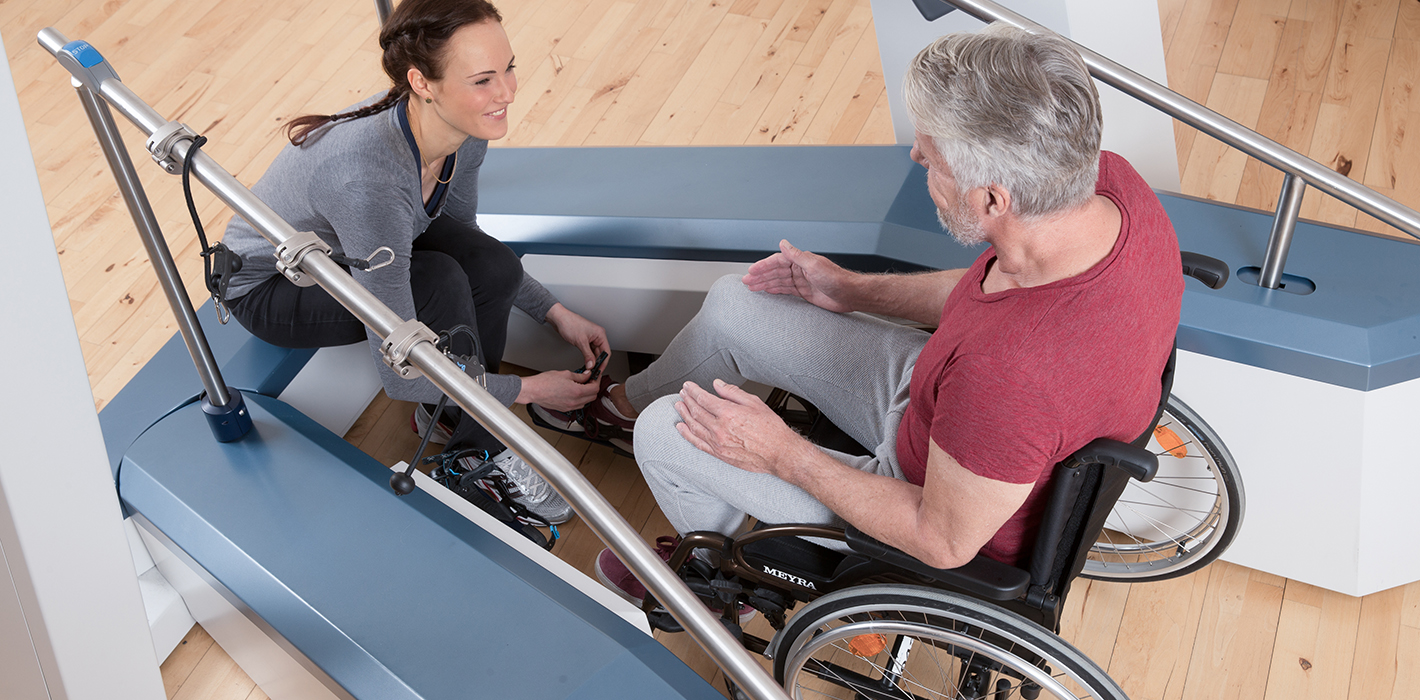
The Swiss Clinique Valmont has introduced a revolutionary training device, the THERA-Trainer Lyra, which helps patients recover more effectively and quickly after a stroke.
The THERA-Trainer Lyra recreates a person’s natural walking movement. The intensity is set individually for each patient.
The device also transmits data on the patient’s recovery electronically to the doctor or physiotherapist, allowing a prompt and effective analysis of the patient’s condition and rehabilitation progress.
This effective and, in fact, very easy-to-use therapy allows doctors to monitor the patient at every stage of treatment and steer the rehabilitation in the right direction.
The device enables stroke patients to regain their motor functions much faster. Before the THERA-Trainer Lyra, such rapid recovery was impossible, and in some cases patients had no chance of walking again.
Clinique Valmont has been rehabilitating patients for more than 100 years. The clinic is surrounded by beautiful nature in an environmentally pristine region. Valmont is an ideal place for the rehabilitation of patients who have suffered a stroke affecting the brain or spinal cord, or damage to the peripheral nerves.


