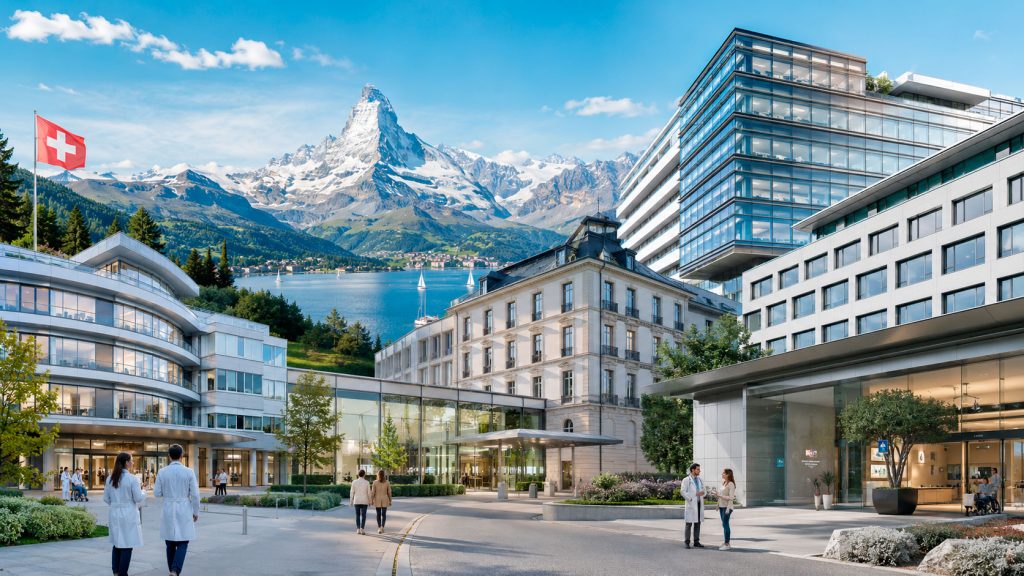
Switzerland remains one of the most attractive destinations for restoring health, thanks to the combination of natural factors and a high standard of medicine. Resorts help relieve stress and restore strength, climate therapy supports the respiratory and nervous systems, and rehabilitation centres provide comprehensive recovery after injuries, operations and serious illness. It is precisely this combination of clean air, a favourable climate, calm surroundings and an individual medical approach that makes treatment in Switzerland so effective and so sought after.
Restoring health is increasingly seen as more than a course of procedures or medication: it is a return of the body to its natural balance. Here Switzerland holds a special place, because the environment itself becomes part of the therapeutic process. Mountain air, a mild climate, quiet, an exceptionally clean environment and a well-developed medical infrastructure create conditions in which treatment and rehabilitation can be more comprehensive and more gentle.
This is why Switzerland has long been associated with a considered approach to recovery, in which natural factors amplify the effect of medical care, as well as with prestigious medicine. For patients this matters most after surgery, with chronic fatigue, nervous exhaustion or respiratory problems, and in programmes of general recovery. If you would like guidance on the possibilities of Swiss medicine and rehabilitation, CorSwiss can help you choose the right form of treatment and support.
Which natural factors make Switzerland so valuable for recovery
Switzerland’s greatest advantage is that it combines several natural conditions at once. Alpine air is clean, with a lower concentration of pollutants, which is especially welcome for people under constant strain in large cities. For many patients the change of environment is in itself an important step towards feeling better: the sense of overload eases, sleep returns to normal and everyday stress subsides.
The climate is just as important. Depending on the region, Switzerland offers both a bracing mountain climate and mild lakeside areas suited to calm recovery. This variety makes it possible to choose conditions around the patient’s specific needs: some need to activate the body’s reserves, others need a gentle regime focused on rest, restoring breathing and emotional balance.
Natural quiet and the visual environment play their own role. In rehabilitation, landscape is more than aesthetics. When a person is in a space with less noise, less information pressure and fewer irritants, the nervous system finds it easier to leave a state of chronic tension. This is especially significant for people recovering from burnout, lengthy treatment or difficult periods in life.
Swiss resorts as a tool for general recovery
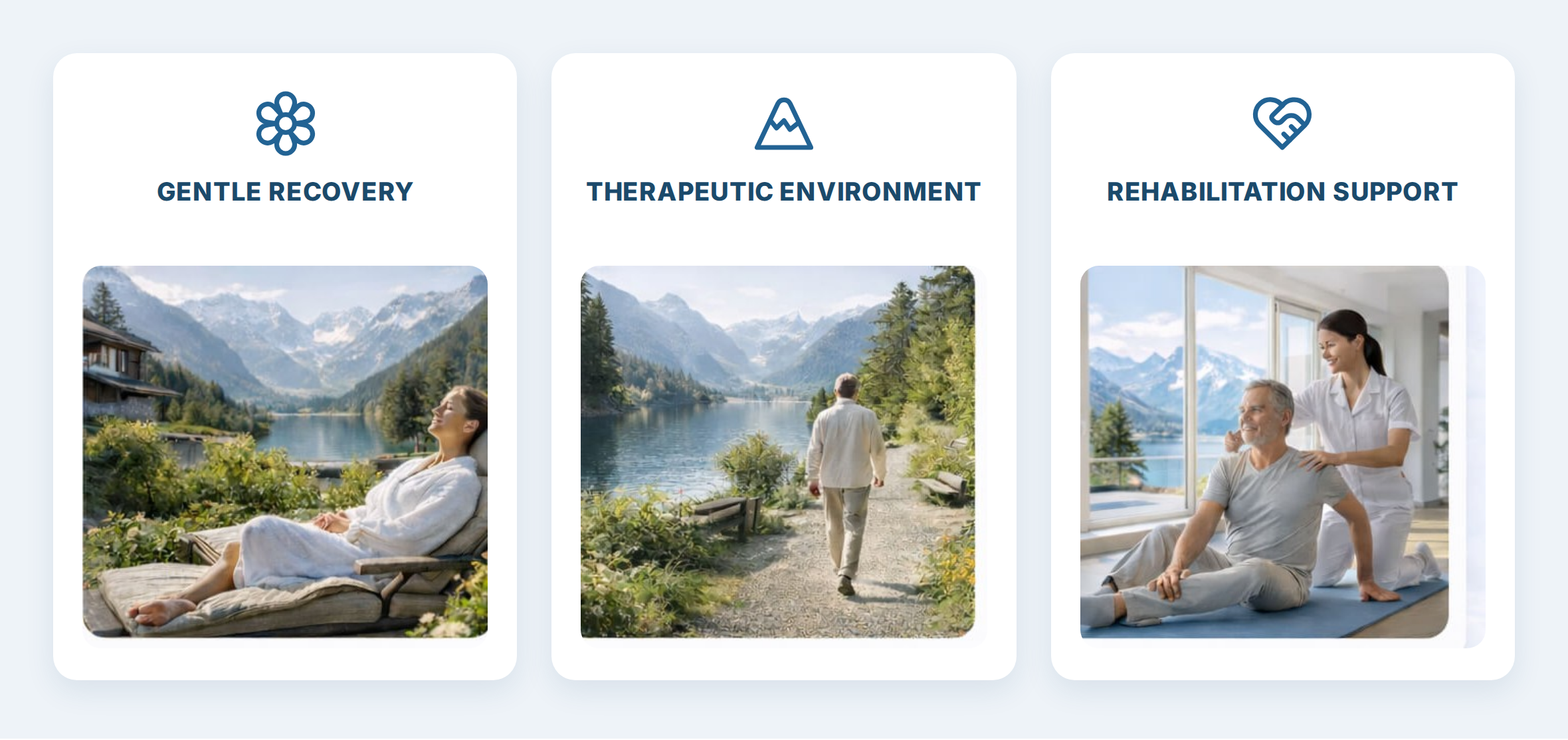
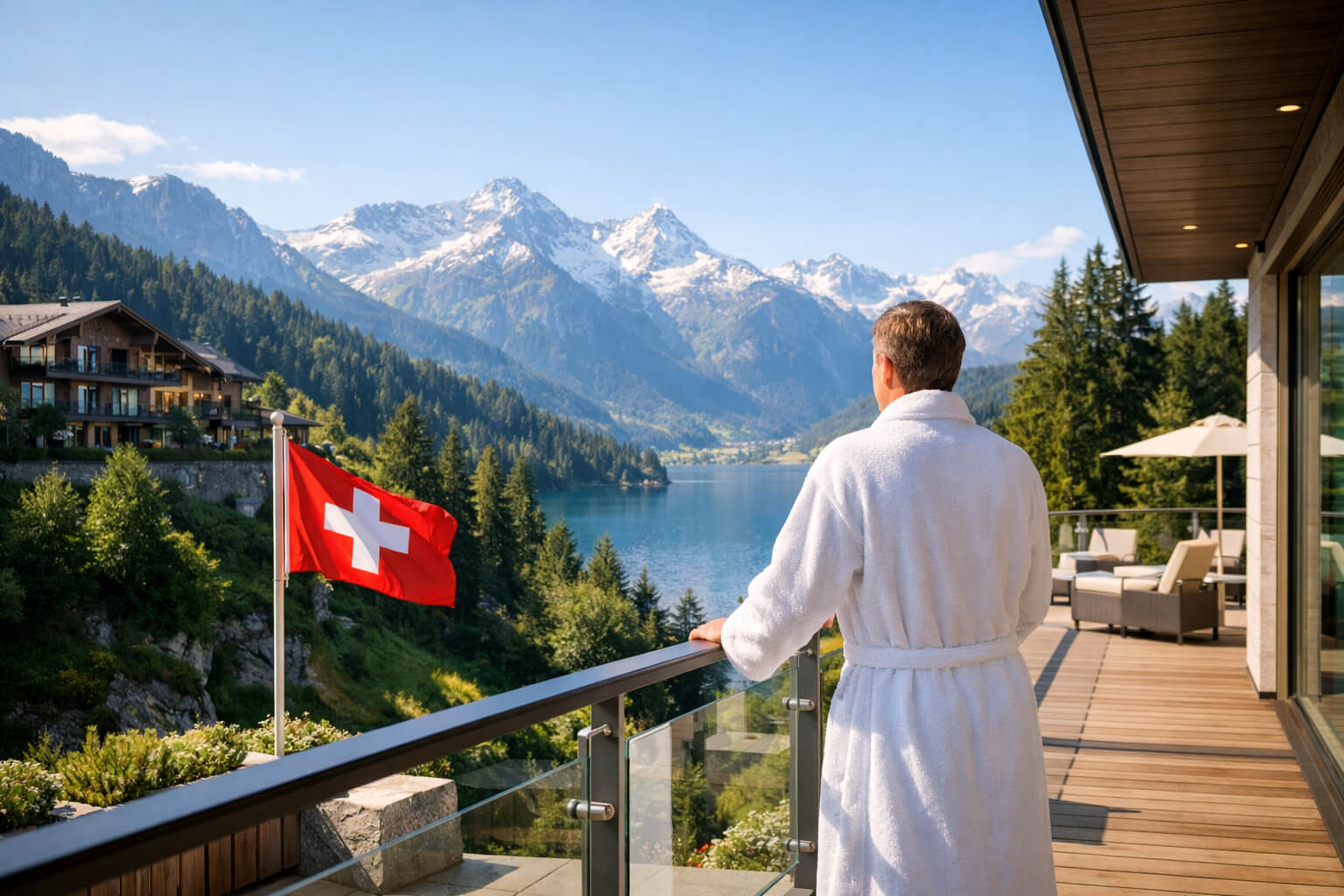
The value of the Swiss resort format is that it suits gentle health restoration as well as rest. For the patient, this means regaining strength in surroundings that feel far from a strictly clinical setting. This approach is particularly sought after by those dealing with overwork, stress, low energy, disturbed sleep and the need to recharge after intense work or emotional strain.
At Swiss resorts, the rhythm of the stay itself matters a great deal: a measured routine, walks, moderate physical activity, clean air and the chance to step away from everyday pressure. The result is a deeper recovery effect rather than a short break. Sleep often improves, anxiety decreases, a sense of inner stability emerges and the capacity for work returns.
A resort environment can also benefit people who need to restore their overall vitality after illness, prolonged strain or a difficult period in life. Where medical treatment is needed, it remains essential; the resort is a valuable complement that helps the body respond better to recovery programmes.
Climate therapy: when the environment itself works for your health
Climate therapy uses natural conditions as a therapeutic resource. Its value for the patient lies in its gentle, systemic effect. The body adapts to the air, temperature, humidity, sunlight and features of the landscape, and this can have a positive effect on overall well-being.
Climate therapy is most often considered in the context of the respiratory system. Clean air and time away from an aggressive urban environment create more favourable conditions for people who need to reduce the strain on their airways and improve their tolerance of physical activity. It can also help those recovering from a long period of weakness who want to rebuild their stamina gradually.
The effect on the nervous system is just as important. For patients with symptoms of exhaustion, anxiety, overwork and burnout, climate therapy becomes part of restoring their inner resources. Regular walks, a change of scene, a stable routine and time in nature help reduce the feeling of constant tension that, in ordinary city life, often persists even during rest.
Rehabilitation centres in Switzerland: when a structured medical approach is needed
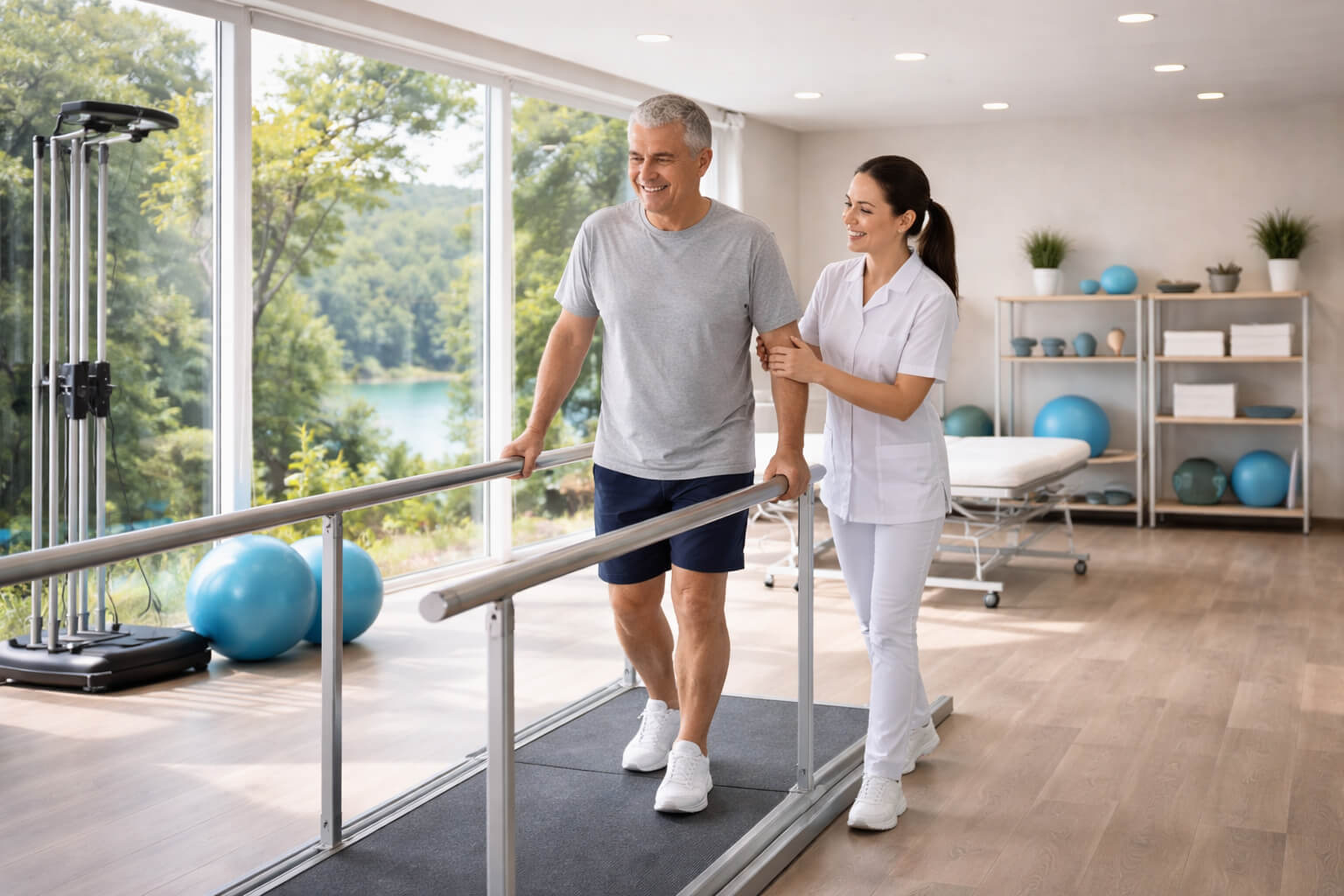
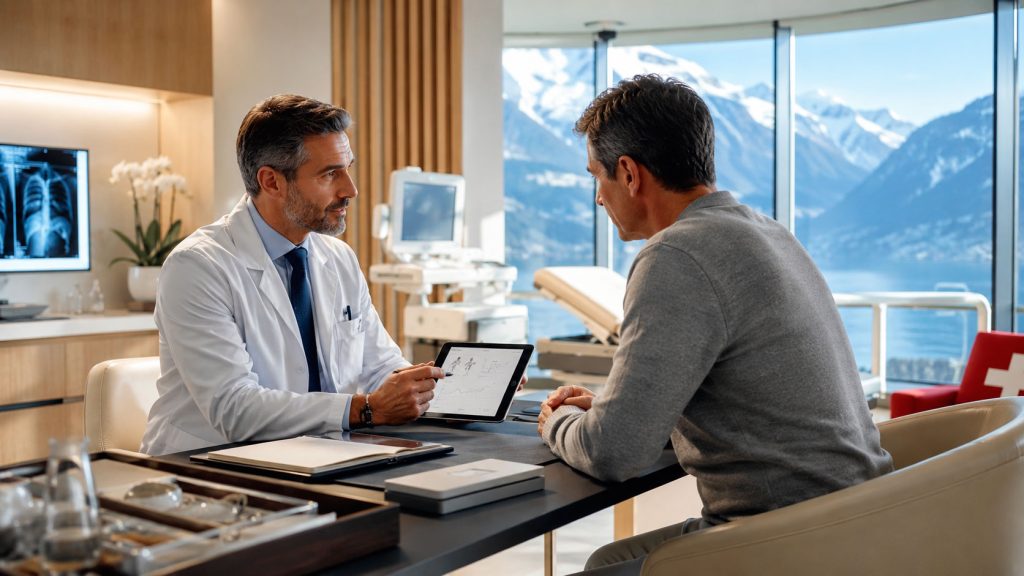
Resorts and climate therapy are generally suited to overall recovery and support, whereas rehabilitation centres are needed where systematic medical supervision is required. The WHO regards rehabilitation as an important part of healthcare, aimed at restoring function, independence and quality of life. For patients this is particularly relevant after operations, injuries and serious illnesses, and wherever recovery calls for a combination of specialist supervision, an individual programme and a carefully designed environment.
The strength of Swiss rehabilitation centres lies in combining clinical expertise with the quality of the surroundings. The patient receives treatments and supervision, together with a space in which it is easier to keep to a routine, gradually return to physical activity and restore psychological balance. This matters because rehabilitation is rarely a purely physical process: after surgery, injury or lengthy treatment, a person needs to regain a sense of control over their body, the rhythm of their life and their daily activity.
For many patients this format proves the most effective. It helps them move beyond the acute phase of treatment to full recovery, taking into account individual characteristics, tolerance of exertion and real goals for returning to everyday life.
Who benefits most from this form of recovery
- People with chronic stress and emotional exhaustion. Suitable for those experiencing constant overload, fatigue and low vitality. Alongside medical care, a change of environment plays an important role, helping the body leave a state of stress and restore its inner balance.
- Patients recovering after treatment. This means people who have undergone operations, injuries or lengthy treatment. Recovery in comfortable, supportive surroundings is psychologically easier and allows a gentler, more gradual return to normal life.
- People who need to strengthen their health gently. These are patients who want to improve their respiratory function, stamina and overall condition without intense exertion. This format allows recovery that is careful and safe.
- Those focused on prevention and early recovery. Suitable for people who want to look after their health before serious problems arise. Especially relevant for those living with constant stress, lack of sleep and chronic tension who want to prevent their condition from deteriorating.
Why an individually chosen programme matters
For all the clear advantages of natural factors, there is no universal solution. One patient recovers best in a mild lakeside climate, another in the mountains with an emphasis on activation and breathing practices, a third needs medical rehabilitation under specialist supervision. The choice between a resort, climate therapy and a rehabilitation centre should therefore be based on the person’s condition, their goals and their doctors’ recommendations, as well as on general ideas about the benefits of nature.
It is the individual approach that makes recovery truly effective. What is valued in Switzerland is the ability to choose conditions in which nature, medical support and daily routine all work in the same direction, rather than a beautiful location for its own sake.
Switzerland has long been a symbol of high-quality recovery, and for good reason. Here, natural healing factors are an integral part of the overall therapeutic approach. Resorts help relieve tension and restore energy, climate therapy supports the respiratory and nervous systems, and rehabilitation centres provide structured recovery after serious conditions.
For the patient, the main advantage of this approach is that it considers the whole person: their physical condition, emotional resources, tolerance of exertion and need for a safe, calm and supportive environment. This is why natural healing in Switzerland remains in demand among those seeking a complete path to restoring their quality of life, beyond a single medical service.
FAQ
What are the natural healing factors in Switzerland?
The main natural factors are clean Alpine air, a mild climate, mountain and lake landscapes, quiet and an exceptionally clean environment. Together they create favourable conditions for the body’s recovery.
How do Swiss resorts differ from rehabilitation centres?
Resorts are better suited to gentle health restoration, stress reduction and general recovery, whereas rehabilitation centres focus on a structured medical approach, specialist supervision and individual programmes after injuries, operations and illnesses.
What is climate therapy?
Climate therapy uses natural conditions such as air, temperature, humidity, altitude and sunlight as part of the recovery process. It helps support overall well-being and the body’s capacity to adapt.
Who might benefit from recovery in Switzerland?
This format is particularly relevant for people after operations and injuries, with chronic stress, overwork, emotional exhaustion or sleep disturbances, and for those who wish to undergo preventive recovery in comfortable surroundings.
Can a resort stay replace medical treatment?
Where medical care is needed, it remains essential and a resort stay complements it. It can be an important addition to treatment and rehabilitation, strengthening the overall recovery effect.
What is the advantage of the Swiss approach to recovery?
Its strength lies in combining a natural environment, a high standard of medicine, individually chosen programmes and comfortable surroundings. This approach takes into account the patient’s emotional resources as well as their physical condition.
Why does an individually chosen programme matter?
Different patients need different conditions for recovery: for some a mild lakeside climate, for others a mountain environment, for others full medical rehabilitation. The choice of programme therefore depends on the state of health, the goals and the specialists’ recommendations.
How do I choose the right form of recovery in Switzerland?
It depends on your needs: resorts suit general health restoration, climate therapy offers the gentle influence of the natural environment, and a rehabilitation centre is the right choice where medical supervision and systematic recovery are needed.