A medical visa for Switzerland is a short-stay Schengen category C visa intended for patients who come to the country for diagnostics, treatment or a medical consultation. To obtain one, you need an invitation from a Swiss clinic, confirmation of your treatment appointment, proof of financial means and the standard set of Schengen visa documents. Processing usually takes 5 to 15 working days. In some cases, a medical visa can be issued on an expedited basis if treatment is urgent.
What is a medical visa for Switzerland
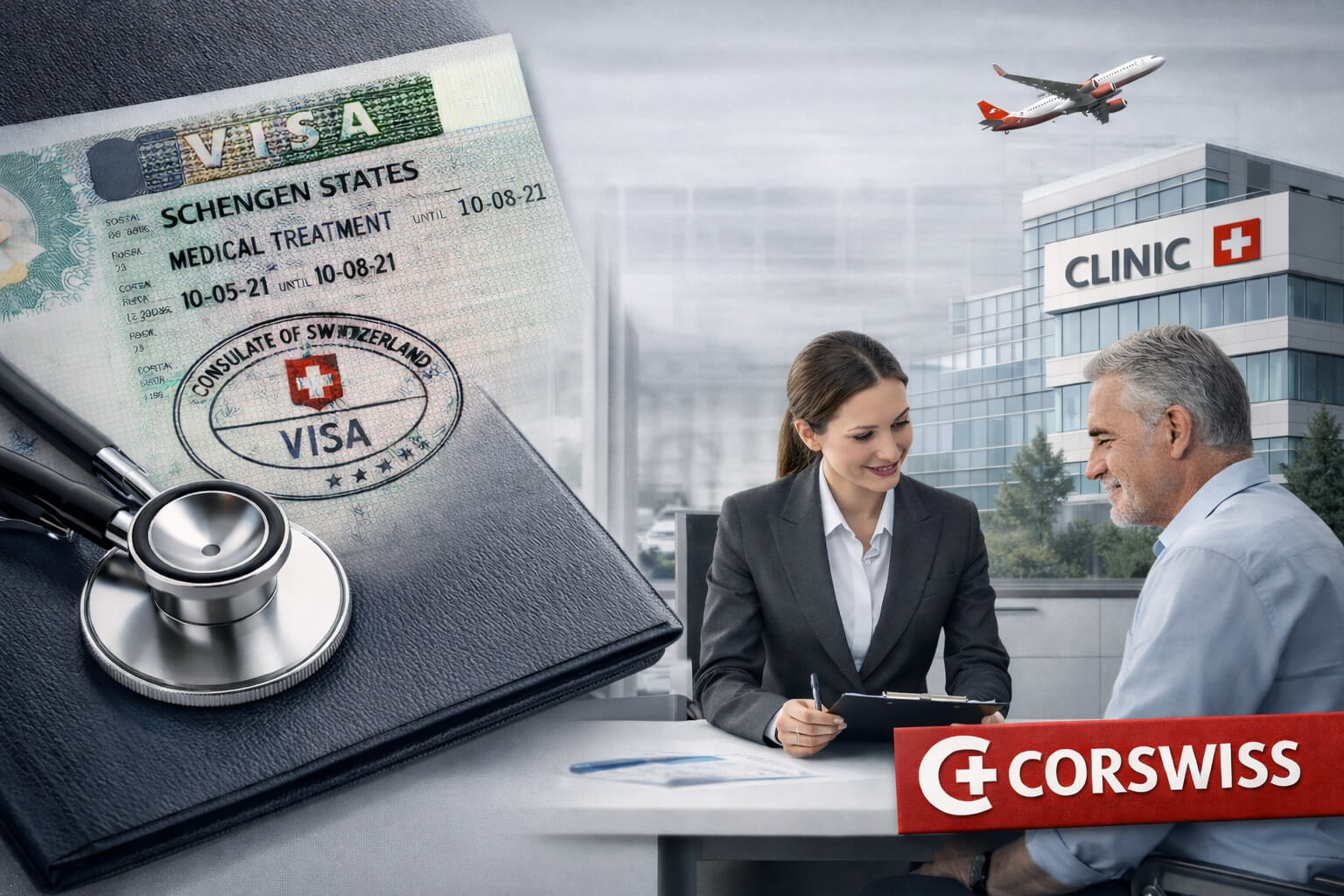
A medical visa is a special type of short-stay visa that allows international patients to enter Switzerland for treatment, an examination or a second medical opinion.
In essence, it is a form of Schengen category C visa, with the medical purpose of the trip stated in the documents. This matters because it confirms the need for treatment and can speed up the processing of the application.
A medical visa is most often issued for:
- complex diagnostics
- surgical operations
- cancer treatment
- rehabilitation
- a second medical opinion
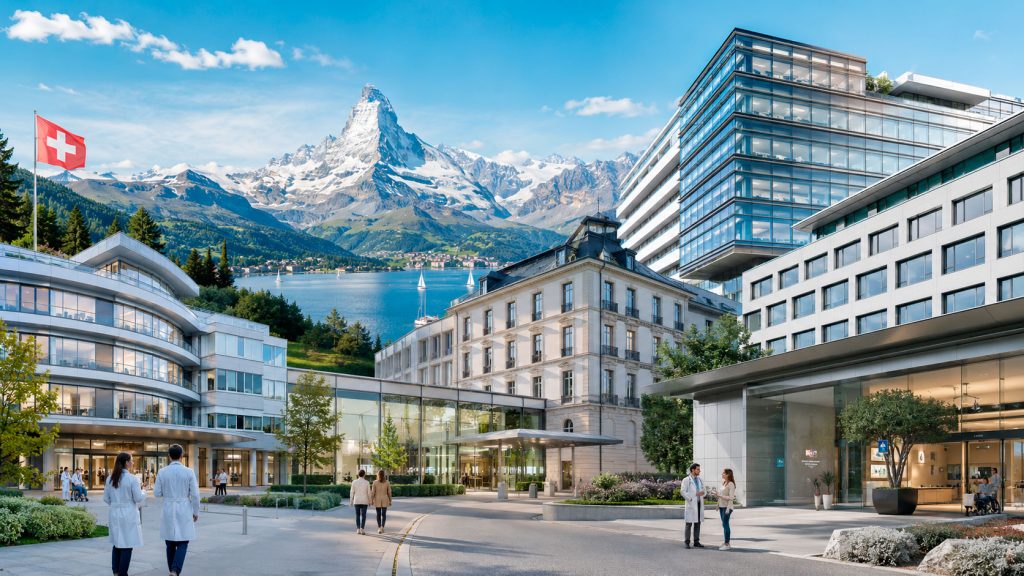
Switzerland is regarded as one of the world’s centres of medical travel thanks to its highly precise diagnostics and strict medical standards.
According to the Swiss Medical Board, the country’s healthcare system regularly ranks among the most effective in the world for quality of treatment and level of medical technology.
Why patients choose treatment in Switzerland
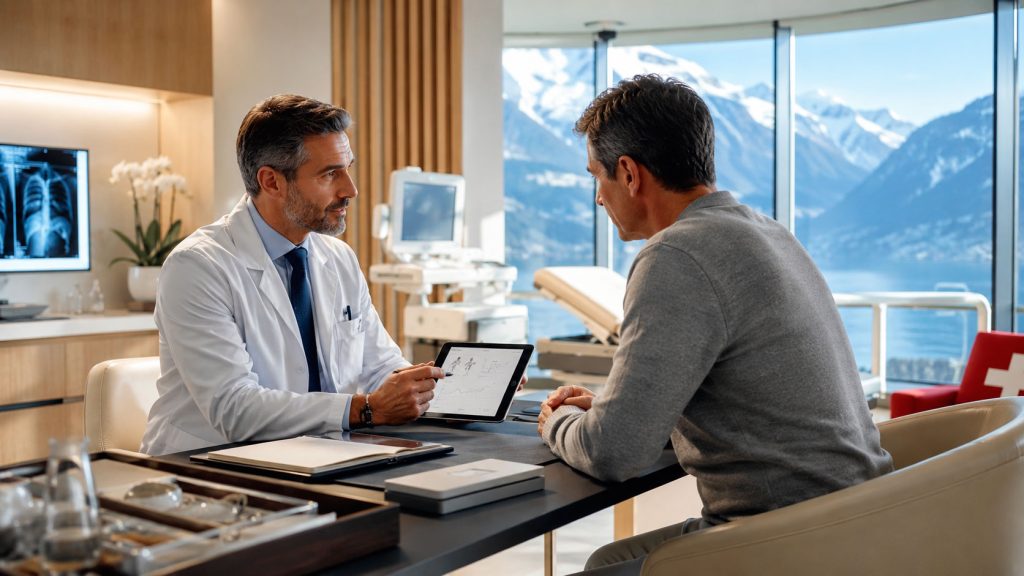
Swiss medicine is known for combining clinical standards, advanced technology and an individual approach to every patient.
Key advantages:
- High medical standards
Clinics follow international treatment protocols, including the recommendations of:
- the WHO (World Health Organization)
- the European Society for Medical Oncology (ESMO)
- international clinical guidelines.
- Precise diagnostics
Swiss medical centres make extensive use of:
- PET-CT and high-precision imaging
- genetic testing
- molecular diagnostics.
- Personalised medicine
Treatment is tailored individually on the basis of the patient’s genetic and biological characteristics.
As a professor of clinical medicine at the University of Zurich notes:
“Modern medicine is moving towards personalised therapies, in which treatment is chosen on the basis of the molecular characteristics of the disease as well as the diagnosis.”
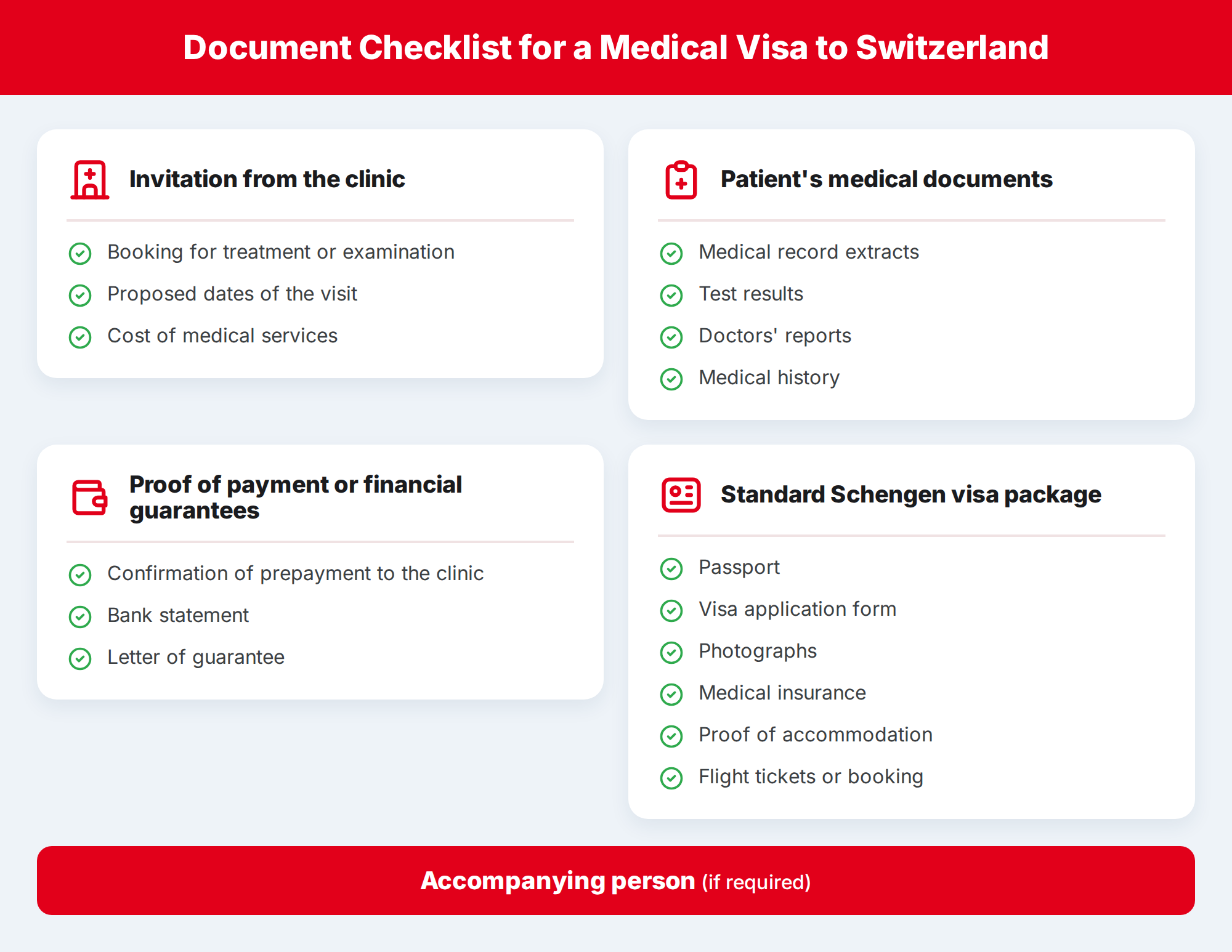
What you need for a medical visa
To apply for a medical visa, you will need the standard set of Schengen documents and medical confirmation of the purpose of your trip.
The main documents:
1. An invitation from the clinic
This is the key document. It confirms:
- your appointment for treatment or an examination
- the expected dates of your visit
- the cost of the medical services.
2. The patient’s medical documents
These usually include:
- extracts from the medical record
- test results
- doctors’ reports
- the medical history.
These documents help the clinic assess the situation and prepare the invitation.
3. Proof of payment or financial guarantees
The consulate must be satisfied that the patient can pay for the treatment.
Acceptable documents include:
- confirmation of advance payment to the clinic
- a bank statement
- a letter of guarantee.
4. The standard Schengen visa set
This includes:
- a passport
- the visa application form
- photographs
- medical insurance
- proof of accommodation
- tickets or a flight reservation.
5. An accompanying person (if required)
If the patient needs to be accompanied, a relative can apply for a visa at the same time. In this case, confirmation of the medical need for an accompanying person is required.
How long processing takes
A medical visa is usually issued more quickly than a tourist visa, especially if treatment is urgent.
Average timeframes:
- 5–10 working days – standard processing
- 2–5 days – expedited processing in medical cases
- up to 15 days – in complex visa situations
Under the rules of the Schengen Visa Code, consulates may process medical visas as a priority if supporting documents confirming the need for treatment are provided.
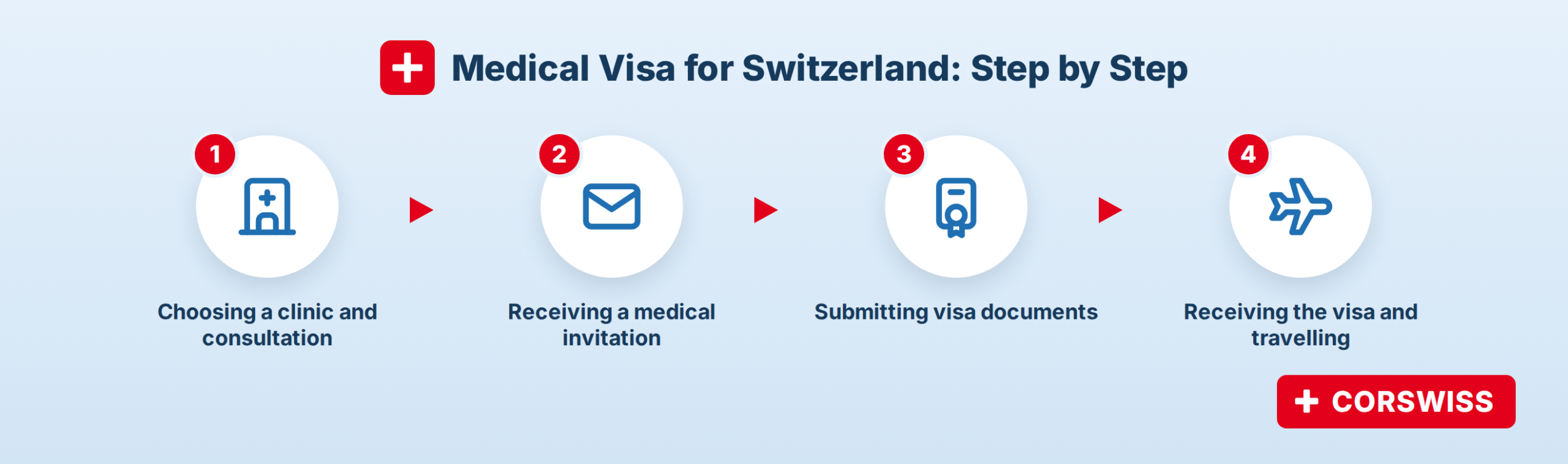
How the medical visa process works
The process usually consists of several stages.
1. Choosing a clinic and consultation
First, the patient chooses a clinic or doctor and sends medical documents for a preliminary assessment.
2. Receiving the medical invitation
After reviewing the documents, the clinic:
- confirms that treatment is possible
- provides a diagnostic or treatment plan
- issues an official invitation.
3. Submitting documents to the visa centre
Documents are submitted to:
- the Swiss consulate
- a visa centre.
In most cases, biometric data must be provided.
4. Receiving the visa
Once the visa is approved, the patient can enter the country for treatment. A medical visa is sometimes issued for multiple entries from the outset if treatment involves several stages.
Are there difficulties in obtaining a medical visa for Switzerland for Russian citizens
Following changes in EU visa policy, some patients have questions about whether a medical visa can be obtained. Applying for a visa for treatment remains possible, however, provided that supporting documents from the clinic and a complete set of visa documents are submitted.
Switzerland processes such applications under the Schengen Visa Code, and where there are medical grounds they may be handled as a priority.
When applying, several factors are important:
- an official invitation from a Swiss clinic
- proof of financial guarantees for the treatment
- the patient’s medical documents.
With a properly prepared set of documents, a medical visa is usually issued without further complications. Specialised medical coordinators can help patients prepare the documents and organise the trip.
The role of medical coordinators
Organising treatment abroad can be complex, especially where serious illness is involved.
Medical coordinators help to:
- select the clinic and doctor
- translate medical documents
- obtain the invitation
- prepare the visa documents
- organise the trip and personal support.
Medical concierge services such as CorSwiss help patients move through this process more quickly and handle the paperwork smoothly.
Why it is important to prepare medical documents in advance
One of the most common reasons for visa delays is an incomplete set of medical documents.
Experts recommend preparing the following in advance:
- translations of medical reports
- recent test results
- extracts from the medical history.
According to research published in The Lancet, timely diagnosis and rapid access to specialist care significantly improve the effectiveness of treatment for complex diseases.
This is particularly important for:
- cancer
- cardiological conditions
- rare diseases.
A medical visa for Switzerland is a relatively quick and clear process when the documents are properly prepared and an official invitation from the clinic has been obtained. Thanks to its high standard of medicine, modern diagnostic technology and international treatment standards, the country remains one of the leading destinations for medical travel. Where needed, specialised services such as CorSwiss help patients organise their treatment and prepare all the documents required for the trip.
FAQ
How long is a medical visa for Switzerland valid?
Most often, a short-stay Schengen visa is issued for up to 90 days. The duration may, however, depend on the length of treatment.
Can a medical visa be extended?
Yes, if the treatment takes longer. This requires medical confirmation from the clinic.
Is advance payment for treatment required to obtain a visa?
In most cases, the clinic requires a partial advance payment or a financial guarantee to confirm the patient’s commitment.
Can a medical visa be obtained urgently?
Yes. Where there are medical indications, the consulate may process the application on an expedited basis.
Can I come for treatment with a relative?
Yes. An accompanying person can obtain a visa together with the patient if this is supported by the medical documents.