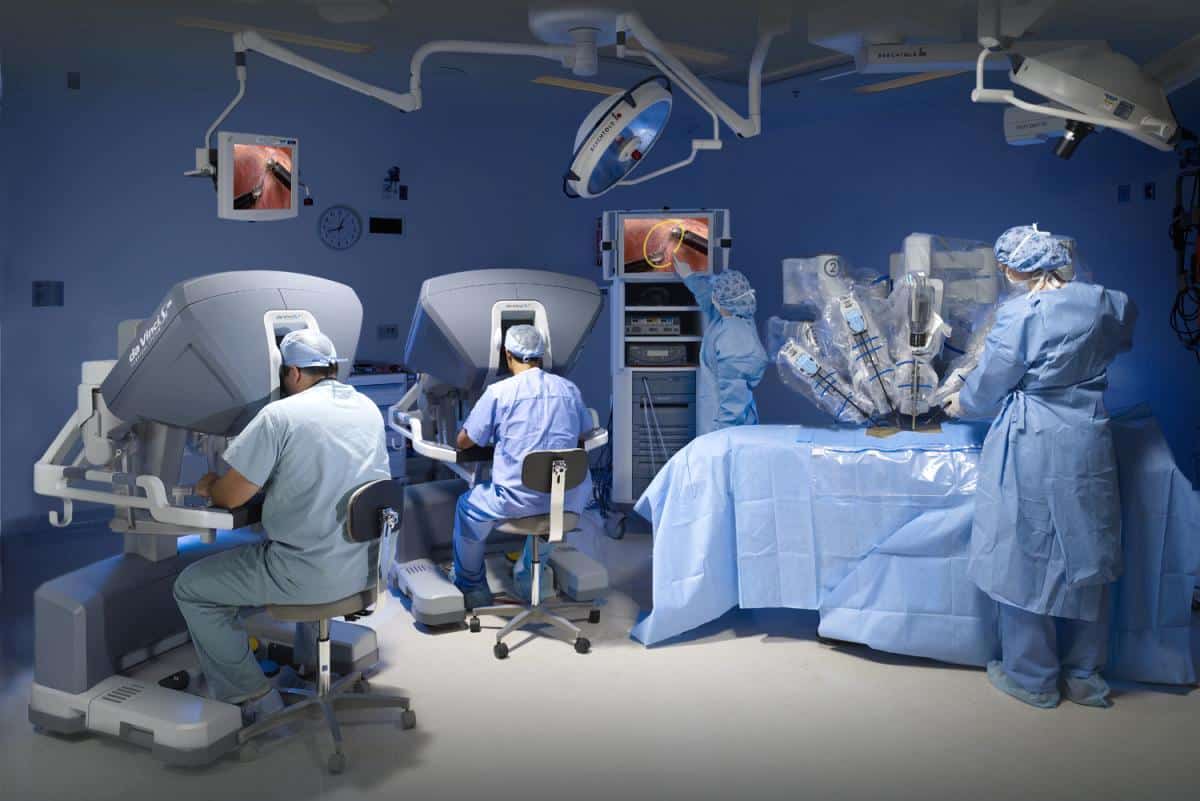
The Da Vinci Code: a robotic surgeon at Privatklinik Bethanien
Switzerland leads European countries in the development and adoption of medical innovation. The government spends 11% of the country’s total GDP on the healthcare system. Only the USA allocates more to developing this sector – 16% of GDP. It is only natural that the quality of medical care and service in Switzerland is very high. Swiss doctors are the first in Europe to start working with new medical technology.
The da Vinci robotic surgical system at Privatklinik Bethanien
Bethanien is a leading Swiss clinic to which around 5,000 patients from all over the world entrust their health each year. In 2017 the clinic took second place in an unusual beauty contest among Swiss clinics. Bethanien is set in a picturesque region, surrounded by the beauty of Alpine mountains and lakes. The rooms in which patients stay resemble luxury suites in fine hotels more than hospital wards.
Professors and holders of medical doctorates in a range of specialties work at Bethanien. The clinic offers obstetrics, treats gynaecological conditions, addresses male and female infertility, and treats disorders of the ear, nose and throat, the gastrointestinal (GI) tract, the musculoskeletal system and many other conditions.
Bethanien specialises in surgery across many fields, from maxillofacial and plastic surgery to musculoskeletal surgery and tumour removal. The clinic’s surgeons and neurosurgeons are renowned in Switzerland and around the world. The clinic works with the latest-generation technology and gives preference to minimally invasive surgery whenever the scalpel can be avoided.
This year the surgical department at Bethanien acquired the latest high-precision equipment: the da Vinci surgical system. In essence, it is a robotic surgeon that takes minimally invasive surgery to a new level. Thanks to da Vinci, the clinic’s surgeons can perform minimally invasive operations in fields well beyond urology and gynaecology.
Minimally invasive surgery: the future of surgery
Minimally invasive operations are operations inside the body performed without incisions or tissue damage during the procedure. Whenever minimally invasive surgery is possible, it is always the better option. Operations performed with a traditional scalpel require general anaesthesia, which places a serious strain on the heart. Rehabilitation after such operations is long and demanding.
Minimally invasive operations are performed with high-precision computerised medical equipment, without incisions in the body. The most common method used for such operations is endoscopy. A thin tube with a micro-camera and a light at its tip – the endoscope – is introduced into the body cavity. The endoscope also contains an instrument with which the operation is performed.
The da Vinci surgical system goes beyond standard endoscopy. The surgeon’s experience and intuition are complemented by a robot that makes no errors. During an operation with da Vinci, the surgeon controls the instruments from a special console. A tiny three-dimensional camera significantly widens the view of the operating field. As a result, the surgeon sees the area being operated on much more clearly than in conventional surgery and can also see areas that are hidden in the classic technique.
The da Vinci surgical system makes it possible to perform complex operations without risk and minimises rehabilitation time.
If you understand German, you can watch Bethanien doctors talking about their use of da Vinci robotics on YouTube.


