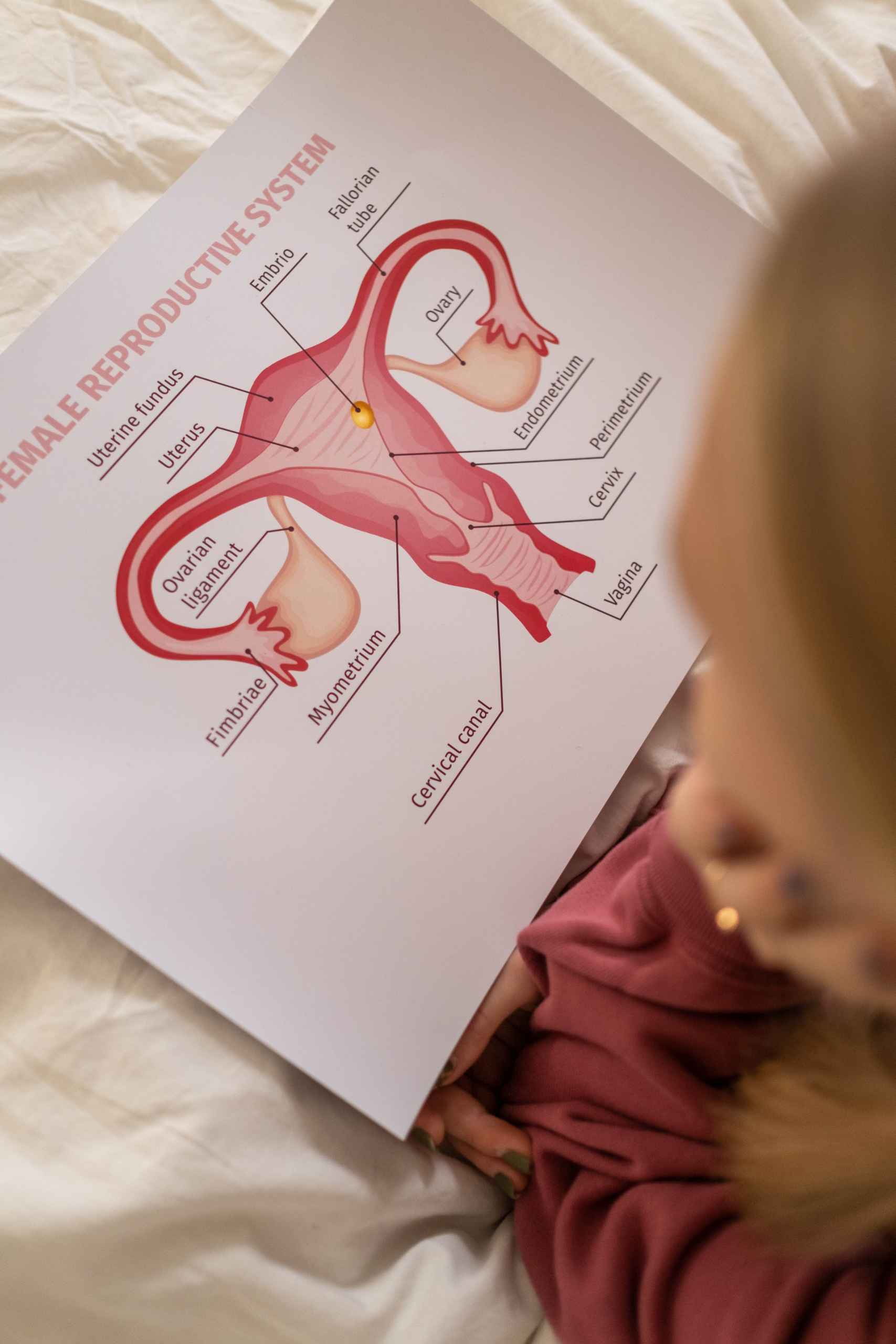
A fibroid (myoma) is a benign tumour that develops from muscle cells. The term myoma is often used as a synonym for uterine fibroids. Uterine fibroids are the most common benign tumours in women. They are not dangerous in themselves, but in some cases they cause unpleasant discomfort and serious complications. Depending on its size, a fibroid can cause a variety of symptoms.
The changes caused by a fibroid are not life-threatening, but they can affect a woman’s quality of life and her ability to become pregnant. Fibroids are spherical tumours, usually of firm consistency. Their size can vary from that of a pea to a growth of several centimetres, which may become larger than the uterus itself. A fibroid remains confined to its site: it does not spread to nearby tissue or form metastases. Fibroids may spontaneously grow or shrink at varying rates over the course of a woman’s life. The type of therapy depends on the symptoms, the size and location of the fibroid and the age of the woman affected.
Diagnosing fibroids
Uterine fibroids are often discovered by chance during a gynaecological examination, as they frequently cause no symptoms. An ultrasound examination is carried out to locate the fibroid precisely and determine its size.
This is why it is important for women to have a pelvic ultrasound at least once a year.
Diagnostics in Switzerland include a women’s health check-up programme. This programme covers the full range of tests and ultrasound examinations that women specifically need in order to prevent asymptomatic conditions such as uterine fibroids.
Causes
The causes of uterine fibroids are unknown. Some fibroids are known to grow under the influence of female sex hormones – oestrogens. Non-modifiable risk factors (those that cannot be changed) include: Black ethnicity, genetic factors, an early first and a late last menstrual period, and fibroids in close relatives (for example, the mother). Modifiable risk factors (which can be influenced over the course of life) are: obesity, high blood pressure (especially when uncontrolled), high consumption of red meat, and excessive use of substances such as alcohol and caffeine. Pregnancy before the age of 25, multiple births and the use of hormonal contraception have been shown to have a protective effect against fibroid formation. Around one in five women is affected. In most of those affected, fibroids cause no symptoms. They usually appear between the ages of 35 and 50.
Symptoms of fibroids
A fibroid may be completely asymptomatic, but if it grows quickly, pain during menstruation, bleeding outside the menstrual cycle, abdominal pain (in the lower abdomen) and pain during intercourse may occur. Heavier menstrual bleeding can lead to iron deficiency.
If the fibroid is large, the abdomen may also enlarge. Difficulty becoming pregnant can also be a symptom of fibroids. Fibroids located in the cervix can also increase the risk of miscarriage or lead to complications during childbirth.
What to do about uterine fibroids
If symptoms appear that may indicate uterine fibroids, you should see a gynaecologist to obtain a diagnosis, rule out other causes of the symptoms and receive treatment. Asymptomatic changes call for planned follow-up monitoring. Symptoms of anaemia, which may result from heavy vaginal bleeding, deserve serious attention: consult a general practitioner while waiting for the specialist appointment.
What treatments are available for uterine fibroids?
Only fibroids that cause symptoms reducing a woman’s quality of life require treatment. Treatment in Switzerland involves choosing a method according to the patient’s age, the need to preserve fertility and the patient’s wishes regarding preservation of the uterus. Asymptomatic changes are simply monitored regularly.
In every case, drug treatment should be considered; it relieves symptoms without making the fibroid disappear. Medication is usually the first choice when preparing for surgery, as it helps reduce the size of the fibroid. It should also be borne in mind that some of these drugs can be used only for a limited time, and their effect is short-lived.
Surgical methods are the most popular: they are more effective and are used more often, particularly when drug treatment does not bring the desired relief of symptoms. When the patient is of reproductive age and planning a pregnancy, the most common procedure is enucleation of the fibroid (myomectomy). The procedure can be performed laparoscopically through small openings in the abdominal wall, and small (up to 3 cm) submucosal fibroids can be removed by hysteroscopy.
In postmenopausal women, or younger women who are not planning a pregnancy, the uterus is usually removed (hysterectomy). The fallopian tubes are usually removed together with the uterus, sometimes with the cervix. The ovaries are usually preserved until the age of 60–65, as they have a positive effect on a woman’s health and wellbeing. At a later age, as there is no benefit in preserving them and there is a risk of cancer developing there, the ovaries are removed together with the entire reproductive organ.


