Tuberculosis is one of the most widespread infectious diseases. It is estimated that more than 10 million people worldwide fall ill with it every year, and more than 1 million die from it annually.
Tuberculosis is among the ten leading causes of death worldwide and claims 1.8 million lives each year. Of all new tuberculosis cases recorded in 2021, 86% occurred in the 30 countries with the highest incidence. Two-thirds of cases are concentrated in eight countries, led by India, followed by China, Indonesia, the Philippines, Pakistan, Nigeria, Bangladesh and South Africa. Nevertheless, it is estimated that the diagnosis and treatment of tuberculosis saved 66 million lives between 2000 and 2021.
Treatment in Switzerland is delivered at the very highest level, using advanced methods in surroundings comparable to a five-star hotel.
The disease
Tuberculosis is a contagious disease caused by bacteria.
Whether the disease becomes active in people infected with Koch’s bacillus depends on many factors (genetic, immunological, nutritional and social). It is estimated that 5–15% of infected people will develop symptomatic tuberculosis during their lifetime. The bacillus can remain “dormant” in the body for years. People with weakened immunity are at higher risk of developing active tuberculosis. HIV and Koch’s bacillus form a particularly dangerous combination, because the immune deficiencies caused by HIV infection encourage tuberculosis to progress. Without treatment, tuberculosis is fatal in almost all patients with AIDS.
The bacteria mainly affect the lungs. When an infected person speaks, sneezes or coughs, they release droplets containing the microbes, which others may breathe in. Yet not everyone who comes into contact with the bacteria falls ill. The body’s own defences fight the pathogens and often neutralise them. Sometimes the bacteria remain inactive in the body for many years. If the immune system is weakened, the bacteria can spread throughout the body, including to the lymph nodes, bones, urinary tract or meninges.
Symptoms of tuberculosis
Tuberculosis is an insidious disease. In most patients the symptoms are mild, and in many cases the disease is diagnosed too late. Extrapulmonary tuberculosis in particular, which is now very rare, is often difficult to diagnose. A person should see a doctor if they have the following symptoms:
- a persistent cough lasting at least 3 weeks
- coughing up sputum, which may contain blood
- loss of appetite and weight
- a general feeling of tiredness and being unwell
- swelling in the neck
- fever
- heavy sweating at night
- chest pain
Diagnosing tuberculosis – the smear test
A doctor suspects the disease on the basis of its symptoms or the result of a chest X-ray. Additional tests are always needed to confirm it. A definitive diagnosis of tuberculosis can only be made when mycobacteria are found in the sample, by smear or culture. In special cases, the diagnosis (in the sense of a decision to start treatment) is made even without bacteriological confirmation of tuberculosis.
In patients with suspected pulmonary tuberculosis, sputum is the main material for testing. When coughing up sputum for the test, make sure that it is genuinely bronchial fluid and not saliva.
Diagnosing tuberculosis – chest X-ray
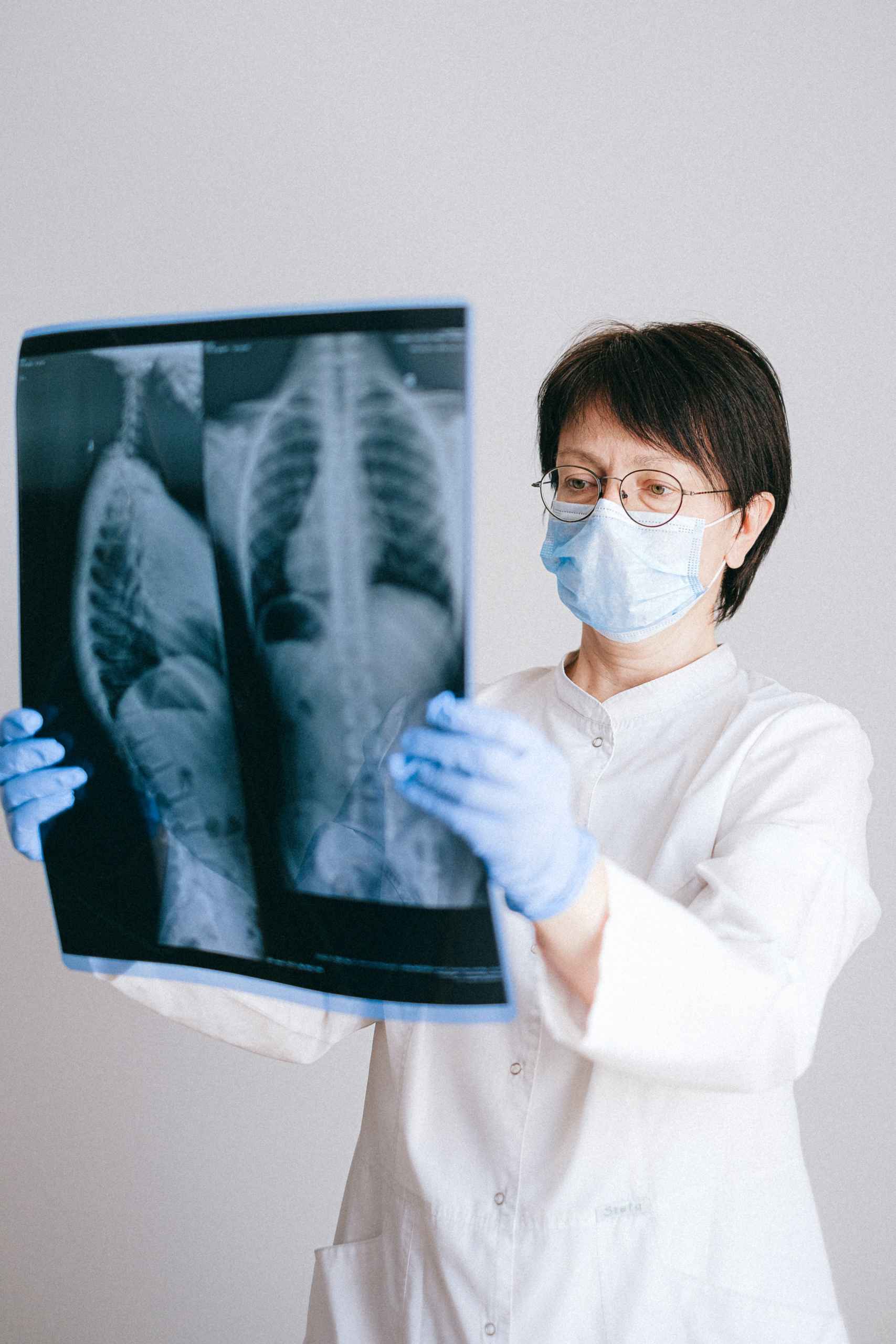
This is the main test for detecting tuberculous lesions in the lungs and assessing their severity.
Lesions suspected to be tuberculous have a characteristic appearance on a chest X-ray. Unfortunately, they are not entirely specific to this disease, so their detection calls for further investigation.
The chest X-ray is the basic examination in the radiological diagnosis of pulmonary tuberculosis, and its result often guides further treatment. In rare cases, a CT scan of the chest is required, most often using a high-resolution algorithm that allows precise visualisation of the lung parenchyma.
Diagnosing tuberculosis – the tuberculin skin test
This test involves injecting a standard quantity of highly purified filtrate of a tuberculosis culture into the skin of the forearm. The preparation is injected intradermally, so the injection is painless. The body of a person who has previously been in contact with mycobacteria (that is, who has been infected or vaccinated with BCG) responds to the mycobacterial antigens with an immune reaction. Redness appears on the skin at the injection site, and a thickening can be felt under the fingers. In people with a strong immune response, tiny blisters may form on the skin. The reaction does not exceed 2–3 cm in size. The reading is based on measuring the diameter of the infiltrate that can be felt in the skin and is taken approximately 48–72 hours after the injection.
The test is safe and has no contraindications. Even the strongest reaction subsides after a while, leaving no trace on the skin. A positive result indicates:
- mycobacterial infection or active tuberculosis (the test does not distinguish between previous infection and active disease)
- BCG vaccination (and a successful immune response to this vaccine). If most people in a given population have been vaccinated with BCG, this reduces the diagnostic value of the test.
- contact with non-tuberculous mycobacteria (bacteria common in the environment that very rarely cause illnesses known as mycobacterioses).
Unfortunately, a large proportion (up to 40%) of people infected with mycobacteria have a negative tuberculin test. The reasons are most often factors that weaken or modify the body’s immunity, such as certain viral infections (for example smallpox, measles, mumps and especially HIV infection), chronic diseases (for example diabetes, kidney failure), medications (for example glucocorticosteroids), poor nutrition and many other factors. Because of these factors, a negative tuberculin test result by no means rules out infection with mycobacteria. The test can safely be repeated many times. If the size of the reaction has increased by 10 mm within 12 months, this indicates a recent mycobacterial infection.
All of this shows how important it is to be examined promptly when a number of symptoms that may indicate tuberculosis appear. Diagnostics in Switzerland draw on all of the world’s most advanced technologies.
How is tuberculosis transmitted?
Tuberculosis mycobacteria are transmitted through tiny airborne droplets released by a person with tuberculosis, in particular when coughing, talking, singing or sneezing.
Tuberculosis is less contagious than diseases such as influenza or measles: transmission usually requires prolonged close contact (in an enclosed space), for example living in the same room as an infectious person or travelling together in a car. It also depends on how infectious the sick person is and on the duration of contact (usually at least several hours of contact are needed).
Consequently, people who have been in contact with someone with tuberculosis will not systematically become infected, let alone ill. Young children and people with weakened immunity are, however, particularly vulnerable.


