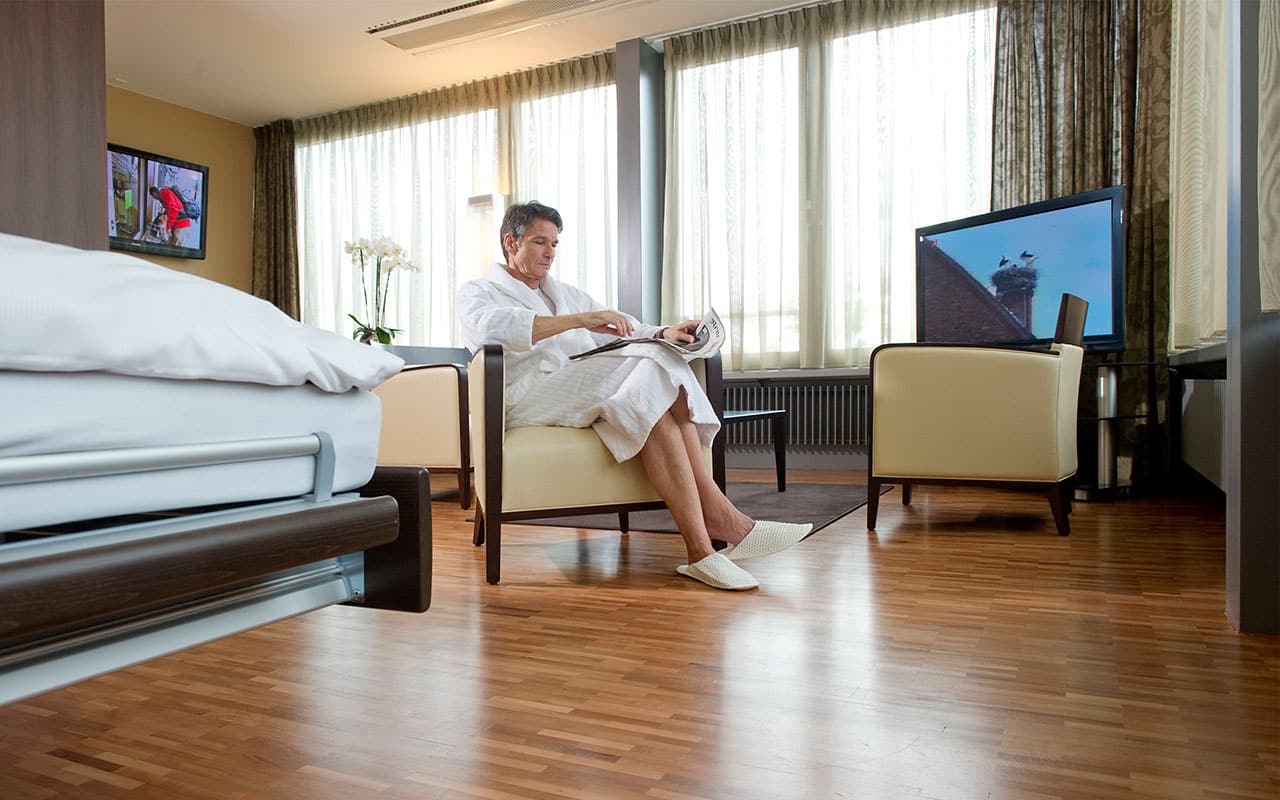
Hospitals’ new offerings in hotel services. The hospitality of the hotel industry applied to patient accommodation. How recovering in a hotel room is becoming accepted practice.
A tourism-oriented approach to medical services is regarded today as a fashionable trend. See for yourself: many Swiss hotels now meet the highest medical standards. What is more, some hospitals are acquiring hotels of their own.
Davide Scruzzi: “Tourism in Swiss healthcare is nothing new. There are long-standing traditions built up through spa treatment with thermal waters. At present, this field is receiving fresh impetus. A recent example is the adaptation of the hotel classification of the Swiss hotel industry’s trade organisation. It is intended to provide wider access to services from private and cantonal hospitals.”
Potential for 150 businesses
In the past, the concept of a “wellness” hotel was defined simply by the combination of a swimming pool and various specialised wellness services. Today a new term has emerged: “medical wellness”. Ordinary wellness hotels, by contrast, focus on the general health of their guests and on providing medical services.
A striking example is the Grand Resort Bad Ragaz, which offers the services of 70 doctors. They range from plastic surgery to orthopaedics, care for children, and support for those who wish to optimise their nutrition and mental health.
Thomas Allemann says the Swiss hotel industry has the potential for around 150 establishments that could position themselves as medical wellness hotels. This is also important for clinic networks. Hotels can specialise in people undergoing outpatient or inpatient treatment in hospitals, providing them with greater support, and in accommodating their relatives. Unique combinations of hotel and clinic are being developed for this purpose.
Allemann is currently meeting representatives of a Swiss healthcare platform, founded in 2010, to obtain help with international cooperation between clinics.
Hotels are receiving more and more patients from clinics
There are also regional initiatives. A unit of the Lucerne Cantonal Hospital, Klinik Hirslanden and Cereneo are being promoted. Four healthcare staff in Lucerne look after clinic guests staying at the hotel, and interpreting services are included. At first the initiative met with resistance, as there were concerns that the accommodation needs of the local population would be overlooked. Today, hotels receive up to 100 patients a year from the clinics.
This may seem few, but it brings great value to the patient during treatment, even though the cost of treatment and accommodation often amounts to several hundred thousand francs per person. The original goal was around 300 patients a year, but this has proved extremely difficult to reach.
Patients come from all over the world to clinics with hotels. Many are Russian; there are also people from the Middle East, Germany and China. The 16 hospitals of the Hirslanden group can treat around 4,000 “international patients” a year.
The treatments most in demand are in oncology, orthopaedics, cardiology and urology. Patients come because of the promotion of Swiss healthcare, and they are also referred by agencies abroad.
According to Conrad Engler of the hospital association H+, foreigners come for more than high-quality treatment: “Another important factor is comfortable accommodation away from home, which reduces the emotional stress associated with travelling and treatment.”
A 3-star hotel next to the hospital
To improve the care of international patients, new patient hotel concepts are emerging in Basel and Geneva. University Hospital Basel has examined the benefits of cooperation between patients and hotels. Suppose that, for some of them, treatment in hospital combined with a hotel stay is a more convenient and also cheaper alternative to inpatient treatment. Patients from abroad are not the hoteliers’ main target, however, as not all of them will stay in modest hotels. When around 50 patients a year come from abroad, they often undergo only a few procedures and then leave. And some very wealthy patients who prefer to recover in a hotel room stay with their families in more expensive and prestigious hotels.
At the university hospital in Lausanne, 115 rooms have been fitted out in a three-star hotel, ready to receive patients with low care needs, including their family members, next year. This is a project of a private partner that maintains a relationship with the clinic but is not aimed exclusively at patients from abroad, a hospital representative emphasises.


