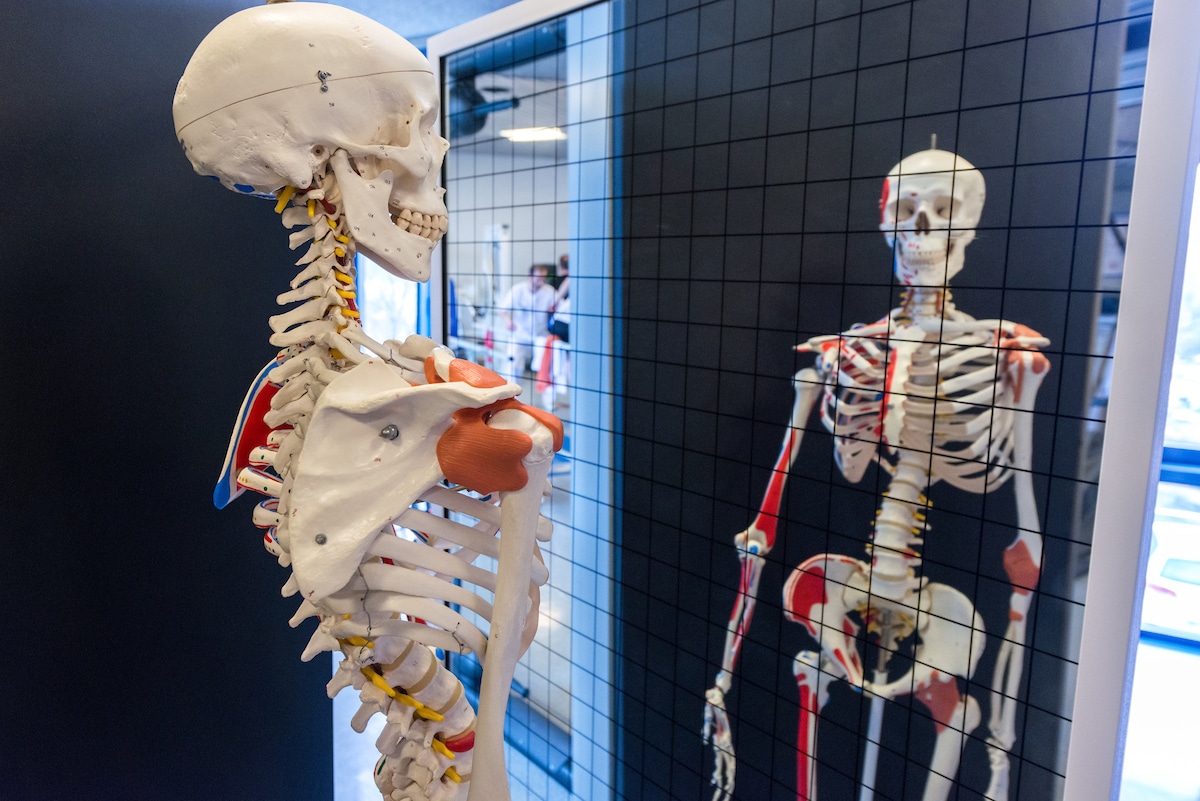
Many patients choose Swiss clinics to resolve their health problems, and for good reason. The country is a world-renowned medical centre and also a ski destination visited every year by a great many professional and amateur athletes. Injuries, unfortunately, are no rarity here. They include disorders of the musculoskeletal system as well as problems with joints, muscles, tendons and other tissues. Orthopaedics is therefore an essential specialty at local clinics. Swiss surgeons use innovative methods that restore internal tissues as gently as possible.
Consultations in orthopaedic surgery and surgical treatment may be needed by professional athletes and sedentary office workers alike. Intensive training with heavy loads often leads to various joint injuries that are difficult to treat conservatively. On the other hand, a sedentary lifestyle can also harm the body, causing various musculoskeletal disorders that require surgery.
What do patients come to Switzerland to treat?
The spine: injuries and degenerative diseases. Implantation of vertebrae and discs is an important area;
Bone conditions: chronic and oncological diseases;
Congenital and acquired limb defects;
Abnormal limb mobility, or mobility lost as a result of injuries to bones and ligaments, joints and tendons, nerve endings and muscles;
Degenerative and inflammatory joint diseases;
Bone conditions of various origins (tumours, degenerative and occupational diseases, injuries);
Congenital developmental disorders of a child’s joints and musculoskeletal system;
Disorders of the geometry of the jaw and face and of the bite.
Swiss medical solutions in sports and paediatric orthopaedics, prosthetics and spinal surgery are considered among the most effective in the world. One of the leading clinics in this field is Ars Medica. More than 3,400 musculoskeletal operations are performed here every year. It is one of the most popular and modern medical institutions, and patients from all over the world come here for consultations. The clinic treats herniated discs, disc compression and degeneration, stress fractures, scoliosis and osteochondrosis, tendon disorders, foot conditions and injuries of the knee, shoulder, hand and elbow. These include classic fractures, inflammation, joint wear, pain, nerve and ligament injuries, arthrosis and post-traumatic pain.
All modern orthopaedic surgery in Switzerland is based on high-tech treatment methods. Above all, this means minimally invasive techniques such as arthroscopy. This technique allows an endoscope to be inserted into the joint cavity to assess the damage and carry out repairs. For complex fractures, osteosynthesis is used – a procedure that surgically joins bone fragments with fixation devices that allow the bone to function normally.
If a joint cannot be preserved, joint replacement is performed. This means replacing natural elements of the musculoskeletal system with artificial ones. Hip and knee replacements are used successfully today, as are replacements of the small joints of the palm and fingers. All materials are highly elastic, strong and, above all, bioinert. Sometimes bone tissue is replaced or built up. This technique is called osteoplasty. It is usually used to correct bone deformities resulting from injury, congenital conditions or previous surgery.
At Swiss clinics, the guiding principle is minimal tissue damage so that wounds heal as quickly as possible. Rehabilitation is comprehensive. After surgery, patients are supported by dietitians, psychologists, cosmetologists and other specialists.


