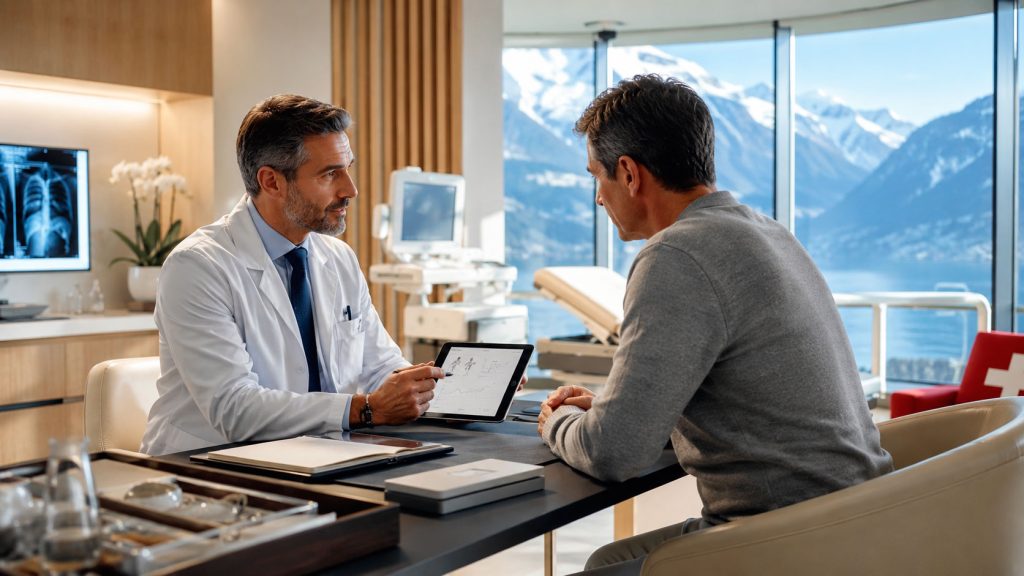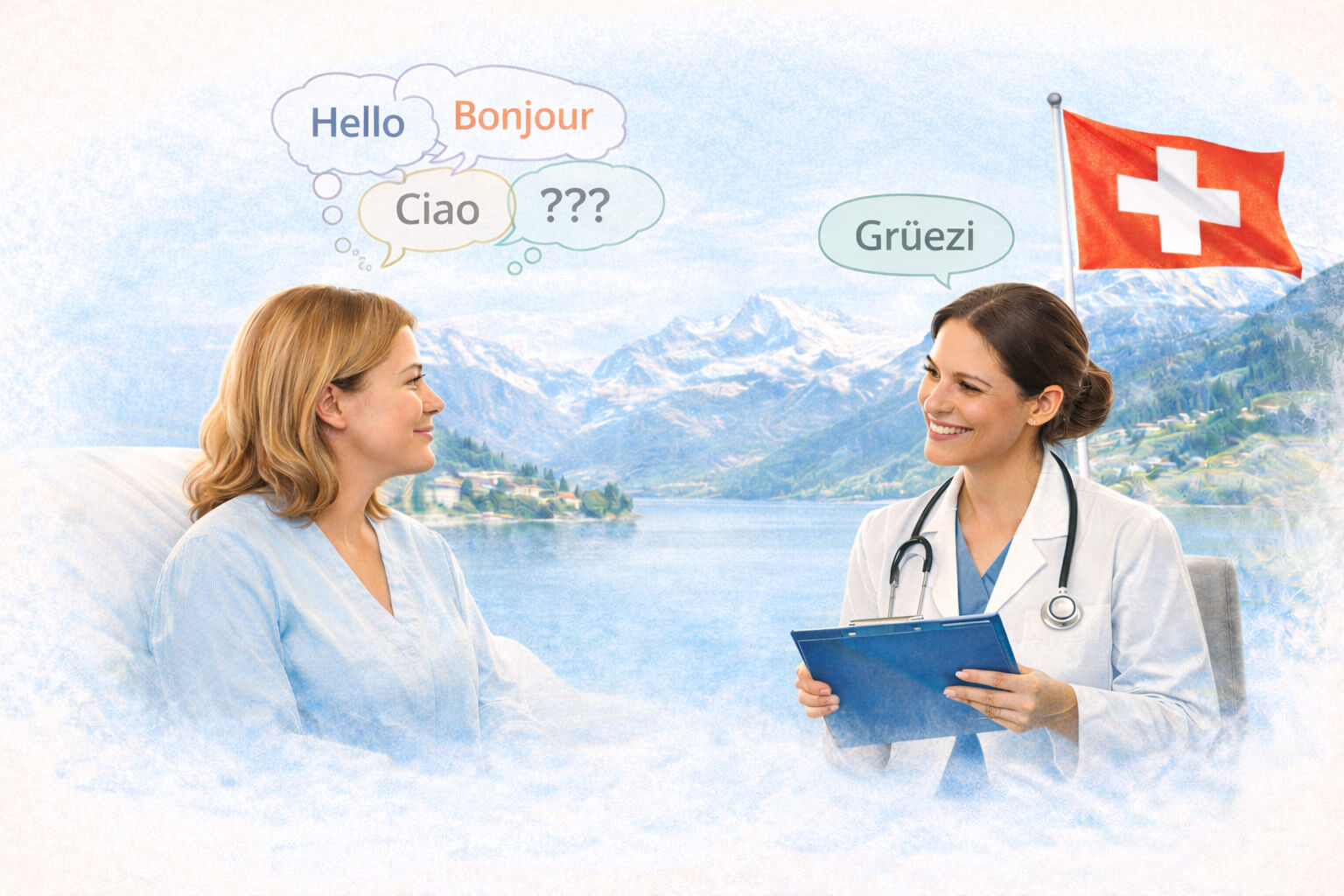
Speaking the language can make communication with doctors easier, but it is generally not a requirement for treatment in Switzerland. Swiss clinics have long experience with international patients and have international departments that help arrange communication and the translation of documents. In many cases the doctors speak English, and an interpreter is provided whenever needed. Thanks to the system of medical support, even patients who speak no European language can undergo diagnosis and treatment without serious language difficulties.
Which languages are used in Swiss medicine
Switzerland has a multilingual culture, and this is reflected in the way its medical institutions work. Several official languages are used in the country, and they are all used in the healthcare system too.
The main languages of medical communication:
- German – the most widely spoken language, used in most regions of the country
- French – widely used in western Switzerland
- Italian – used in the southern region of the country
- English – frequently used when working with international patients
The main language of the medical staff may vary by region. In Zurich, Basel and Bern, for example, German is most common; in Geneva and Lausanne, French; and in the canton of Ticino, Italian.
For international patients, however, this is rarely a problem. Large clinics and medical centres usually employ specialists who speak several languages, including English.
Do doctors communicate in English?
In the Swiss medical system, English is widely used in research and in international medical practice. Many doctors have trained or completed fellowships elsewhere in Europe and in the USA, so they speak English at a professional level.
English is used particularly often:
- in university hospitals
- in large private medical centres
- in international medical programmes
- when working with international patients
In such institutions, consultations, discussions of the diagnosis and the treatment plan can take place in English with no need for additional translation.
Effective communication between doctor and patient is one of the key factors in safe treatment. Many clinics embrace this principle and make sure every stage of treatment is explained clearly to the patient.
International departments for international patients
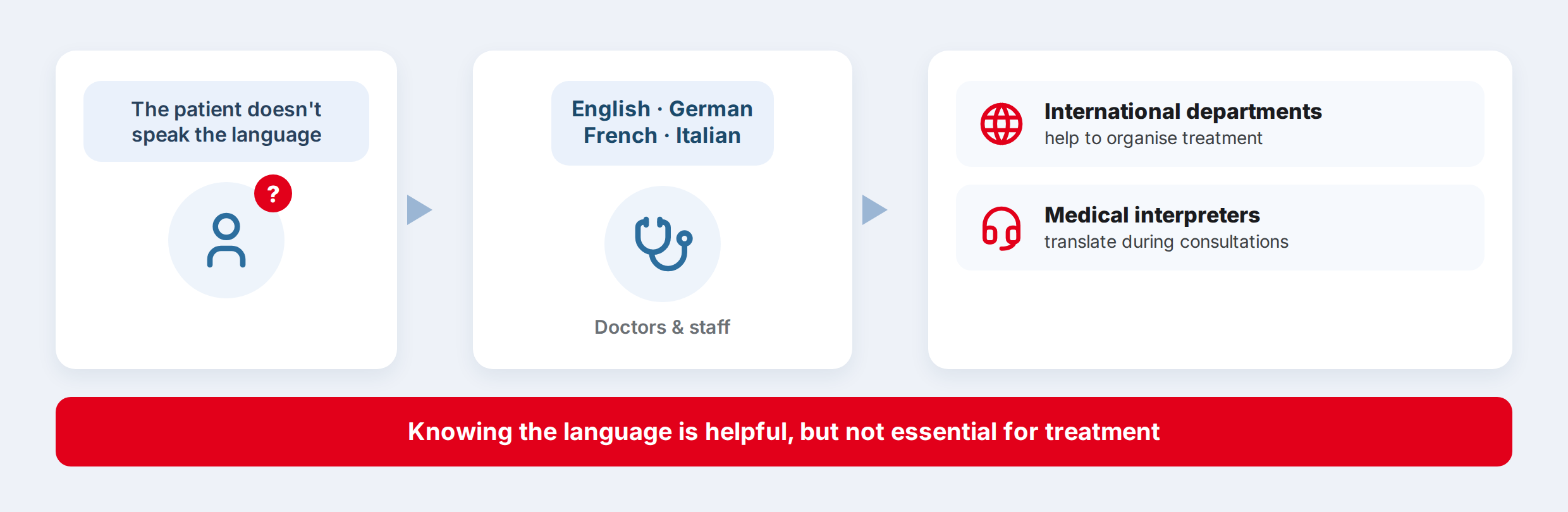
Swiss clinics have long welcomed patients from many countries, so most large medical centres have dedicated international departments.
Their role is to help international patients arrange treatment and handle organisational matters.
As a rule, international departments help to:
- organise communication between patient and doctor
- translate medical documents
- agree the treatment plan
- coordinate appointments for examinations and consultations
- support the patient during treatment
These departments act as the link between the patient and the medical team. As a result, the language barrier is greatly reduced and the treatment process becomes clearer and more comfortable.
Do you need an interpreter during treatment?
In some situations a patient may need a professional interpreter. This depends on the complexity of the medical information and on the patient’s command of the language.
An interpreter is most often needed in the following cases:
- discussing a complex diagnosis
- explaining a treatment plan or a surgical procedure
- signing medical and legal documents
- a long hospital stay
- consultations with several specialists
In these situations, interpreting helps prevent misunderstandings and ensures that medical information is conveyed accurately.
As one European expert in medical communication observes:
“The patient must fully understand the diagnosis and the treatment plan. Professional medical interpreting helps prevent errors and makes therapy safer.”
How the language barrier is usually overcome
In practice, the language barrier in medical travel is addressed in several ways. Swiss clinics and medical coordinators have long since developed a system of support for international patients.
The most common solutions:
- Medical coordinators: specialists who help the patient deal with the clinic, the doctors and the administrative departments.
- Translation of medical documents: medical histories, test results and doctors’ reports are translated into a language the medical team understands.
- Patient support: during consultations and hospital stays, the patient can be assisted by a coordinator or an interpreter.
- Medical interpreting services: some clinics provide interpreters for consultations and for discussing the treatment plan.
This system allows patients to focus on their treatment rather than on language.
How communication works before you travel for treatment
Most of the interaction with the clinic takes place before the patient arrives. This makes it possible to understand the diagnosis in advance, assess the possible treatment options and prepare a plan of care.
The process usually involves several stages:
- The patient sends their medical documents to the clinic.
- The documents are translated and reviewed by the doctors.
- The specialists issue a medical opinion.
- A preliminary treatment plan is drawn up.
- The patient receives recommendations on organising the trip.
At this stage the patient can be assisted by medical coordinators or specialised concierge services. CorSwiss, for example, helps patients translate medical documents, arranges communication with clinics and coordinates the preparations for treatment.
This greatly simplifies dealing with medical institutions, especially for patients who do not speak a European language.
Why Switzerland is convenient for international patients
Switzerland has long been regarded as one of the key destinations for medical travel. The country’s clinics have extensive experience with patients from many parts of the world.
Several factors contribute to this:
- The clinics’ international experience. Many Swiss medical centres regularly welcome international patients and have well-established communication systems.
- A high standard of medical service. Clinics pay close attention to the organisation of treatment and to the patient’s comfort.
- A well-developed system of patient support. International departments, coordinators and interpreters assist patients at every stage of treatment.
- A personalised approach. Treatment is often tailored to the individual, taking into account the specifics of the condition and the patient’s medical history.
Speaking the language can make communication with doctors more convenient, but it is generally not a requirement for treatment in Switzerland. International departments, medical coordinators and professional interpreters reliably bridge the language gap.
Swiss clinics have been welcoming patients from all over the world for many years and have built a support system for international patients. This allows you to focus on diagnosis and treatment with clear, easy communication.
FAQ
Can I be treated in Switzerland without speaking German?
Yes. Most clinics have international departments and medical coordinators who help patients communicate with doctors and organise their treatment.
Do doctors in Switzerland speak English?
In many large clinics, doctors and medical staff speak English, especially in international medical centres.
Do I need an interpreter during a consultation?
It depends on the situation. English is often sufficient for straightforward consultations, but a professional medical interpreter is sometimes used when complex treatment is being discussed.
Are medical documents translated?
Yes. Medical documents are usually translated before the doctors review them. This allows the specialists to assess the patient’s condition accurately and propose a treatment plan.
Do clinics help with communication?
Yes. Large clinics have international departments that help arrange communication with doctors, the translation of documents and the coordination of treatment.
Can treatment be arranged remotely?
Yes. A preliminary consultation usually takes place before the patient arrives: the medical documents are reviewed, a treatment plan is drawn up and organisational matters are discussed.