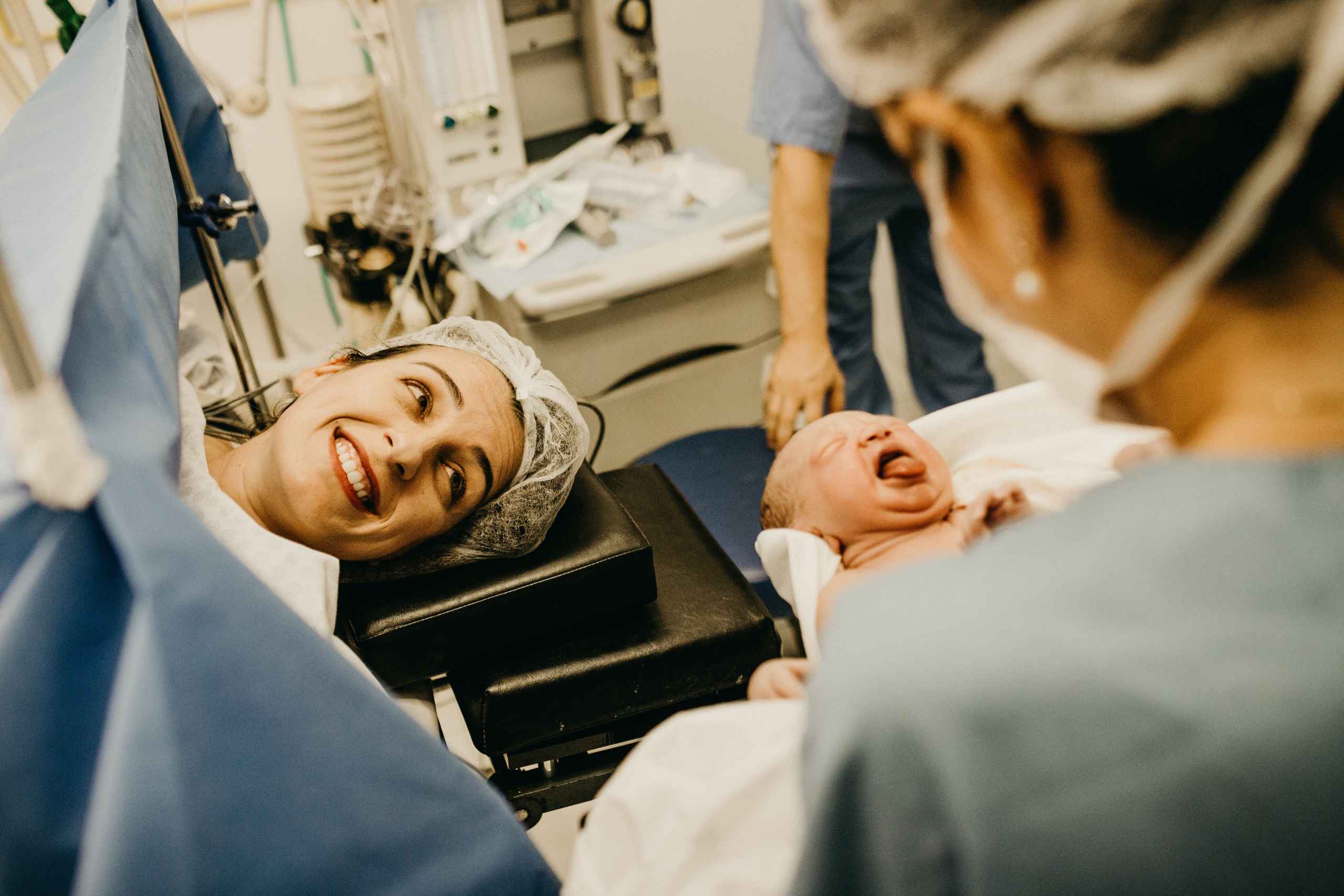
Childbirth is a very dynamic event, and we can never predict how it will end. A caesarean section should therefore always be kept in mind. Here is what a caesarean section is and when it is indicated.
What is a caesarean section?
There are many ways of giving birth, one of which is the caesarean section. It is worth remembering that this is a serious operation, albeit one of the most common and most frequently performed, and it has real consequences for both baby and mother. Although it sometimes takes quite a long time to get back into shape, the method has made an enormous contribution to reducing perinatal complications and is a very important, life-saving procedure. According to current expert knowledge, a successful natural birth is always far better for both child and mother than a routine caesarean section, but the operation is indisputably necessary in strictly defined circumstances.
In many cases a planned caesarean section is performed for medical reasons.
Indications for a caesarean section
- incorrect position of the baby
- malformations of the baby that prevent a natural birth (including hernias and tumours)
- cephalopelvic disproportion and high foetal weight
- abnormal foetal heart rate and impending foetal asphyxia
- disorders of cervical dilation
- premature labour
- failure to progress in the later stages of labour
- maternal cardiovascular disease
- maternal lung disease
- severe visual impairment or maternal retinopathy
- spinal disorders
- neurological and psychiatric indications
- suspected internal bleeding
- active genital herpes
- sexually transmitted diseases
- placental abruption and placenta praevia
- previous uterine surgery, uterine defects, fibroids and growths
- multiple pregnancy
- a previous birth by caesarean section
A caesarean section may be planned, or performed urgently during labour because of problems with the mother or the baby. A planned caesarean section is carried out at 38–39 weeks of pregnancy if the health of mother and baby allows waiting until then.
If the health of the mother or baby is at risk during a natural vaginal birth, an emergency caesarean section is performed. A common reason is, for example, a drop in the baby’s heart rate. This is why the foetal heart rate is always monitored during labour.
Giving birth in Switzerland also includes delivery by caesarean section where indicated. It is therefore important to see the gynaecologist who is managing your pregnancy on time and to have your scheduled ultrasound scans.
Every birth in Switzerland is unique. If an emergency caesarean section becomes necessary during a natural birth, qualified doctors will perform the operation in the best possible way for mother and child. To deal with any complications, Swiss clinics have the most modern technical and medical equipment. As a result, births in Switzerland are as safe as possible.
What happens in the first few days after a caesarean section?
During the first 24 hours, the nursing staff will regularly check your general condition, assessing parameters such as:
- pain,
- lochia and uterine contraction,
- the surgical wound,
- urine output,
- ongoing infusions,
- the return of your mobility.
In the following days these checks become less frequent, depending on your state of health.
When can you go home?
The length of your stay at the clinic after giving birth in Switzerland depends on your health and that of your baby. It is often 4 to 6 days. The discharge date is a joint decision by the gynaecologist and the paediatrician. Recovery after a caesarean section takes longer than after a vaginal birth.
How to care for the wound after a caesarean section
A dressing is applied to the surgical wound and is removed by medical staff after 2–3 days. You can shower as usual with soap and water, even with the dressing in place. Once the dressing has been removed, gently pat the wound dry with a towel after showering. The skin heals in 10–12 days, and all the stitches dissolve by themselves. The wound needs no plaster; what matters is keeping the skin dry. If the wound becomes red and swollen, this may be a sign of a wound infection, which occurs in 1–2 cases in 100.


