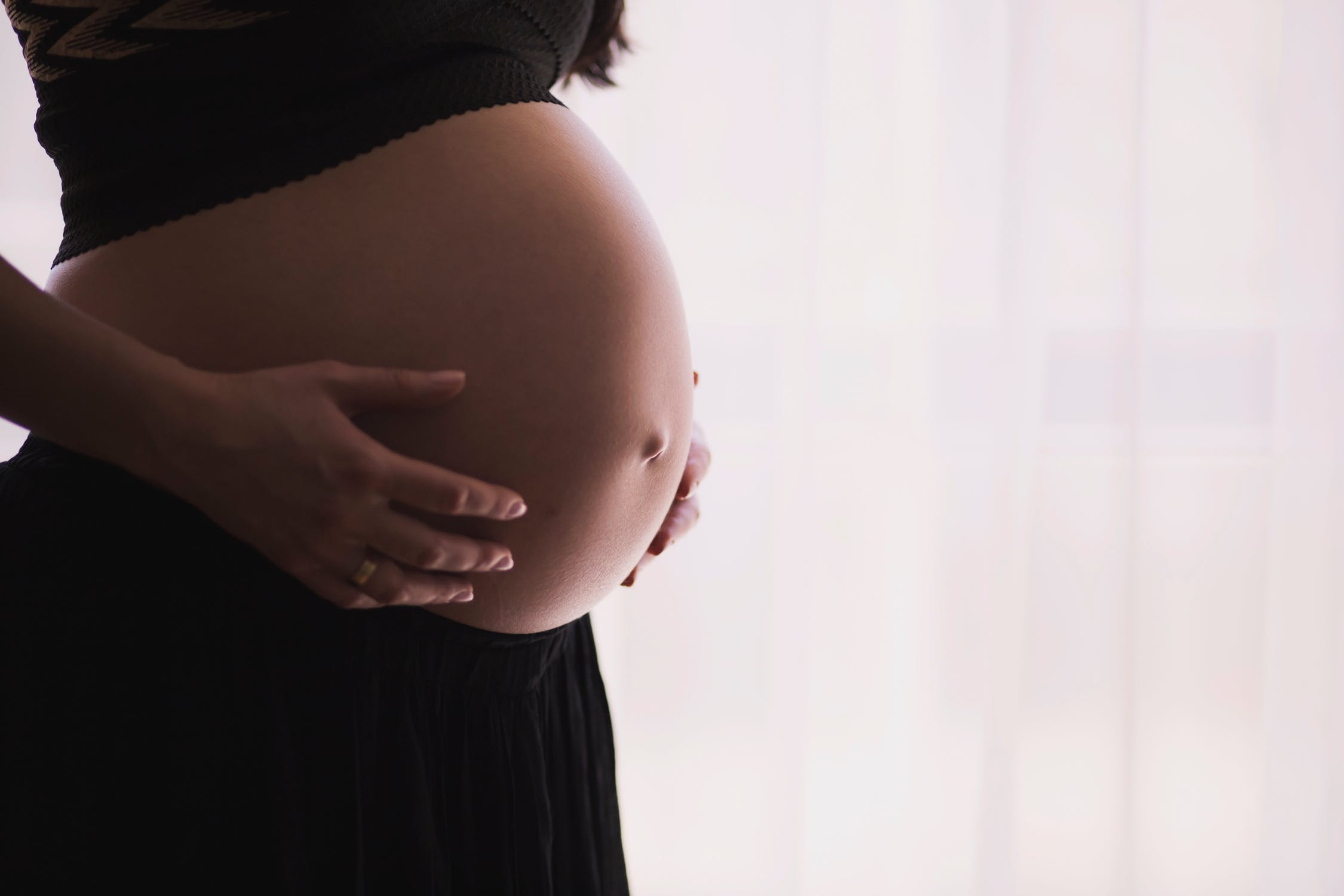
A caesarean section is one way of giving birth: a surgical method that is used increasingly often in modern obstetric practice.
Many women wish to give birth by caesarean section regardless of medical indication, seeing it as the “easy way” to deliver.
In this article we look at how a caesarean section is performed, when it is needed, and whether it can be offered to every woman in labour regardless of indication. We also look at what the operation costs and where to have it.
The history of the caesarean section
The name “caesarean section” is linked to the legend of Caesar’s birth: supposedly he was taken from his mother’s womb after her death. Historical sources, however, record that Caesar’s mother died only 10 years before the emperor himself. Even so, the term took hold, and the operation is still called a “caesarean section” today.
The first technique resembling the modern caesarean section was developed by the Italian obstetrician Eduardo Porro at the end of the 19th century. Progress in obstetrics was driven by the achievements of modern medicine: asepsis, anaesthesiology and bacteriostatic drugs. Together, these allowed doctors to start using caesarean section in cases that very often ended in the death of the foetus and the mother, and so to save lives.
Porro’s method involved removing the uterus at the same time and suturing the cervical stump into the lining of the abdominal cavity. This limited the risk of infection during surgery. Before Porro’s method, a caesarean section ended in the mother’s death in almost 100% of cases. With Porro’s method, mortality was around 60%.
At the time, this was a turning point in obstetrics. Side effects such as infertility and early menopause seemed a small price to pay for a life saved.
The first step towards the caesarean section as it is performed today was taken by the German obstetrician Max Sänger. He proposed a far less radical procedure designed to preserve the mother’s fertility. His operation involved neither hysterectomy nor salpingo-oophorectomy – in other words, the uterus was preserved. Instead, the method consisted of removing the peritoneum from part of the anterior uterine wall and performing a 2 cm wide wedge resection of the anterior wall.
The wedge was cut so that the thick edge of the myometrium lay against the peritoneum and the thin edge against the endometrial cavity. These modifications made it possible to bring the serous edges together and close them with silk sutures.
Sänger’s method thus made it possible to preserve the uterus during a caesarean section and to prevent the spread of infection.
The modern caesarean section
A caesarean section is a complex surgical procedure used as an alternative to natural birth.
A caesarean section is performed only when there is a clear medical indication for it. The main indication is to minimise the possible risks of a natural birth and to protect the health and life of the foetus and the mother.
A caesarean section is most often a planned operation, which means it is fully controlled and safe for mother and child. In some cases an emergency caesarean section is needed: the obstetrician-gynaecologist decides to operate during a natural birth, or when complications arise in the final weeks of pregnancy, in order to save the life of the mother and child.
Progress in surgical and anaesthetic techniques has made caesarean birth routine practice in obstetrics. Complications related to the operation are very rare, and mother and baby recover quite quickly, returning home within 5 to 10 days.
Indications for caesarean section
Sometimes a caesarean section is safer for mother and child than a natural birth.
Your doctor may recommend a caesarean section in the following cases:
- Labour fails to progress. Labour may stall if the cervix does not open sufficiently despite strong contractions over several hours.
- The baby’s health or life is at risk. If your doctor is concerned about changes in the baby’s heartbeat, a caesarean section may be the best option.
- The baby is in an abnormal position. A caesarean section may be the safest way to deliver if the baby’s feet or buttocks enter the birth canal first (breech presentation) or if the baby is lying sideways, shoulder first (transverse lie).
- Multiple pregnancy. A caesarean section may be needed if the patient is carrying twins and the leading baby is in an abnormal position, or if there are three or more babies.
- A problem with the placenta. If the placenta covers the opening of the cervix (placenta praevia), a caesarean section is recommended.
- Umbilical cord prolapse. A caesarean section may be recommended if a loop of the umbilical cord slips through the cervix ahead of the baby.
- The mother has health problems. A caesarean section may be recommended if the mother has serious health problems, such as cardiovascular disease. It is also recommended if the patient has an active genital herpes infection at the time of delivery.
- A mechanical obstruction. A caesarean section may be needed if the pregnant woman has a large fibroid blocking the birth canal, a serious displaced pelvic fracture, or if the baby has a condition that can make the head unusually large (severe hydrocephalus).
- The patient has had a previous caesarean section. If a woman has had one or more caesarean sections before the current pregnancy, a caesarean section is scheduled so as not to risk the previous scars tearing.
Some women giving birth for the first time ask for a caesarean section themselves, to avoid labour pains or possible complications of a vaginal birth. Doctors, however, recommend a caesarean section only where there is a clear medical indication.
How to prepare for a caesarean section
Because a caesarean section is a planned operation in most cases, the mother-to-be has time to prepare thoroughly.

- The obstetrician-gynaecologist sets the date of the operation. Unlike a natural birth, where the timing is approximate and the date varies, with a caesarean section the parents know exactly when their child will be born. The date of a caesarean section is usually set slightly earlier than the natural due date.
- On the day of the operation, the mother arrives at the clinic in good time. She should bring her referral, passport, current insurance certificate, pregnancy record and the results of all the required tests.
- In most cases, the doctor arranges blood and urine tests the day before the operation.
- The mother should arrive at the clinic with a bag already packed with everything she will need in the first days after the birth. The clinic can provide recommendations for this list, and they are also easy to find online.
- Items commonly on the list include a baby blanket, a nightshirt for the mother, absorbent night pads and several changes of underwear.
- Like any operation, a caesarean section is performed on an empty stomach. A nurse at the clinic will usually tell patients when they may eat or drink water.
What happens during the operation
The operation itself lasts about 30 minutes on average. Preparation for the caesarean section takes a little longer.
First, the midwife or nurse connects the pregnant woman to a cardiotocography monitor to check that the baby is well. Her temperature and blood pressure are then measured, and the nurse puts in a drip.
The mother remains conscious during the caesarean section; spinal anaesthesia is used to keep pain to a minimum.
The procedure involves an incision of about 15 cm in the lower abdomen above the pubic bone. The doctor cuts in turn through the skin, the muscles and the uterus in order to deliver the baby safely.
A special screen is placed between the patient and the operating field, so she does not see the operation itself. At the moment the baby is delivered, however, the new mother can see her child. The umbilical cord is then cut and the baby is handed to a neonatologist for examination. The doctor and midwife complete the operation, remove the placenta and suture the uterus and the abdominal layers.
Recovery
The caesarean operation itself is considerably shorter than a natural birth. Recovery after a caesarean section, on the other hand, takes longer than after a vaginal birth.
After a caesarean section, a woman stays in hospital for 5 to 10 days. She spends the first 24 hours in the recovery room under close observation by doctors and nurses. In the first days after the operation, the patient experiences pain and some restriction of movement.
After leaving hospital, a woman who has had a caesarean section should avoid all physical exertion for 1.5–2 months so as not to damage the sutures. It is therefore advisable for the new mother to have practical help from her family for the first 3–4 weeks after the caesarean section.
Over time, light forms of activity can gradually be added to return to everyday life. Full recovery usually takes about 6 months.
Importantly, after a caesarean section women are advised to wait at least 2 years before becoming pregnant again, so that the body has time to recover fully.
Contraindications to caesarean section
Every surgical procedure has its contraindications.
The main contraindication to a caesarean section is a tendency to thrombosis or a history of thrombophilia. A caesarean section carries a risk of heavy blood loss, which can be fatal for patients with thrombophilia.
For patients with thrombophilia, a natural birth is the best option.
What a caesarean section costs in CIS countries
In Ukrainian state institutions, a caesarean section is performed free of charge. As of 2020, the state reimburses clinics UAH 41,000 per operation. Additional tests are charged separately, as are the medicines doctors prescribe after the operation. In practice, many women still make private arrangements with the doctor for the operation, and the size of the fee can vary.
Private clinics publish their prices for caesarean section. At one popular Kyiv clinic, for example, a patient pays from EUR 1,000 for the operation alone. This amount does not include the stay in the clinic, tests or additional consultations with the doctor.
In Russia, a caesarean section in state clinics is likewise presented as free of charge: the operation is on the list of procedures covered by the compulsory health insurance (OMS) policy.
A woman can also give birth under a paid contract. Such contract deliveries by operation cost from 28,000 roubles in a state clinic up to 300,000 roubles, or about EUR 3,500.
Giving birth in Switzerland: what a caesarean section costs in Switzerland
If you are looking for the best conditions for childbirth, including surgical delivery, and want complete service and safety, with your baby delivered by renowned European professors, consider giving birth in Switzerland.
For decades, affluent medical travellers have chosen Switzerland as the place where their heirs are born.
A birth at Switzerland’s leading clinics, such as Sant’Anna, Bethanien and Lindberg, costs on average CHF 36,000. A birth by caesarean section costs CHF 47,000.
This amount covers all expenses, from anaesthesia to the stay in the clinic and round-the-clock monitoring of mother and baby.
Swiss clinics also help you prepare for your baby’s arrival and for your new role as parents.
Find out more about giving birth and caesarean section in Switzerland on our website.
The caesarean section, then, is a product of medical progress. Thanks to this method, the lives of many mothers and their children can be saved.
Find a doctor you can trust and follow all of their recommendations.


