For a number of modern techniques, Swiss clinics are around five years ahead of the European and Russian standard. The reason is concrete rather than a matter of marketing or of Swiss quality in a general sense: specific institutional mechanisms explain the speed. Here we look at what they are and how they show in robotic surgery, targeted therapy and clinical research.
Why Switzerland leads in speed of adoption
Speed is the result of several structural factors working at the same time.
A decentralised healthcare system. In Switzerland, a large share of management and clinical decisions is taken at the level of the cantons and individual medical institutions. Within the federal framework set by the Swiss Federal Office of Public Health, this allows new approaches to be introduced flexibly and quickly, without lengthy centralised approvals.
A regulator that works fast. Swissmedic, the Swiss agency for therapeutic products, reviews applications for new medicines and devices in 9–12 months on average. The European EMA takes 14–18 months — and that is from the submission of a complete dossier.
A strong university base. Switzerland has five major academic medical centres: in Zurich, Basel, Bern, Geneva and Lausanne. Each is linked directly to a university and its research, with no intermediaries. A new technique refined in the laboratory reaches clinical practice faster.
Competition between clinics. Private and cantonal clinics compete for patients both at home and internationally. For them, adopting a modern technique is a practical way to retain patients as much as a matter of prestige.
Clinical trials as a route to early access
Switzerland is one of Europe’s leading countries in the number of clinical trials per capita. For patients, this means one thing: access to methods that have yet to become standard.
Key institutions:
- SAKK (Swiss Group for Clinical Cancer Research) – a network of more than 20 clinics conducting cancer research. Through it, patients gain access to medicines before they are registered.
- Clinical Trial Units at university hospitals – continuously launching early-phase I and II trials.
- Close cooperation with the pharmaceutical headquarters in Basel (Roche, Novartis) means new molecules reach clinical centres practically next door.
The practical effect: some patients in Zurich or Basel receive treatment with a method that will become standard in Europe in 2–3 years and in Russia in 4–5 years.
Robotic surgery: from da Vinci to the next generation
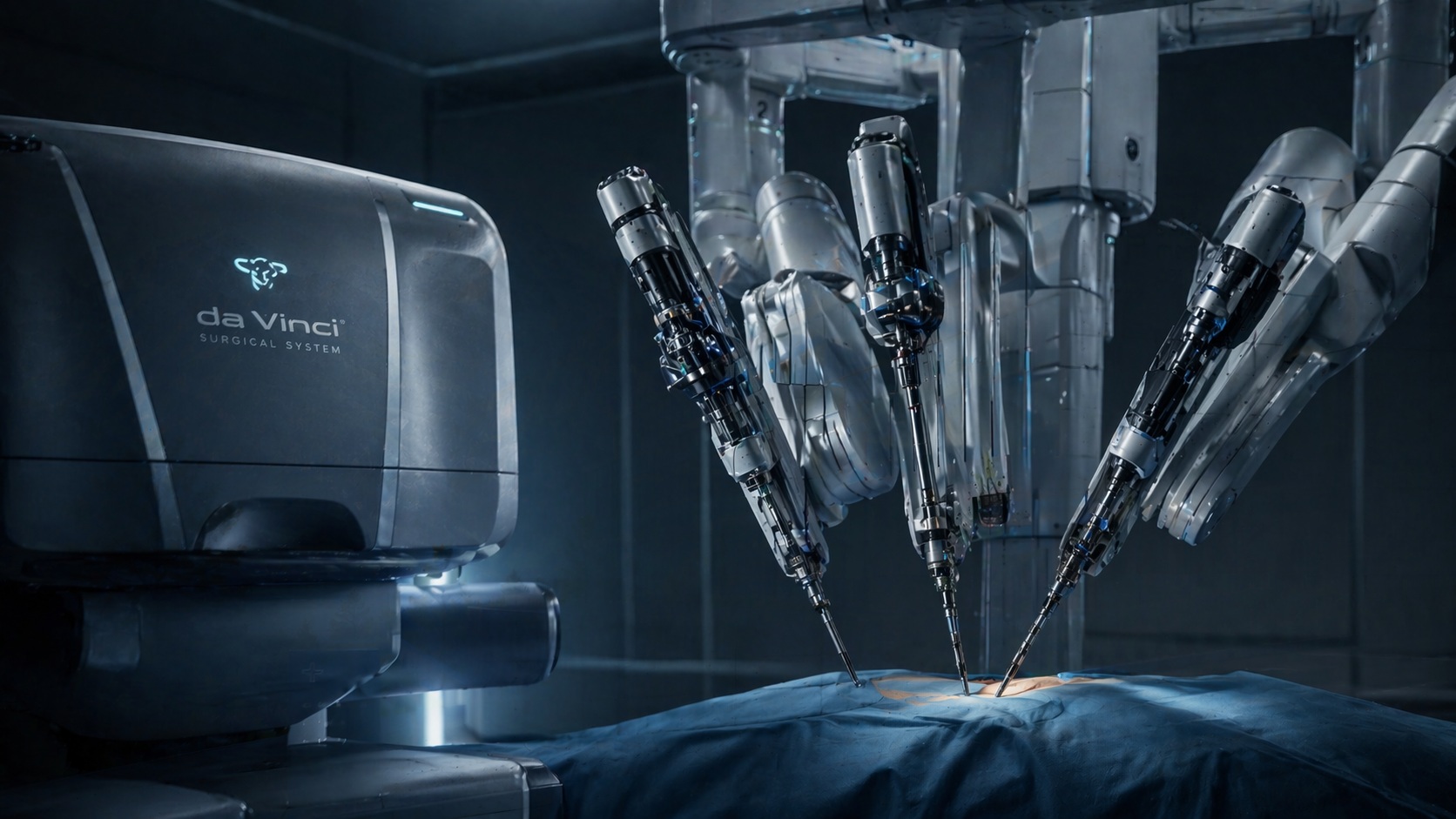
Switzerland was one of the first countries in Europe to introduce the da Vinci surgical system, in the early 2000s. Today dozens of these systems are in use across the country, and a new generation of platforms is being adopted alongside them: Hugo RAS from Medtronic and Versius from CMR Surgical.
Leading centres:
- University Hospital Zurich (USZ) – the largest volume of robotic operations in the country
- Klinik Hirslanden – a private group of 17 clinics actively introducing new robotic platforms
- Geneva University Hospitals (HUG) – a strong centre for robotic urology and gynaecology
The main fields of application are urology (radical prostatectomy), gynaecology, thoracic surgery and bariatric surgery. The concrete benefit for the patient: after robotic prostatectomy, the hospital stay has been reduced from 7 days with open surgery to 2–3 days, and urinary function recovers within weeks rather than months.
Targeted and precision therapy
Switzerland’s speed is especially evident in oncology.
Molecular Tumour Boards – regular multidisciplinary meetings at which teams of oncologists, geneticists and pathologists select therapy according to the specific genetic profile of a tumour. In major Swiss centres this has been standard since 2016–2018, while in many countries the approach is still the exception.
Next-generation tumour sequencing (NGS) – carried out as a matter of course in academic centres before therapy is chosen. It is routine practice rather than a premium option.
CAR-T therapy – one of the most complex and effective immunological methods in haemato-oncology. Centres in Zurich and Basel were among the first in Europe to be certified to use it.
PD-1/PD-L1 immunotherapy – enters standard protocols faster than in most countries, thanks to clinics’ direct access to manufacturers and the accelerated Swissmedic procedure.
Proton therapy and nuclear medicine
The Paul Scherrer Institute (PSI) in Villigen is one of the oldest proton therapy centres in Europe. It was here that the spot-scanning technique was first developed; today it is the global standard, used in proton therapy centres around the world.
Swiss proton therapy specialises in:
- paediatric oncology (minimising radiation exposure to developing tissue)
- tumours of the skull base and spine
- prostate cancer in patients for whom preserving neighbouring organs is critical
Patients come from around the world: PSI accepts referrals from dozens of countries.
Digital medicine and artificial intelligence
AI tools in Swiss clinics have moved beyond the experimental stage and are already in active use in a number of clinics:
- In radiology departments in Zurich and Lausanne, algorithms provide a second reading of CT and MRI scans, helping to reduce missed findings.
- Liquid biopsy (ctDNA monitoring) – analysis of circulating tumour DNA in the blood – is used to detect recurrence early after treatment, months before a tumour becomes visible on scans.
- The Swiss-wide electronic health record ecosystem (eHealth) allows clinics to share patient data, increasing the speed and accuracy of multidisciplinary decisions.
What this means for an international patient
For a patient from another country, Switzerland’s structural advantages translate into concrete opportunities:
- Early access to modern methods – including those not yet approved in their home country or available there only through a quota.
- Participation in clinical trials – many protocols are open to non-residents, offering a chance of experimental therapy.
- Individually selected treatment through molecular tumour boards – for complex oncology cases, this can be decisive.
There is another side, however: only some Swiss clinics accept international patients directly. Some protocols require prior communication through a coordinator who knows the language, the clinical standards of both countries and the administrative workings. Without this guidance, the process can drag on for months or stall at the document stage.
How to access treatment at a Swiss clinic
This is why an experienced intermediary between patient and clinic is so often needed. CorSwiss provides consultations, selects the clinics best suited to the diagnosis and organises examinations and treatment in Switzerland – from the first enquiry to transfers and follow-up care. The patient and their family are relieved of the entire administrative workload: translation of medical documents, choice of specialist, scheduling, and financial and visa matters.
If you are considering Switzerland for a complex diagnosis, or would like a second opinion from European experts, contact our team for a free initial consultation. We will tell you which clinics and methods genuinely suit your case and help you plan the entire course of treatment.
In brief
The speed of Swiss clinics is no accident. Behind it lie a compact, fast regulator, a decentralised healthcare system, a powerful research base and competition between clinics. For a patient who needs truly modern care – robotic surgery, targeted therapy or immunotherapy, proton radiation, rare clinical protocols – Switzerland offers a real structural advantage. To make the most of it, it is important to plan the right route from the very start.