Remote assessment
We review your records and arrange a second opinion from a specialist professor.
Imaging and the laboratory are the two pillars of an accurate diagnosis: MRI, CT, PET and scintigraphy alongside histology and biochemistry.
About the specialty
Radiology brings together two disciplines. Diagnostic radiology uses X-rays to produce images of internal structures, while nuclear medicine uses radiopharmaceuticals in very small doses to show how an organ functions as well as its shape.
The range covers MRI, CT, digital subtraction angiography for aneurysms, stenoses and thromboses, digital fluoroscopy, scintigraphy, PET scanning, mammography and ultrasound. The method is chosen for the task, combining several where needed.
The laboratory disciplines (pathology and histology, biochemistry, genetics, microbiology and virology) work in direct contact with radiologists and treating doctors. Modern detectors and image-processing algorithms reduce radiation exposure, which matters especially for frequent examinations, children and pregnant women.
Why guests come to us
Images of the brain, muscles, joints and internal organs, free of radiation exposure.
Detailed cross-sections of the body to assess organs, bones and vessels in injuries and tumours.
Bone images for fractures, and dynamic images of the gastrointestinal (GI) tract, urinary system and lungs.
Safe ultrasound of the abdomen, thyroid, soft tissues and vessels, and foetal monitoring.
Scintigraphy and PET to assess organ function and detect metastases.
Pathology, biochemistry, genetics, microbiology and virology to establish the diagnosis.
Process
We review your records and arrange a second opinion from a specialist professor.
We select the clinic and doctor and agree the cost estimate and timing.
Diagnostics and treatment. An interpreter and an assistant are with you at every appointment.
Recovery, with remote follow-up of your results once you are home.
Clinics for this specialty
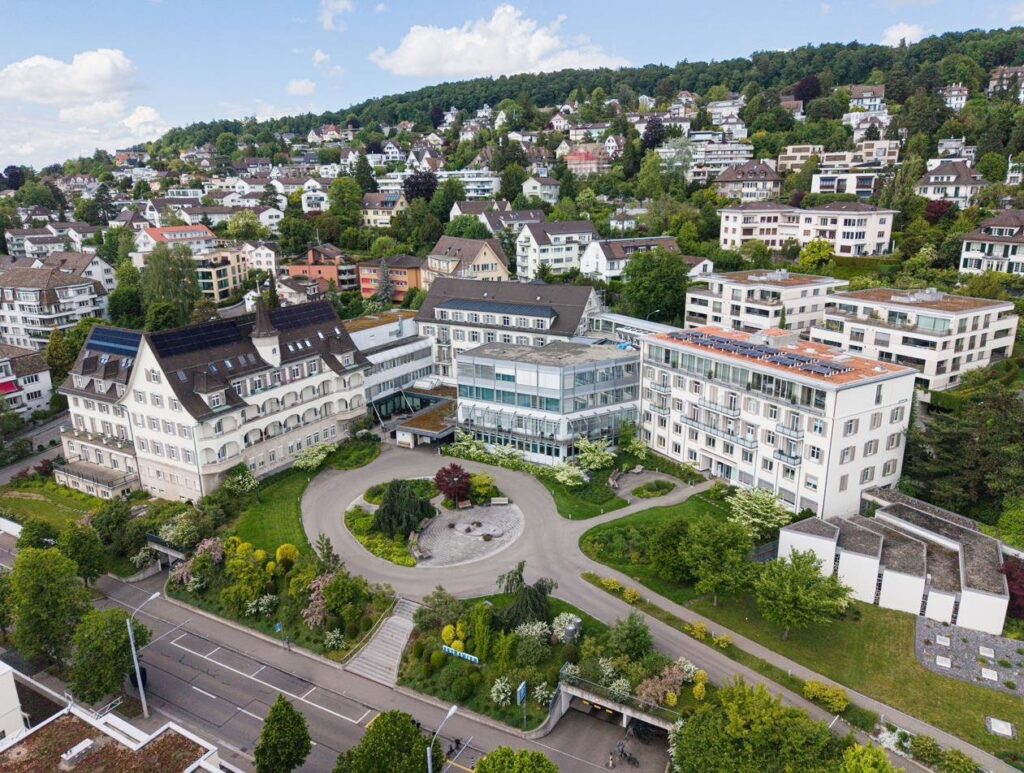
Zurich · Multispecialty
A flagship of Swiss private medicine and our key partner for treatment and check-ups since 2011. Part of Swiss Medical Network and the Mayo Clinic Care Network.
Visit the clinic pageQuestions and answers
The cost depends on the diagnosis, the scope of examinations and the programme chosen. We obtain a cost estimate from the clinic and share it with you before treatment begins, with a clear breakdown of what it includes.
Yes. We arrange a remote review of your records and a second opinion from a specialist professor before any travel is planned.
Usually 5–10 working days, depending on urgency and whether a visa is required.
A medical interpreter accompanies you to every appointment and remains available throughout your stay in Switzerland, so you can communicate in your own language.
We are your independent representative and an end-to-end Swiss medical concierge. We select the best specialist for your case from across Switzerland, arrange a second opinion and agree a transparent cost estimate before treatment begins. Everything else is handled by one team: medical visa, flights and transfers, accommodation (including for those travelling with you), a personal medical interpreter at every appointment and a 24/7 assistant for any practical matter. Your personal medical manager looks after your case from the first enquiry until you are home, and stays in touch afterwards: we follow up your results remotely and coordinate ongoing care.
With state-of-the-art equipment, radiology and nuclear medicine in Switzerland are regarded as among the best in the world. The country’s leading clinics use advanced technology for precise diagnosis and treatment, with a high degree of safety and minimal strain on the body. Swiss radiologists are highly qualified and have many years of experience, ensuring accurate and effective examinations.
CorSwiss arranges examinations at leading radiology centres in Switzerland, including:
These institutions are distinguished by an exceptionally high quality of service and comfortable accommodation comparable to a five-star hotel. Patients can count on attentive care and an individual approach, making the examination as comfortable as possible.
Each of these clinics has its own distinctive features and specialisations, so the best place for imaging can be chosen according to the patient’s individual needs. Privatklinik Bethanien, for example, is renowned for its personalised approach and high standards of service, while Clinique de Genolier is known for its multidisciplinary medical centre offering a wide range of diagnostic and treatment services. Whichever clinic is chosen, patients can be confident that their health is in the hands of leading specialists.
Diagnostic radiology is a key branch of medicine that uses X-rays for diagnostic and therapeutic purposes. It is one of the core methods of medical imaging, producing images of internal structures such as bones, organs and tissues. Radiology covers a wide range of procedures that help doctors detect diseases and conditions and monitor their progression and the effectiveness of treatment. Modern radiological methods offer high precision with minimal strain on the patient’s body, making them indispensable in diagnosing many conditions.
X-ray
A conventional imaging method that uses X-rays to produce images of bones and some soft tissues. Radiography is particularly useful for diagnosing fractures, infections and abnormalities in bone structure.
CT scanning
Computed tomography (CT) provides more detailed images than a conventional X-ray. It is used to assess complex structures including organs, vessels and tissues, and can detect even small abnormalities.
Magnetic resonance imaging (MRI)
MRI is an advanced imaging technology that uses strong magnetic fields and radio waves to create detailed images of soft tissues such as the brain, muscles, joints and internal organs. MRI is often used to diagnose tumours, ligament injuries, neurological disorders and other conditions.
Ultrasound
Also known as sonography, ultrasound uses sound waves to produce images of internal organs and structures. It is safe and non-invasive, which makes it particularly useful for monitoring the foetus during pregnancy and for diagnosing conditions of the liver, kidneys and other organs.
The radiologist chooses the imaging method according to the specific clinical situation and the patient’s condition. One or more methods may be used to determine precisely the location and size of lesions, tumours or haemorrhages, ensuring a comprehensive approach to diagnosis and treatment.
Easy access
A key advantage of our service is easy access to care. We work with leading Swiss clinics in various regions of the country, making them easy to reach for patients from anywhere in the world. Our network of partner institutions allows examinations and treatment to be arranged quickly with short waiting times, which matters for both urgent and planned procedures.
Modern equipment
Our partner clinics are equipped with the latest medical technology, meeting the highest international standards. This includes advanced radiology and nuclear medicine equipment that produces precise, detailed images with minimal strain on the patient’s body. State-of-the-art equipment improves the quality of diagnosis and reduces the risk of side effects, making the procedure as safe as possible.
Speed
Time matters, especially where health is concerned. We therefore arrange all procedures as quickly and efficiently as possible. Examinations are performed and results delivered swiftly thanks to a well-coordinated team of specialists and advanced equipment. Patients save time and receive their diagnostic results promptly, which is especially important for starting treatment in good time.
The branch of medicine covering all technologies that use radioactive elements (radioactive substances) in humans, for both diagnostic and therapeutic purposes. It makes it possible to study how organs work by administering very low doses of a radiopharmaceutical (also known as a radioactive tracer: a physiological agent bound to a radioactive isotope).
Radiology services in Switzerland cover a wide range of diagnostic and therapeutic procedures performed with advanced medical equipment and technology. Radiology plays a key role in the early detection of disease and in monitoring treatment, providing precise, detailed images of internal organs and structures.
Magnetic resonance imaging (MRI): an imaging method that uses strong magnetic fields and radio waves to create detailed images of internal organs, tissues and structures. MRI is particularly effective for diagnosing conditions of the central nervous system, the musculoskeletal system and soft tissues.
Computed tomography (CT): a diagnostic procedure that uses X-rays to produce detailed cross-sections of the body. CT allows doctors to assess internal organs, bones and vessels with high precision. It is often used to diagnose injuries, tumours and other conditions.
Digital subtraction angiography (DSA): a specialised vascular imaging method for assessing blood vessels after a contrast agent has been injected. DSA is used to diagnose and treat various vascular conditions such as aneurysms, stenoses and thromboses.
Digital fluoroscopy: an imaging method that produces dynamic, real-time images of internal organs. It is often used to examine the gastrointestinal (GI) tract, urinary system and lungs, and to guide various diagnostic and therapeutic procedures.
Conventional radiology: classic X-ray examinations producing images of bones, joints and the chest organs. Alongside more modern technologies, conventional radiology remains an important tool in diagnosing many conditions.
Nuclear medicine (scintigraphy): a diagnostic method that uses radiopharmaceuticals to produce images of organs and tissues. Scintigraphy assesses the function of organs such as the heart, kidneys, thyroid and bones, and is often used to detect metastases, inflammation and other conditions.
Mammography: a specialised X-ray examination used to diagnose conditions of the breast, including breast cancer. Mammography can detect tumours at an early stage, which significantly improves the chances of successful treatment.
Sonography (ultrasound): a safe, non-invasive imaging method that uses sound waves to produce images of internal organs. Sonography is widely used in obstetrics and gynaecology, and to examine the abdomen, thyroid, soft tissues and vessels.
These services, offered at Swiss clinics, provide a comprehensive approach to diagnosis and treatment, giving patients the most accurate results and effective treatment.
Radiology at Privatklinik Bethanien has made significant technical progress thanks to modern advances in nuclear medicine. The clinic uses advanced methods, including scintigraphy and PET scanning, which allow highly precise examinations and diagnosis. These methods use radioactive isotopes whose radiation is captured by special cameras to create detailed images of internal organs and tissues.
For treatment, nuclear medicine at Bethanien also uses radiopharmaceuticals designed to destroy abnormal cells in a targeted way. This approach significantly improves treatment outcomes, acting effectively on tumours and other abnormalities while minimising the effect on healthy tissue. Radiology at Bethanien thus combines advanced diagnostic and treatment technology to provide patients with high-quality medical care.
Modern radiology and nuclear medicine technology in Switzerland can be applied to a wide range of indications. This includes diagnosing and monitoring conditions of organs and systems such as the cardiovascular system, the airways and the musculoskeletal system, as well as tumours and neurological conditions. Advanced technology allows imaging to be adapted to both simple and complex conditions, including chronic diseases and rare cases. Specialists can thus identify pathological changes precisely and develop the most effective treatment plans.
Modern X-ray systems are equipped with high-speed detectors and advanced image-processing algorithms that significantly speed up scanning. This shortens examination times and minimises discomfort for patients. Faster scanning also produces sharper, more precise images, supporting a quicker and more accurate diagnosis. A faster procedure is especially important in emergencies and situations that require immediate intervention.
Radiology and nuclear medicine technology has also made significant progress in signal quality, which directly affects image quality. Modern systems are equipped with highly sensitive detectors that deliver sharper, more detailed images even at low X-ray doses. Fine details and abnormalities can be distinguished more clearly, which is key to an accurate diagnosis. Improved signal quality increases the diagnostic value of images and reduces the need for repeat examinations.
Reducing the patient’s radiation exposure is one of the main priorities of modern radiology. Innovative X-ray systems use advanced dosimetry and dose-optimisation methods to reduce substantially the amount of radiation passing through the body while maintaining image quality. This is especially important for patients who undergo regular or frequent examinations, and for children and pregnant women, who require particular care. Minimising radiation exposure reduces the risk of potential side effects and makes examinations safer.
Swiss Medical Network offers the full range of options for precise diagnosis and expert image-guided treatment. The centre is staffed by leading specialists in their field. Patients are diagnosed and examined with the latest technology and modern equipment.
Consultation
A confidential conversation with a coordinating physician: we review your records, propose a professor and calculate the cost.
Consultation
The supervising physician will call you back during the working day.