AI ассистент, Автор в CorSwiss — Swiss Medical Concierge - Page 2 of 28

Private vs Public Clinics in Switzerland: What Is the Difference?

Both private and public clinics in Switzerland offer a high standard of medicine, modern technology and highly qualified doctors. The main difference lies in how treatment is organised, how quickly patients can see a specialist and the level of service. Public hospitals often serve as large medical and research centres, while private clinics focus on an individual approach and patient comfort. This is why international patients often choose private medical institutions.

How the Swiss healthcare system works

The Swiss healthcare system is regarded as one of the most advanced in Europe. It combines public medical institutions, private clinics and a system of compulsory health insurance.

The system rests on:

  • public hospitals
  • private clinics
  • compulsory health insurance for residents
  • strict standards of medical care

Most residents receive treatment through the compulsory health insurance system. Patients can go to public institutions as well as to certain private clinics that work with insurance schemes.

The high standard of medical care in Switzerland is ensured by strict treatment standards, a strong scientific base and the continuous adoption of modern technology.

Public clinics in Switzerland

The role of university and cantonal hospitals

Public medicine in Switzerland is represented above all by cantonal hospitals and university medical centres. These institutions play a key role in the country’s healthcare system.

Major university hospitals, such as University Hospital Zurich, are affiliated with the country’s leading universities and fulfil several important functions:

  • treating patients
  • conducting medical research
  • training future doctors

These hospitals often become centres for developing new methods of diagnosis and therapy.

Access to treatment for residents

Public hospitals are primarily geared towards residents of Switzerland. They operate within the insurance system and treat patients who hold health insurance.

Typical features of these institutions include:

  • treatment according to established medical protocols
  • a heavy workload for doctors
  • possible waiting lists for planned procedures
  • priority for patients resident in Switzerland

The standard of medical care nevertheless remains very high. Public clinics are particularly strong in complex surgery, transplant medicine and cardiology.

Research and medical training

Many university clinics in Switzerland take an active part in international research. They also play a key role in training doctors.

The European association of medical universities notes:

“Academic medical centres play a key role in advancing medical innovation and training specialists.”

This explains why university hospitals remain important research centres of European medicine.

Private clinics in Switzerland

Specialised medical centres

Private clinics in Switzerland often operate as specialised medical centres. Many of them concentrate on particular fields of medicine.

The most common specialisations are:

  • oncology
  • orthopaedics
  • cardiology
  • neurosurgery
  • rehabilitation medicine
  • aesthetic and reconstructive surgery

This specialisation allows doctors to concentrate their expertise in particular areas and to use the latest medical technology.

A high level of medical service

One of the main advantages of private clinics is the way their medical service is organised. These institutions place great emphasis on patient comfort and the coordination of treatment.

Private clinics usually offer:

  • a personal treatment coordinator
  • help with translating medical documents
  • personal support for international patients
  • individual treatment planning

For patients travelling from abroad, this system makes organising treatment much simpler.

An individual approach to each patient

Private clinics place great emphasis on a personalised approach. The treatment plan is often shaped around the patient’s individual characteristics.

This approach is particularly important in the treatment of complex conditions, including cancer and rare diseases.

Modern equipment and technology

Private medical centres invest actively in new medical technology. This allows them to introduce innovative methods of diagnosis and treatment.

Clinics may use:

  • robotic surgical systems
  • advanced medical imaging
  • genetic testing
  • innovative therapies

This high level of technological equipment is one of the reasons Switzerland is regarded as a centre of international medical travel.

The main differences between private and public clinics
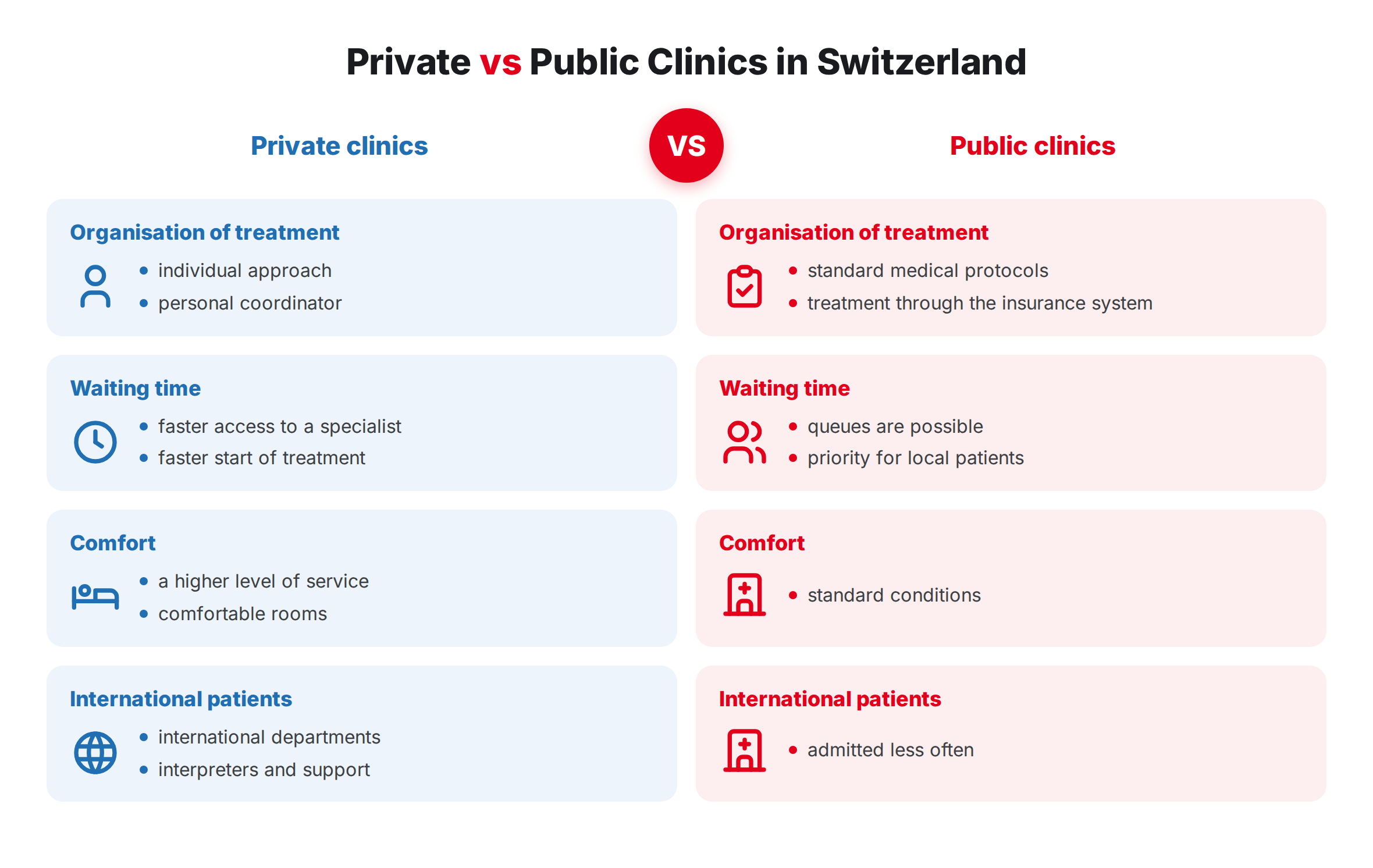
The main differences between private and public clinics

Although the standard of medicine is equally high, private and public clinics differ in how they are organised.

Level of service

Public hospitals follow a standard model of medical care. Private clinics usually offer a higher level of service, including personal support for the patient and individually organised treatment.

Waiting times

Public hospitals may have waiting lists for planned procedures. In private clinics, treatment often begins sooner thanks to more flexible organisation.

Accommodation

In public hospitals, accommodation meets standard hospital requirements. Private clinics more often offer more comfortable accommodation.

Access for international patients

Public clinics primarily serve residents of Switzerland. Private medical institutions more often accept international patients and have international departments.

Cost of treatment

Public hospitals operate within the insurance system. Private clinics usually provide treatment on a self-pay basis.

Access to treatment for international patients

Switzerland has long been a destination for international medical travel. Patients come here for diagnostics, for treatment of complex conditions and for a second medical opinion.

International patients are more often accepted by private clinics, as these institutions have experience in working with patients from abroad.

Private clinics usually offer:

  • international departments
  • medical coordinators
  • interpreters
  • help with travel arrangements

Organising treatment usually involves several stages:

  1. sending medical documents
  2. receiving a preliminary medical opinion
  3. receiving a cost estimate for treatment
  4. planning the trip

When patients choose private clinics

In many cases, patients prefer private medical institutions.

The most common situations are:

  • complex or rare conditions
  • the need for personalised treatment
  • seeking a second medical opinion
  • faster access to specialists
  • a high level of comfort and service

For international patients, another important factor is the ability to arrange treatment promptly.

When treatment may take place in public clinics

Private medical centres are popular, and public hospitals remain an important part of the healthcare system as well.

Treatment may take place in these institutions if:

  • the condition is treated according to standard medical protocols
  • the patient is taking part in a research programme
  • the expertise of a university medical centre is required
  • treatment is provided within the insurance system

In many cases, university hospitals are the leading centres of academic medicine.

How to choose a clinic for treatment in Switzerland

The choice of medical institution depends on the diagnosis, the specialists’ recommendations and the patient’s goals.

The process usually involves several stages:

  1. choosing a clinic and a doctor
  2. sending medical documents
  3. receiving a preliminary medical opinion
  4. receiving a cost estimate for treatment
  5. arranging the trip

For international patients, this process can be complex. This is why many turn to medical coordinators.

The CorSwiss service, for example, helps patients choose a clinic, arranges specialist consultations and provides personal support throughout treatment in Switzerland.

Both public and private clinics in Switzerland offer a high standard of medicine and modern treatment technology. Public hospitals play an important role in research and in training doctors.

For international patients and complex medical cases, however, private clinics often prove the more convenient option. Prompt organisation of treatment, an individual approach and well-developed patient support make them a popular choice for people considering treatment in Switzerland.

FAQ

How do private and public clinics in Switzerland differ?

The main difference lies in how treatment is organised. Public hospitals operate within the insurance system and are geared towards residents of Switzerland. Private clinics more often offer an individual service and actively welcome international patients.

Where is it best for international patients to be treated?

International patients more often choose private clinics, as these institutions have international departments, medical coordinators and experience in working with patients from many countries.

Does the quality of treatment differ?

The quality of medical care remains high in both systems. The main difference lies in the level of service, the speed with which treatment is organised and the standard of accommodation.

How much does treatment in a private Swiss clinic cost?

The cost of treatment depends on the diagnosis, the clinic and the scope of medical care. Private clinics usually work on a self-pay basis and sit outside the public insurance system.

Can a foreign national be treated in a public clinic in Switzerland?

Yes, this is possible. These clinics, however, primarily serve residents of Switzerland, so international patients more often turn to private medical centres.
Treatment in Switzerland or Germany: Where Is Care Better?

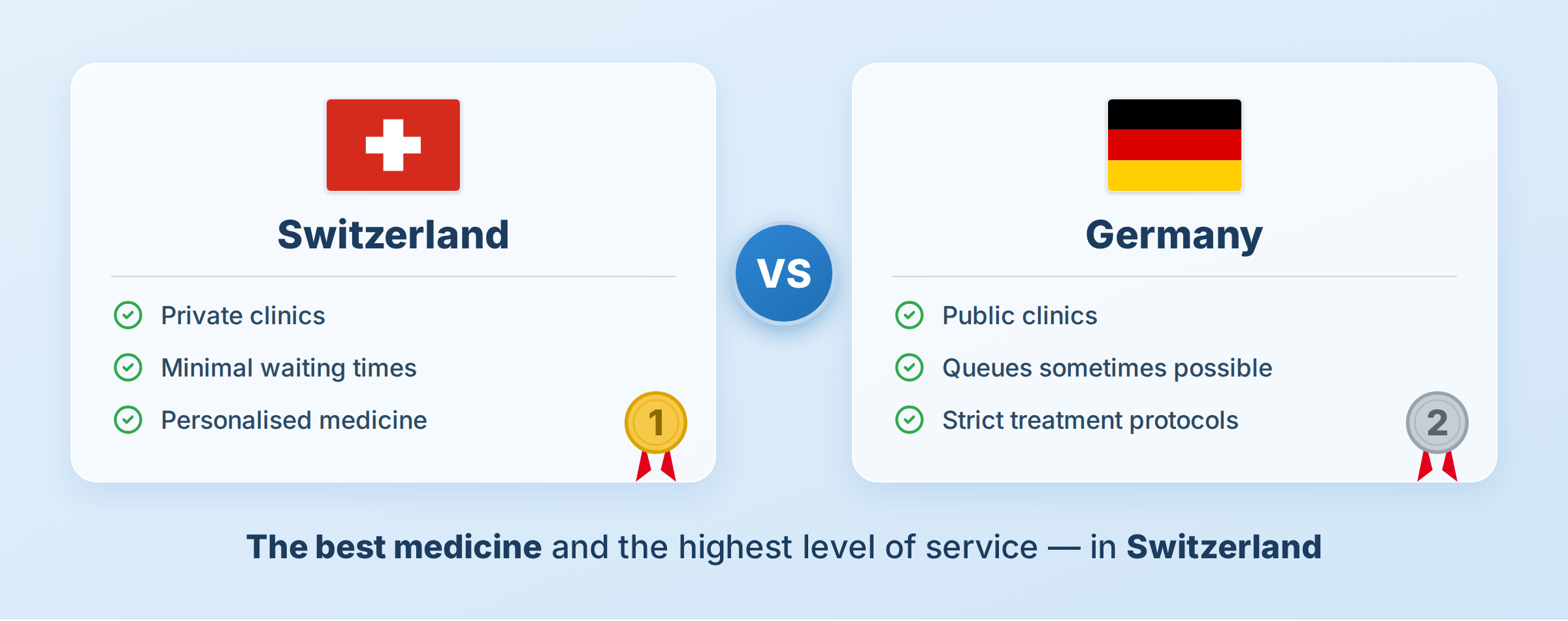
Switzerland and Germany are regarded as two of the most advanced healthcare systems in Europe, and both countries welcome patients from all over the world. Germany is known for its large university hospitals, advanced diagnostics and strong rehabilitation medicine. Switzerland is often chosen by patients who value innovative treatments, an individual approach and a high standard of medical service. The final choice depends on the complexity of the condition, the treatment timeline and the patient’s preferences.

Why patients choose treatment in Europe

European medicine has long been considered a benchmark of quality thanks to strict standards and the development of scientific medicine. Patients choose European clinics for several reasons:

  • evidence-based medicine
  • strict quality control of treatment
  • access to modern medical technology
  • high standards of safety and diagnostics
  • clinics’ participation in international research

Many European medical centres work closely with research institutes and pharmaceutical companies, which allows new treatments to be introduced faster than in most countries.

The World Health Organization emphasises that a high level of standardisation in medical care is one of the key factors in the successful treatment of complex diseases.

The healthcare system in Switzerland

Medical technology and innovation

Switzerland is regarded as one of the most technologically advanced healthcare systems in Europe. Private clinics are quick to adopt modern diagnostic methods, including high-precision MRI, molecular diagnostics and genetic testing.

Many medical centres work in close partnership with pharmaceutical companies and research laboratories. This makes it possible to introduce innovative therapies, including targeted treatment and personalised medicine.

A personalised approach to the patient

One of the hallmarks of Swiss medicine is its individual approach. Medical teams develop a personal treatment strategy based on:

  • the patient’s medical history
  • genetic factors
  • the results of extended diagnostics
  • international clinical guidelines

Main areas of treatment

Swiss clinics are particularly renowned in the following fields:

Many clinics welcome patients from different countries, and their international departments specialise in supporting patients from abroad.

Why Switzerland has long been a centre of international medicine

For many decades, Switzerland has attracted patients from all over the world. There are several reasons for this:

  • a high concentration of specialised private clinics
  • modern medical equipment
  • close links between medicine and scientific research
  • a high standard of service and patient support
  • strict quality standards in medical care

As a result, the country has become one of the key centres of international medical travel.

The healthcare system in Germany

An extensive network of university hospitals

Germany is known for its large university medical centres, which combine treatment, medical training and scientific research. Such hospitals often take part in international clinical trials.

High-quality diagnostics

German clinics have a well-developed diagnostic infrastructure. Patients can undergo:

  • comprehensive laboratory tests
  • functional diagnostics
  • high-precision imaging
  • genetic tests

This enables doctors to establish an accurate diagnosis and choose the optimal treatment approach.

A strong rehabilitation system

Germany is widely known for its well-developed rehabilitation system and network of specialised centres, including neurological and orthopaedic rehabilitation. After surgery, patients can undergo recovery treatment at specialised centres.

Main areas of treatment

The strongest fields of German medicine are considered to be:

  • oncology
  • cardiac surgery
  • orthopaedics
  • transplantation
  • neurology

Key differences between Swiss and German medicine

Key differences between Swiss and German medicine

Criterion Switzerland Germany
Standard of medicine Very high, with a focus on innovation Very high, especially at university hospitals
Type of clinic Mainly private specialised centres A strong network of university and public hospitals
Cost of treatment Usually higher More affordable
Waiting times Generally shorter Waiting lists are sometimes possible
Level of service Very high, personalised High, but more standardised

Switzerland has historically attracted international patients through its combination of innovative technology, high medical standards and an individual approach to treatment.

Cost of treatment

The cost of treatment can vary considerably depending on a number of factors:

  • the scope of diagnostics
  • the complexity of the condition
  • whether surgery is required
  • the length of hospital stay
  • subsequent rehabilitation

Overall, treatment in Switzerland tends to be more expensive. This reflects the use of the latest technology, the high qualifications of specialists and the standard of medical service.

Patients often regard the cost of treatment as an investment in the quality of medical care and in access to innovative therapies.

When Switzerland is the better choice

Swiss clinics may be the optimal choice in the following situations:

  • complex or rare diseases
  • the need for personalised treatment
  • obtaining a second medical opinion
  • the need for innovative therapies
  • a high standard of service and personal support
  • rapid access to specialists

In such cases, patients often choose specialised private clinics.

When Germany may be the more suitable option

Germany also remains a popular destination for medical travel. It may be the more suitable choice in the following cases:

  • a limited budget
  • standard medical procedures
  • treatment at large university hospitals
  • the need for long-term rehabilitation

The German healthcare system is well suited to comprehensive treatment followed by recovery.

How to arrange treatment abroad

Arranging treatment abroad usually involves several stages:

  1. Choosing a clinic and a doctor
  2. Sending medical records for preliminary review
  3. Receiving a medical invitation
  4. Obtaining a medical visa
  5. Planning the trip and hospital stay

Many patients turn to specialised medical coordinators. CorSwiss, for example, helps patients choose a clinic in Switzerland, arranges consultations with doctors and accompanies the patient at every stage of treatment.

Both Switzerland and Germany offer a high standard of medicine and modern treatment technology. Germany is known for its extensive network of university hospitals and strong rehabilitation system. Switzerland is often chosen by patients who value innovative treatments, a personalised approach and a high standard of medical service.

That is why, for complex conditions or where innovative or individual treatment is needed, patients often regard Swiss clinics as one of the most attractive options.

FAQ

Where is cancer best treated: in Switzerland or Germany?

Both countries have strong cancer centres. Germany is known for its university hospitals and large research programmes. Switzerland often offers a more personalised approach and access to innovative therapies.

Is there a big difference in the cost of treatment?

Yes, treatment in Switzerland is usually more expensive. This reflects the level of technology, the individual approach and the high standard of medical service.

How long does it take to arrange treatment?

Preparing the trip and agreeing the treatment usually takes anywhere from a few days to a few weeks, depending on the complexity of the case and the chosen clinic.

Do I need to speak the language to be treated?

No. Many clinics have international departments and interpreters who assist patients at every stage of treatment.

Can I obtain a second medical opinion?

Yes. Many European clinics offer a second-opinion service. Patients can send their medical records and receive a specialist consultation remotely.

Switzerland vs Israel: Where Is Medicine Better?

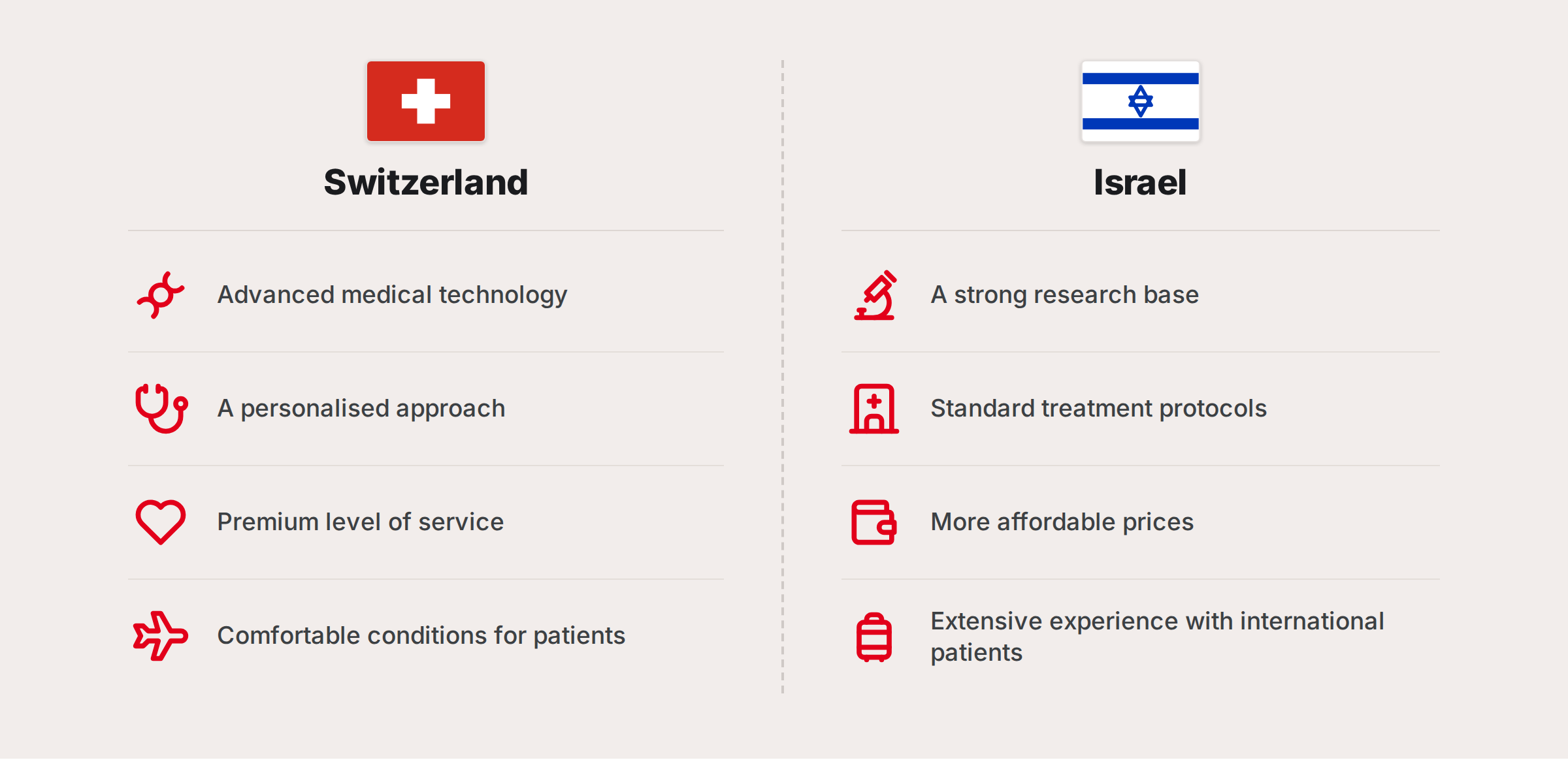
Switzerland and Israel are regarded as two of the most developed destinations for medical travel. Israel is known for strong clinical medicine, an extensive research base and comparatively more affordable prices. Switzerland, in turn, attracts patients with its high level of medical technology, a personalised approach and an exceptional standard of service. The choice of country usually depends on the complexity of the condition, the patient’s budget and their expectations of how treatment is organised.

Why Patients Choose Treatment Abroad

Medical travel is growing because patients want access to the best methods of diagnosis and treatment. In some cases, treatment abroad offers faster access to specialised care and to modern medical technology.

The most common reasons for turning to clinics abroad:

  • access to advanced diagnostic and therapeutic technologies
  • treatment of complex or rare conditions
  • a second medical opinion
  • high medical standards and treatment protocols

According to the World Health Organization, quality healthcare should be effective, safe and based on evidence-based medicine.

The Healthcare System in Switzerland

Swiss medicine has traditionally been regarded as one of the most technologically advanced in Europe. The country has a large number of highly specialised private clinics that are quick to introduce new methods of diagnosis and treatment.

Medical Technology

Swiss clinics make wide use of modern diagnostic methods, molecular diagnostics, robotic surgery and personalised therapy. Many medical centres work closely with universities and pharmaceutical companies.

This allows innovative treatments to be brought into clinical practice more quickly.

A Personalised Approach to Treatment

One of the hallmarks of Swiss medicine is an individual approach to every patient. The treatment plan is often drawn up by an interdisciplinary team of doctors.

Specialised Private Clinics

Switzerland has a high concentration of private medical centres specialising in particular fields of medicine. Many of them welcome international patients and have well-developed international patient services.

The main fields of treatment:

Why Switzerland Has Long Been a Centre of International Medicine

Patients from many countries have been coming to Switzerland for treatment for decades. Several factors explain this:

  • a high concentration of specialised clinics
  • a high level of medical technology
  • well-developed personalised medicine
  • close links between medicine and scientific research
  • a high standard of service and patient support

This combination of medical technology and service makes treatment in the country particularly attractive to international patients.

The Healthcare System in Israel

Israeli medicine also enjoys a strong international reputation. The country is known for its well-developed research base and strong university hospitals.

Research-Based Medicine

Israel is actively developing medical research and clinical trials. Many innovative treatments and medicines undergo clinical trials there.

Public and Private Clinics

Large public medical centres with affiliated research institutes play an important role in Israel’s healthcare system. At the same time, there is also a well-developed private sector.

Main Fields of Treatment

Israel is particularly well known in several fields of medicine:

  • oncology
  • cardiology
  • reproductive medicine
  • transplantation

A strong scientific base and well-developed clinical practice make Israeli clinics a popular destination for treatment abroad.

Key Differences Between Medicine in Switzerland and Israel

Key differences between medicine in Switzerland and Israel
Criterion Switzerland Israel
Level of medicine High-tech medicine with a focus on innovation Strong clinical medicine and research base
Cost of treatment Usually higher Lower on average
Waiting time Often minimal May depend on the clinic
Type of clinics Many specialised private centres Large public and private hospitals
Level of service A very high standard of service and personal support A good standard, though more conventional
Comfort for international patients Well-developed medical travel infrastructure Extensive experience with international patients

Switzerland has traditionally attracted international patients through its combination of innovative technology, a high standard of medicine and an individual approach to treatment.

Cost of Treatment

The cost of treatment can differ considerably from country to country. Several factors influence the price:

  • the scope of diagnostics
  • the complexity of the condition
  • the length of the hospital stay
  • whether surgery is needed
  • the rehabilitation phase
  • the level of the clinic

In Israel, treatment is often less expensive thanks to the large number of public medical centres.

In Switzerland the cost may be higher, but patients often gain access to more individualised treatment, modern technology and more comfortable conditions during their stay.

When Treatment in Switzerland Is the Better Choice

Swiss clinics can be a particularly good fit in the following situations:

  • complex or rare conditions
  • a need for personalised therapy
  • a second medical opinion
  • a need for high-tech treatment methods
  • the wish for the most comfortable possible conditions during treatment

When Israel May Be the Right Option

Israel can also be a good choice in a number of cases:

  • a limited treatment budget
  • treatment according to standard medical protocols
  • certain fields of medicine, including reproductive medicine

How to Arrange Treatment Abroad

Arranging treatment usually involves several stages:

  1. choosing a clinic
  2. sending medical records
  3. receiving a preliminary medical assessment
  4. planning the trip and the hospital stay

Patients often turn to medical coordinators, who help them choose a clinic, translate documents and organise treatment.

CorSwiss helps patients choose clinics in Switzerland, obtain a preliminary medical opinion and arrange treatment with personal support.

Switzerland is often the choice of patients who value innovative treatment technology, a personalised approach and a high standard of medical service. It is precisely this combination of technology, medical expertise and personal support that makes Swiss clinics so attractive to international patients.

FAQ

Where is it better to treat cancer: in Israel or in Switzerland?

Both countries have strong cancer centres. Israel is known for its active clinical research, while Swiss clinics often offer personalised therapy and access to the latest treatment technologies.

Does the cost of treatment differ?

Yes, costs can differ. Treatment in Israel is usually less expensive, while in Switzerland the cost is higher because of the level of technology, service and individual attention.

How long does it take to arrange treatment?

In most cases, a preliminary medical assessment can be obtained within a few days of sending the medical records.

Can I get a second medical opinion?

Yes. Many international clinics offer a second-opinion service, in which specialists review the patient’s medical records and propose alternative treatment options.

Do I need to speak the local language to be treated?

No. International clinics usually provide interpreters and coordinators who support patients at every stage of treatment.

Medical Visa for Switzerland: Required Documents and How to Apply

A medical visa for Switzerland is a short-stay Schengen category C visa intended for patients who come to the country for diagnostics, treatment or a medical consultation. To obtain one, you need an invitation from a Swiss clinic, confirmation of your treatment appointment, proof of financial means and the standard set of Schengen visa documents. Processing usually takes 5 to 15 working days. In some cases, a medical visa can be issued on an expedited basis if treatment is urgent.

What is a medical visa for Switzerland

A medical visa is a special type of short-stay visa that allows international patients to enter Switzerland for treatment, an examination or a second medical opinion.

In essence, it is a form of Schengen category C visa, with the medical purpose of the trip stated in the documents. This matters because it confirms the need for treatment and can speed up the processing of the application.

A medical visa is most often issued for:

  • complex diagnostics
  • surgical operations
  • cancer treatment
  • rehabilitation
  • a second medical opinion

Switzerland is regarded as one of the world’s centres of medical travel thanks to its highly precise diagnostics and strict medical standards.

According to the Swiss Medical Board, the country’s healthcare system regularly ranks among the most effective in the world for quality of treatment and level of medical technology.

Why patients choose treatment in Switzerland

Swiss medicine is known for combining clinical standards, advanced technology and an individual approach to every patient.

Key advantages:

  1. High medical standards

Clinics follow international treatment protocols, including the recommendations of:

  • the WHO (World Health Organization)
  • the European Society for Medical Oncology (ESMO)
  • international clinical guidelines.
  1. Precise diagnostics

Swiss medical centres make extensive use of:

  • PET-CT and high-precision imaging
  • genetic testing
  • molecular diagnostics.
  1. Personalised medicine

Treatment is tailored individually on the basis of the patient’s genetic and biological characteristics.

As a professor of clinical medicine at the University of Zurich notes:

“Modern medicine is moving towards personalised therapies, in which treatment is chosen on the basis of the molecular characteristics of the disease as well as the diagnosis.”

What you need for a medical visa

What you need for a medical visa

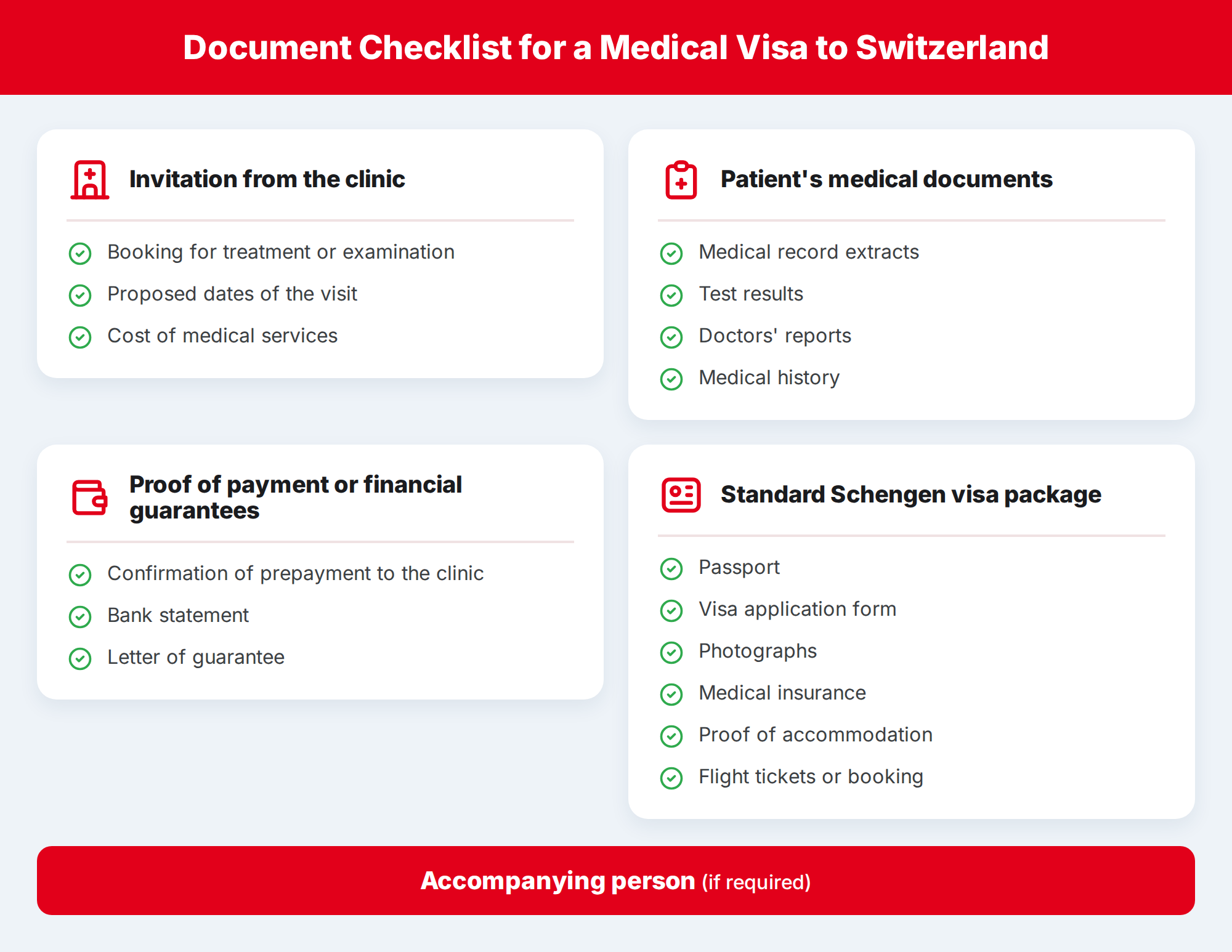
To apply for a medical visa, you will need the standard set of Schengen documents and medical confirmation of the purpose of your trip.

The main documents:

1. An invitation from the clinic

This is the key document. It confirms:

  • your appointment for treatment or an examination
  • the expected dates of your visit
  • the cost of the medical services.

2. The patient’s medical documents

These usually include:

  • extracts from the medical record
  • test results
  • doctors’ reports
  • the medical history.

These documents help the clinic assess the situation and prepare the invitation.

3. Proof of payment or financial guarantees

The consulate must be satisfied that the patient can pay for the treatment.

Acceptable documents include:

  • confirmation of advance payment to the clinic
  • a bank statement
  • a letter of guarantee.

4. The standard Schengen visa set

This includes:

  • a passport
  • the visa application form
  • photographs
  • medical insurance
  • proof of accommodation
  • tickets or a flight reservation.

5. An accompanying person (if required)

If the patient needs to be accompanied, a relative can apply for a visa at the same time. In this case, confirmation of the medical need for an accompanying person is required.

Checklist of documents for a medical visa for Switzerland

How long processing takes

A medical visa is usually issued more quickly than a tourist visa, especially if treatment is urgent.

Average timeframes:

  • 5–10 working days – standard processing
  • 2–5 days – expedited processing in medical cases
  • up to 15 days – in complex visa situations

Under the rules of the Schengen Visa Code, consulates may process medical visas as a priority if supporting documents confirming the need for treatment are provided.

How the medical visa process works

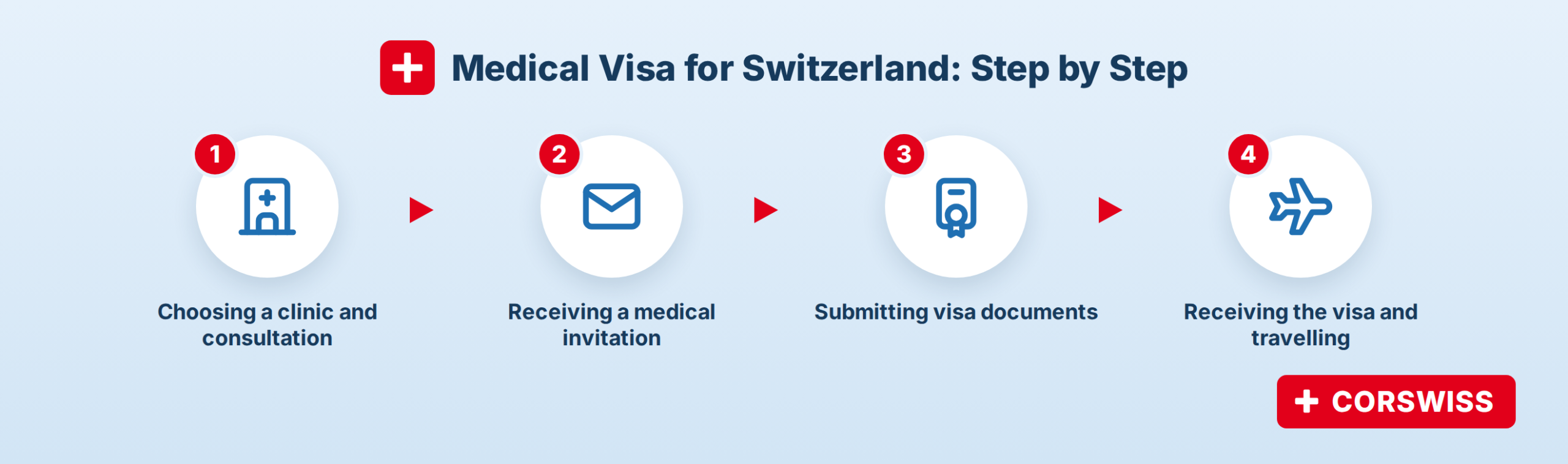
The process usually consists of several stages.

1. Choosing a clinic and consultation

First, the patient chooses a clinic or doctor and sends medical documents for a preliminary assessment.

2. Receiving the medical invitation

After reviewing the documents, the clinic:

  • confirms that treatment is possible
  • provides a diagnostic or treatment plan
  • issues an official invitation.

3. Submitting documents to the visa centre

Documents are submitted to:

  • the Swiss consulate
  • a visa centre.

In most cases, biometric data must be provided.

4. Receiving the visa

Once the visa is approved, the patient can enter the country for treatment. A medical visa is sometimes issued for multiple entries from the outset if treatment involves several stages.

Are there difficulties in obtaining a medical visa for Switzerland for Russian citizens

Following changes in EU visa policy, some patients have questions about whether a medical visa can be obtained. Applying for a visa for treatment remains possible, however, provided that supporting documents from the clinic and a complete set of visa documents are submitted.

Switzerland processes such applications under the Schengen Visa Code, and where there are medical grounds they may be handled as a priority.

When applying, several factors are important:

  • an official invitation from a Swiss clinic
  • proof of financial guarantees for the treatment
  • the patient’s medical documents.

With a properly prepared set of documents, a medical visa is usually issued without further complications. Specialised medical coordinators can help patients prepare the documents and organise the trip.

The role of medical coordinators

Organising treatment abroad can be complex, especially where serious illness is involved.

Medical coordinators help to:

  • select the clinic and doctor
  • translate medical documents
  • obtain the invitation
  • prepare the visa documents
  • organise the trip and personal support.

Medical concierge services such as CorSwiss help patients move through this process more quickly and handle the paperwork smoothly.

Why it is important to prepare medical documents in advance

One of the most common reasons for visa delays is an incomplete set of medical documents.

Experts recommend preparing the following in advance:

  • translations of medical reports
  • recent test results
  • extracts from the medical history.

According to research published in The Lancet, timely diagnosis and rapid access to specialist care significantly improve the effectiveness of treatment for complex diseases.

This is particularly important for:

  • cancer
  • cardiological conditions
  • rare diseases.

A medical visa for Switzerland is a relatively quick and clear process when the documents are properly prepared and an official invitation from the clinic has been obtained. Thanks to its high standard of medicine, modern diagnostic technology and international treatment standards, the country remains one of the leading destinations for medical travel. Where needed, specialised services such as CorSwiss help patients organise their treatment and prepare all the documents required for the trip.

FAQ

How long is a medical visa for Switzerland valid?

Most often, a short-stay Schengen visa is issued for up to 90 days. The duration may, however, depend on the length of treatment.

Can a medical visa be extended?

Yes, if the treatment takes longer. This requires medical confirmation from the clinic.

Is advance payment for treatment required to obtain a visa?

In most cases, the clinic requires a partial advance payment or a financial guarantee to confirm the patient’s commitment.

Can a medical visa be obtained urgently?

Yes. Where there are medical indications, the consulate may process the application on an expedited basis.

Can I come for treatment with a relative?

Yes. An accompanying person can obtain a visa together with the patient if this is supported by the medical documents.

Do You Need to Speak the Language for Treatment in Switzerland?

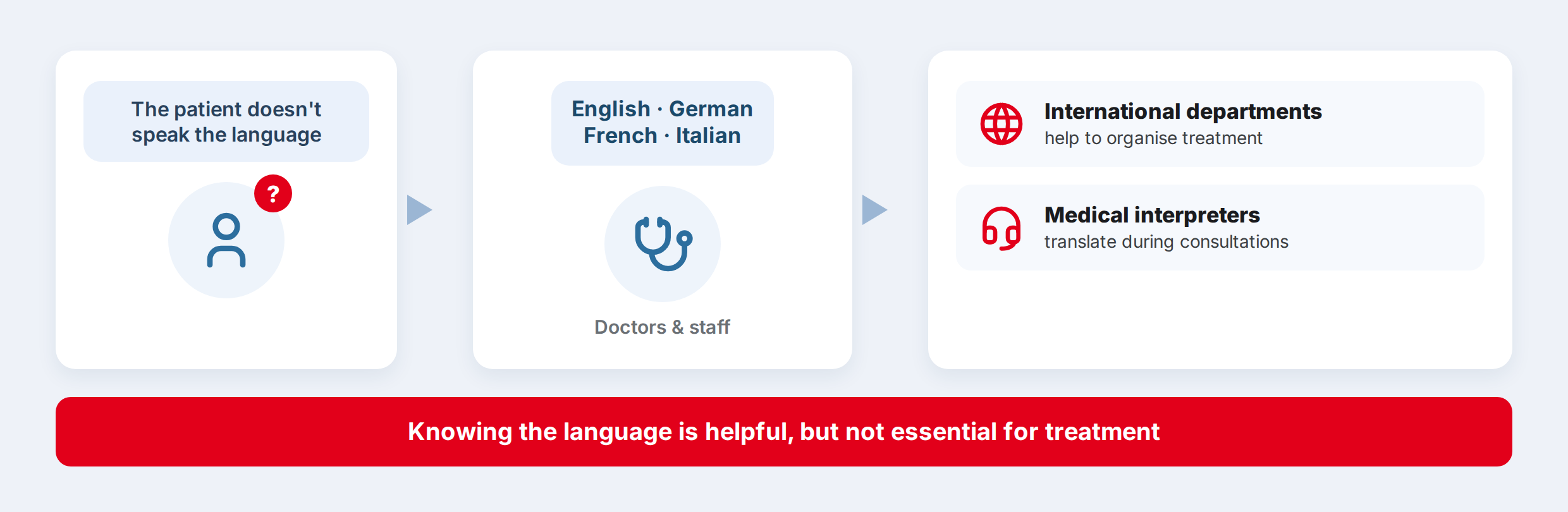
Speaking the language can make communication with doctors easier, but it is generally not a requirement for treatment in Switzerland. Swiss clinics have long experience with international patients and have international departments that help arrange communication and the translation of documents. In many cases the doctors speak English, and an interpreter is provided whenever needed. Thanks to the system of medical support, even patients who speak no European language can undergo diagnosis and treatment without serious language difficulties.

Which languages are used in Swiss medicine

Switzerland has a multilingual culture, and this is reflected in the way its medical institutions work. Several official languages are used in the country, and they are all used in the healthcare system too.

The main languages of medical communication:

  • German – the most widely spoken language, used in most regions of the country
  • French – widely used in western Switzerland
  • Italian – used in the southern region of the country
  • English – frequently used when working with international patients

The main language of the medical staff may vary by region. In Zurich, Basel and Bern, for example, German is most common; in Geneva and Lausanne, French; and in the canton of Ticino, Italian.

For international patients, however, this is rarely a problem. Large clinics and medical centres usually employ specialists who speak several languages, including English.

Do doctors communicate in English?

In the Swiss medical system, English is widely used in research and in international medical practice. Many doctors have trained or completed fellowships elsewhere in Europe and in the USA, so they speak English at a professional level.

English is used particularly often:

  • in university hospitals
  • in large private medical centres
  • in international medical programmes
  • when working with international patients

In such institutions, consultations, discussions of the diagnosis and the treatment plan can take place in English with no need for additional translation.

Effective communication between doctor and patient is one of the key factors in safe treatment. Many clinics embrace this principle and make sure every stage of treatment is explained clearly to the patient.

International departments for international patients

International departments for international patients

Swiss clinics have long welcomed patients from many countries, so most large medical centres have dedicated international departments.

Their role is to help international patients arrange treatment and handle organisational matters.

As a rule, international departments help to:

  • organise communication between patient and doctor
  • translate medical documents
  • agree the treatment plan
  • coordinate appointments for examinations and consultations
  • support the patient during treatment

These departments act as the link between the patient and the medical team. As a result, the language barrier is greatly reduced and the treatment process becomes clearer and more comfortable.

Do you need an interpreter during treatment?

In some situations a patient may need a professional interpreter. This depends on the complexity of the medical information and on the patient’s command of the language.

An interpreter is most often needed in the following cases:

  • discussing a complex diagnosis
  • explaining a treatment plan or a surgical procedure
  • signing medical and legal documents
  • a long hospital stay
  • consultations with several specialists

In these situations, interpreting helps prevent misunderstandings and ensures that medical information is conveyed accurately.

As one European expert in medical communication observes:

“The patient must fully understand the diagnosis and the treatment plan. Professional medical interpreting helps prevent errors and makes therapy safer.”

How the language barrier is usually overcome

In practice, the language barrier in medical travel is addressed in several ways. Swiss clinics and medical coordinators have long since developed a system of support for international patients.

The most common solutions:

  • Medical coordinators: specialists who help the patient deal with the clinic, the doctors and the administrative departments.
  • Translation of medical documents: medical histories, test results and doctors’ reports are translated into a language the medical team understands.
  • Patient support: during consultations and hospital stays, the patient can be assisted by a coordinator or an interpreter.
  • Medical interpreting services: some clinics provide interpreters for consultations and for discussing the treatment plan.

This system allows patients to focus on their treatment rather than on language.

How communication works before you travel for treatment

Most of the interaction with the clinic takes place before the patient arrives. This makes it possible to understand the diagnosis in advance, assess the possible treatment options and prepare a plan of care.

The process usually involves several stages:

  1. The patient sends their medical documents to the clinic.
  2. The documents are translated and reviewed by the doctors.
  3. The specialists issue a medical opinion.
  4. A preliminary treatment plan is drawn up.
  5. The patient receives recommendations on organising the trip.

At this stage the patient can be assisted by medical coordinators or specialised concierge services. CorSwiss, for example, helps patients translate medical documents, arranges communication with clinics and coordinates the preparations for treatment.

This greatly simplifies dealing with medical institutions, especially for patients who do not speak a European language.

Why Switzerland is convenient for international patients

Switzerland has long been regarded as one of the key destinations for medical travel. The country’s clinics have extensive experience with patients from many parts of the world.

Several factors contribute to this:

  1. The clinics’ international experience. Many Swiss medical centres regularly welcome international patients and have well-established communication systems.
  2. A high standard of medical service. Clinics pay close attention to the organisation of treatment and to the patient’s comfort.
  3. A well-developed system of patient support. International departments, coordinators and interpreters assist patients at every stage of treatment.
  4. A personalised approach. Treatment is often tailored to the individual, taking into account the specifics of the condition and the patient’s medical history.

Speaking the language can make communication with doctors more convenient, but it is generally not a requirement for treatment in Switzerland. International departments, medical coordinators and professional interpreters reliably bridge the language gap.

Swiss clinics have been welcoming patients from all over the world for many years and have built a support system for international patients. This allows you to focus on diagnosis and treatment with clear, easy communication.

FAQ

Can I be treated in Switzerland without speaking German?

Yes. Most clinics have international departments and medical coordinators who help patients communicate with doctors and organise their treatment.

Do doctors in Switzerland speak English?

In many large clinics, doctors and medical staff speak English, especially in international medical centres.

Do I need an interpreter during a consultation?

It depends on the situation. English is often sufficient for straightforward consultations, but a professional medical interpreter is sometimes used when complex treatment is being discussed.

Are medical documents translated?

Yes. Medical documents are usually translated before the doctors review them. This allows the specialists to assess the patient’s condition accurately and propose a treatment plan.

Do clinics help with communication?

Yes. Large clinics have international departments that help arrange communication with doctors, the translation of documents and the coordination of treatment.

Can treatment be arranged remotely?

Yes. A preliminary consultation usually takes place before the patient arrives: the medical documents are reviewed, a treatment plan is drawn up and organisational matters are discussed.

How to Choose the Right Surgeon: Key Factors to Consider

Choosing a surgeon for treatment in Switzerland

Choosing a surgeon for treatment in Switzerland is an important step that can significantly influence the success of your treatment and your overall health. In this section, we look at the key factors that will help you make the right choice.

First and foremost, look at the surgeon’s qualifications and experience. Swiss clinics are renowned for their high medical standards, and surgeons here undergo rigorous certification and continue to train in modern treatment methods. Check that the surgeon holds the relevant certificates and accreditations and has experience of performing precisely the operations you need. Look into other patients’ reviews and speak to them if possible.

An equally important aspect is the availability of modern technology and equipment at the clinic. Switzerland is known for its medical innovation, and many clinics are equipped with the latest technology, allowing operations to be performed with high precision and minimal risk. Make sure that the clinic you intend to use applies advanced methods and technology, which can significantly improve treatment outcomes and recovery after surgery.

1. The surgeon’s qualifications and experience

A surgeon’s qualifications and experience are the foundation of successful treatment. Begin by checking the surgeon’s education. They should hold a medical degree, a specialisation in the relevant field and the appropriate certificates. In Switzerland, high standards of medical education and certification require surgeons to pass rigorous examinations and to reconfirm their qualifications periodically.

The doctor’s experience in performing specific operations is also decisive. Ask how many operations for your condition they have already carried out and what the results were. A large number of successful operations can indicate a high level of competence and the ability to deal with a range of complications.

2. Reviews and reputation

Researching a surgeon’s reviews and reputation is an important stage in the selection process. Look for reviews from former patients on medical forums, clinic websites and social media. Reviews can tell you how patients rated the surgeon’s professionalism, their manner with patients and the overall experience of treatment.

It is also useful to seek recommendations from your treating doctor or from acquaintances who have already been treated in Switzerland. First-hand recommendations often prove the most reliable and can help you make a more informed choice.

3. The clinic’s technology

Modern equipment and technology play a key role in the success of surgery. Swiss clinics are known for their advanced medical equipment, and this is one aspect worth checking. Make sure the clinic where your chosen surgeon works is equipped with modern devices and instruments that can contribute to a better surgical outcome.

Examples of advanced technology include minimally invasive surgical techniques, robotic systems and the latest diagnostic equipment. Such technology can make operations more precise and shorten recovery time.

4. Approach to the patient and treatment methods

The surgeon’s approach to the patient and their treatment methods are important factors. The surgeon should listen carefully to your concerns, explain the operation in detail and answer all your questions. Discuss every aspect of treatment with them, including preparation for surgery, the operation itself and the recovery period.

Also ask which treatment methods they prefer and what their advantages and disadvantages are. A good surgeon should offer an individual approach that takes into account your health and personal preferences.

5. Certification and membership of professional associations

A surgeon’s membership of professional associations and organisations can serve as a further indicator of their qualifications and commitment to high standards of medical practice. In Switzerland, many surgeons are members of organisations such as the Swiss Medical Association (FMH) or other specialist associations.

Check whether the surgeon belongs to such associations and takes part in their activities. This can reflect a commitment to continuous professional development and to current medical standards.

6. Personal impression and trust

Your personal impression of the surgeon plays a considerable role in the choice. It is important that you feel comfortable and confident when speaking with the doctor. Arrange a consultation to assess how attentive they are to your needs, how well they explain complex medical terms and how openly and honestly they answer your questions.

A sense of trust and easy communication with the surgeon can have a positive effect on your emotional state and your confidence in the success of treatment. Confidence in the specialist fosters better cooperation and can have a positive effect on recovery.

CorSwiss can provide you with high-quality medical care and help you choose the right surgeon for treatment in Switzerland. We understand that your personal impression of the surgeon plays a considerable role in the decision.

It is important that you feel comfortable and confident when speaking with the doctor. We arrange consultations so that you can assess how attentive the surgeon is to your needs, how well they explain complex medical terms and how openly and honestly they answer your questions.

Choosing the right surgeon for treatment in Switzerland is an important and responsible step. Give due attention to each of the factors above to secure high-quality medical care and achieve the best possible results. CorSwiss is ready to support you at every stage of this journey.

Common Myths and Facts About Surgical Procedures

Myths about surgical procedures

There are many myths about surgical procedures, especially when it comes to treatment in Switzerland. One of the most common is that every operation is dangerous and carries a high risk. Many patients fear that surgery may lead to serious complications or even death. Statistics, however, show that the safety of surgical procedures in Switzerland is exceptionally high thanks to strict medical standards and advanced equipment.

Another common myth about surgery in Switzerland is that all operations are extremely painful. With advances in anaesthesiology and modern pain relief, most patients experience minimal discomfort both during and after the procedure. Treatment in Switzerland also includes a comprehensive approach to pain management, which helps patients recover faster.

Facts about surgery

The facts about surgery in Switzerland show that most operations are successful, with minimal complications. High standards of medical care, strict adherence to protocols and an individual approach to every patient make treatment in Switzerland among the best in the world. Swiss clinics, for example, are known for minimally invasive techniques that shorten recovery time and reduce the risk of post-operative complications.

In addition, Swiss surgeons are among the most highly qualified in the world. Doctors undergo rigorous selection and continuous training to meet international standards. This is confirmed by numerous patient reviews highlighting the high quality of medical care in Switzerland. The facts about surgery in Switzerland thus convincingly refute common myths about surgical procedures.

Common misconceptions about surgery

One common misconception is that every surgical procedure requires a long hospital stay and rehabilitation. In reality, thanks to minimally invasive methods, many patients return to normal life within a few days of the operation. Laparoscopic operations, for example, performed through small incisions, significantly shorten recovery time and reduce pain.

Another misconception concerns the cost of surgical procedures in Switzerland. Many people believe that treatment in Switzerland is only for the wealthy. Thanks to a well-developed medical tourism sector and the possibility of insurance cover, however, many patients from different countries can access high-quality medical care in Switzerland. This is another example of how treatment in Switzerland dispels myths about surgical procedures.

Debunking myths about surgery

Debunking myths about surgery also means refuting the belief that all operations are painful and require a long recovery. Modern anaesthesia methods and advanced technologies make operations virtually painless, and recovery is often much shorter than commonly assumed. Robotic surgery, for example, allows complex operations to be performed with great precision and minimal tissue trauma, which supports a fast recovery.

Another frequent myth is that patients are left without proper follow-up after surgery. In fact, treatment in Switzerland includes careful monitoring of the patient’s condition after the operation. Patients receive comprehensive aftercare, including regular check-ups and consultations with doctors, which helps prevent possible complications and speed up recovery.

Truth and myths about surgery

Truth and myths about surgery are often intertwined, causing confusion among patients. It is important to remember that treatment in Switzerland is based on scientific evidence and the many years of experience of its doctors. This dispels many myths about surgical procedures and shows that modern operations can be safe, effective and minimally traumatic. Swiss clinics, for example, make extensive use of innovative diagnostic and treatment methods such as 3D imaging and robotic systems, which improve surgical outcomes.

What is more, the truth about surgery in Switzerland is that patients receive personalised medical care. Every surgical procedure is carefully planned around the patient’s individual characteristics, which minimises risks and increases the effectiveness of treatment. In this way, treatment in Switzerland dispels myths about surgery and demonstrates the highest standard of medical care.

The Importance of Pre-operative Assessment: What Patients Need to Know

Pre-operative assessment

A pre-operative assessment is an important stage in preparing for any surgical operation. It helps the doctor to assess the patient’s general health, identify possible risks and take measures to minimise them. It includes a thorough review of the medical history, physical examinations and various laboratory and diagnostic tests. The doctor may order additional investigations, such as an electrocardiogram (ECG), X-ray or ultrasound, to obtain a fuller picture of the patient’s condition. All of these measures are aimed at ensuring maximum safety and a successful outcome of the operation when you undergo treatment in Switzerland.

Treatment in Switzerland deserves particular attention here: high standards of medical care and advanced technologies allow thorough and precise pre-operative assessments. Swiss clinics use the latest diagnostic and treatment methods, which ensures highly accurate results and minimises the risk of complications. Experienced specialists give every patient their full attention, tailoring their approach to the individual’s condition and needs. Treatment in Switzerland follows a comprehensive approach that combines modern medical technology with doctors’ many years of experience, making it one of the best in the world.

What a pre-operative assessment includes

A pre-operative assessment includes several key stages, such as:

  • Review of the patient’s medical history: the doctor gathers information on past illnesses, allergies, previous operations and current medication.
  • Physical examination: checking vital signs such as blood pressure, heart rate and breathing.
  • Laboratory and diagnostic tests: blood tests, electrocardiogram (ECG), X-ray and other investigations needed for a complete assessment of the patient’s condition.

Why preparation for surgery matters

Preparation for surgery in Switzerland begins with a thorough pre-operative assessment, which plays a key role in a successful outcome. The main benefits include:

  • Early identification of risks: the pre-operative assessment reveals potential problems that could affect the course of the operation and subsequent recovery.
  • Optimised treatment: based on the results, doctors can adjust the treatment plan and select the most suitable methods.
  • Less stress for the patient: knowing the state of their health and understanding the forthcoming procedures helps patients feel more confident and calm.

Pre-operative checklist

To ensure a safe and successful operation, patients are advised to follow this checklist:

  • Follow your doctor’s recommendations: carry out all instructions and recommendations from the medical staff.
  • Disclose all medication you take: make sure your doctor knows about every medicine you are taking.
  • Plan transport and support: arrange help and support for the day of the operation and the recovery period that follows.

Treatment in Switzerland

Treatment in Switzerland is distinguished by high-quality medical care and an individual approach to every patient. A thorough pre-operative assessment is an integral part of preparing for surgery, ensuring maximum safety and effectiveness of the procedure. Swiss clinics are equipped with modern technology and apply advanced diagnostic methods, which allows the best treatment results to be achieved.

In conclusion, a pre-operative assessment is an essential step. It helps to identify possible risks and optimise the treatment plan, which is especially important for a successful operation and a swift recovery. Treatment in Switzerland ensures a high level of safety and effectiveness thanks to a meticulous approach to every stage of preparing for and performing surgical procedures.

Understanding Recovery: Tips for a Smooth Recovery after Surgery

The recovery process after surgery

Recovery after surgery can be challenging and calls for careful planning and adherence to the doctors’ recommendations. In this article, we look at the key aspects of recovery to help you return to normal life as quickly as possible and free of avoidable complications while undergoing treatment in Switzerland.

Swiss medical institutions are known for their advanced technologies, highly qualified specialists and individual approach to every patient. Here you receive professional medical care together with comfortable conditions for recovery, which considerably improves the chances of a successful recovery.

The main stages of recovery after surgery

After surgery, every patient passes through several stages of recovery. These include immediate post-operative monitoring, the start of active rehabilitation and long-term recovery. It is important to understand that recovery after surgery is an individual process that depends on many factors, including the type of operation, the patient’s age and their general state of health.

During immediate post-operative monitoring, the medical staff track the patient’s vital signs, manage pain and prevent possible complications. Active rehabilitation then begins, which may include physiotherapy, therapeutic exercise and special exercises to restore the body’s functions. Long-term recovery requires regular check-ups with the doctor, following recommendations on nutrition and physical activity and, where appropriate, taking supportive medication.

Swiss medical institutions take a comprehensive approach to rehabilitation, giving patients everything they need for a successful and swift recovery.

Recovery tips

Follow your doctor’s recommendations

The first and most important rule for a successful recovery is to follow your doctor’s recommendations closely. Your doctor knows every detail of your condition and can give personalised advice on recovery after surgery. Follow all prescriptions and instructions on medication, physical activity and diet.

Good nutrition

A healthy diet plays a key role in healing after surgery. Make sure your diet is rich in the vitamins, minerals and proteins needed to repair tissue and support the body’s overall condition. Choose light, easily digestible food and leave aside fatty, spicy and heavy dishes, to spare the digestive system.

Physical activity

Light physical activity, such as walking, can help to speed up recovery. However, it is important to avoid overexertion and always to consult your doctor before starting any exercise. A physiotherapist can design a special exercise programme that takes every aspect of your condition into account.

Post-operative care

Treatment in Switzerland and proper post-operative care include regular monitoring by a doctor, observing hygiene standards and managing pain. Keep an eye on stitches and wounds to prevent infection. If you notice any signs of inflammation, contact your doctor immediately.

Psychological support

Psychological support deserves full attention during recovery. Surgery and the recovery that follows can be stressful, so the support of loved ones and, where needed, a professional psychologist can be very helpful.

Treatment in Switzerland

For those seeking the highest level of medical care and the best conditions for recovery, treatment in Switzerland can be an excellent choice. Switzerland is renowned for its world-class medical institutions, qualified staff and advanced technologies, which ensure a high standard of care and comfort for patients. Many clinics offer individual post-operative recovery programmes that include every element needed for a swift and safe return to normal life.

Recovery after surgery is a complex, multifaceted process that requires attention to detail and adherence to the doctors’ recommendations. Good nutrition, moderate physical activity, post-operative care and psychological support are the key elements of a successful recovery. If you want the best possible conditions for your recovery, consider treatment in Switzerland, where you will receive high-quality medical care and an individual approach.

By following these tips, you can considerably improve your recovery and return more quickly to an active and healthy life.

Innovative Surgical Techniques: How Modern Technology Is Transforming Surgery in Switzerland

Treatment in Switzerland, renowned for its high medical standards, continues to lead the way in surgery. Thanks to the rapid development of technology, surgical procedures are becoming ever more precise, safer and gentler on the body. Let us look at some of the most innovative surgical techniques offered at Swiss clinics today.

Robotic surgery: precision with artificial intelligence

Robotic surgery is a genuine breakthrough in medicine. Surgical robots equipped with miniature instruments and high-precision cameras make it possible to perform operations with remarkable accuracy. The advantages of robotic surgery are clear:

  • Minimal invasiveness: The incisions in such operations are considerably smaller, which reduces blood loss and speeds up the patient’s recovery.
  • Greater precision: The robot performs movements with high accuracy, allowing the surgeon to work in hard-to-reach areas.
  • Improved control: The surgeon controls the robot while enjoying a wider view of the operating field thanks to 3D imaging.

Minimally invasive surgery: less pain, faster recovery

Minimally invasive surgery is an important and promising trend in modern medicine, especially in the context of treatment in Switzerland. Instead of large incisions, surgeons use small openings to introduce special instruments and cameras, allowing operations to be performed with minimal tissue damage.

This approach has many advantages. Above all, it significantly reduces the risk of complications such as infection and bleeding. Patients experience less pain after surgery, which reduces the need for strong painkillers. As a result, hospital stays are considerably shorter, and patients can return to normal life sooner.

In addition, rehabilitation after minimally invasive operations is faster and easier. Patients regain physical activity more quickly and return to their everyday routines. Swiss clinics, equipped with advanced technology and highly qualified medical staff, offer optimal conditions for minimally invasive surgery, ensuring a high level of safety and comfort for their patients.

Minimally invasive surgery in Switzerland is therefore an effective, modern method of treatment that combines high precision, minimal risk and rapid recovery.

Advanced surgical procedures: an individual approach to every patient

Swiss clinics offer a wide range of advanced surgical procedures that make it possible to treat even the most complex conditions. These include:

  • Endoscopic surgery: Allows operations to be performed inside organs using flexible instruments and a camera.
  • Laparoscopic surgery: Used for operations on the abdominal organs.
  • Microsurgery: Used for operations on very small structures, for example in neurosurgery.

Why choose treatment in Switzerland?

Switzerland offers patients everything needed for comfortable and effective treatment:

  • Highly qualified specialists: Swiss surgeons are recognised experts in their fields.
  • Modern equipment: Clinics are equipped with the latest medical technology.
  • Individual approach: Every patient receives an individual treatment plan.
  • High safety standards: Swiss clinics observe the strictest safety standards.

Treatment in Switzerland stands for high-quality medical care and a swift recovery.

Innovative surgical techniques have fundamentally changed the approach to treating many diseases. Thanks to technological progress, surgical procedures have become safer, more effective and gentler on the body. As one of the world’s leaders in medicine, Switzerland gives patients access to the most advanced surgical methods.